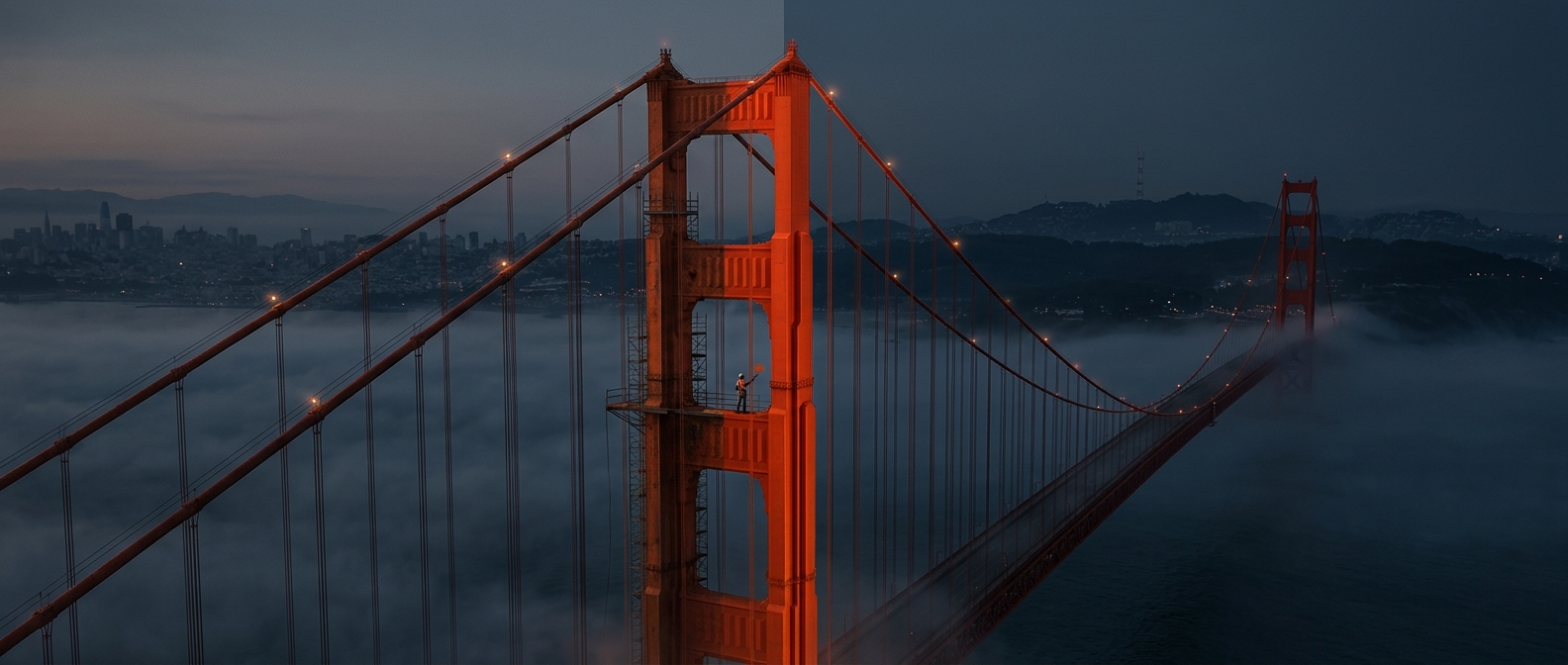
A worksite suspended over open water
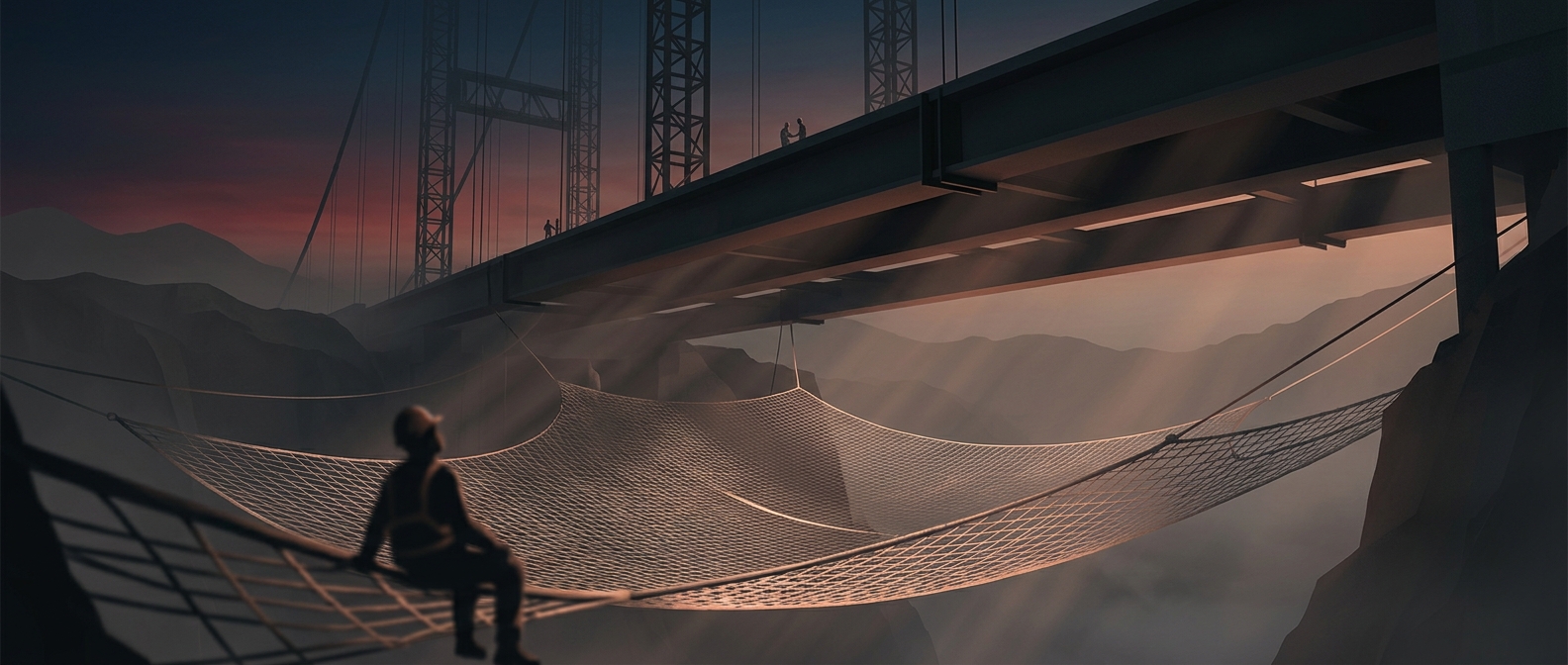
During construction of the Golden Gate Bridge, crews worked high above the water, where a misstep could become a fatal fall. The safety net was stretched beneath the work area, turning the empty space below the bridge deck into a last line of protection. If a worker fell, the net could absorb the impact and keep him from plunging into the bay.
That arrangement mattered because ordinary safeguards could not remove every danger. Workers had to move around unfinished steelwork and exposed edges as the bridge took shape. A net did not make the job safe in the modern sense; it changed the odds when prevention failed. Nineteen workers who fell were caught and survived.
A name for an unlikely reprieve
The survivors came to be known as the “Half-Way-to-Hell Club,” a grimly comic name that captured how close a fall could bring a worker to death. The label turned an emergency measure into part of the bridge’s construction story: the net was not merely equipment beneath the site, but a visible acknowledgment that building the span meant confronting risk directly.
Its most lasting lesson is practical. A safety system can matter most not when everything goes according to plan, but in the instant a worker loses footing—when a barrier below can make the difference between a fall and a return to the job.