A burning cord changed who could threaten a knight
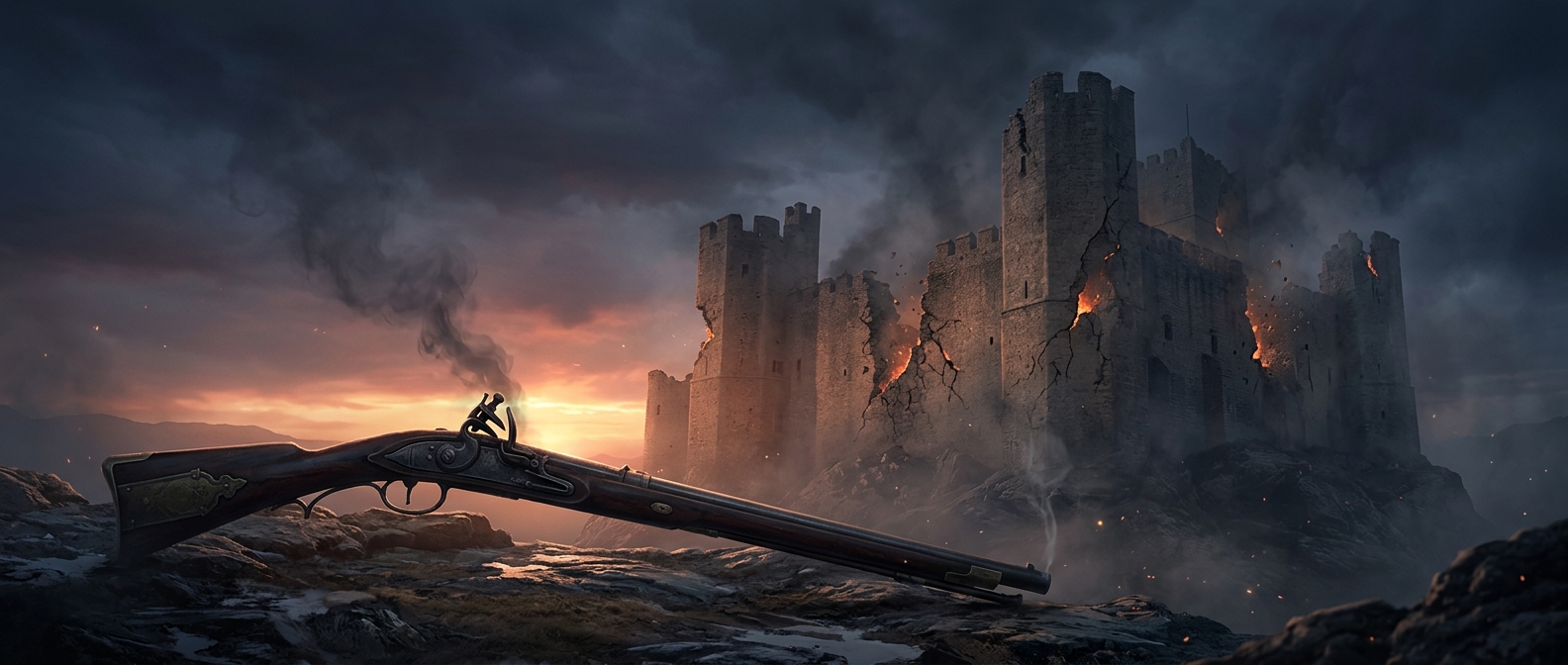
A matchlock musket fired when a trigger lowered a glowing cord onto a small pan of gunpowder. The flash lit the main powder charge inside the barrel, propelling a lead ball toward its target. Unlike a trained horseman with a lance, a musketeer did not need years of practice in riding, weapons handling, and mounted tactics to pose a danger at range. That made it possible for rulers to field larger bodies of infantry capable of challenging armored elites.
The weapon was far from effortless or dependable. A soldier had to keep the match lit, measure and load powder and shot, and aim through smoke; reloading was slow, and early guns were less reliable and precise than later firearms. Armor also did not suddenly become useless. But a musket ball at battlefield distance could penetrate some armor, and even the risk of being hit made a direct charge more costly.
Castles faced a different gunpowder threat
The matchlock’s importance was not that one infantryman could knock down a castle. Muskets could make defenders on walls more vulnerable and help attackers control the approaches, but stone fortifications required heavier siege guns to breach. As artillery improved, tall medieval walls—built to resist climbing and arrows—proved poorly suited to absorbing cannon fire.
Fortifications changed in response. In places where gunpowder artillery mattered, builders favored lower, thicker walls and projecting earth-and-stone defenses that could absorb or deflect cannonballs. The shift was gradual: firearms did not make castles obsolete overnight. They helped alter the balance between expensive, specialized mounted warriors and larger armies of infantry, while artillery forced rulers to rethink what a defensible stronghold should look like.