A milky latex became an underwater barrier
A bare telegraph wire could carry a signal across land, but laid on the seabed it faced a basic problem: seawater conducts electricity. If current escaped from the wire into the ocean, the signal weakened before it reached the far end. Engineers needed a coating that could keep water away from the metal and resist conducting electricity itself.
Gutta-percha provided both qualities. It is a natural latex collected from certain tropical trees, especially in Southeast Asia. Unlike the stretchy latex used to make many rubber products, gutta-percha becomes firm when cool and softens when warmed. That made it possible to shape around a wire and form a solid, water-resistant covering.
From tree to cable
Workers cleaned and softened the material, then pressed it around the metal conductor in layers. The result was not simply a wire dipped in “sap”: it was a manufactured insulating sheath, designed to stay continuous along the cable. A break or gap could let seawater reach the conductor, so the coating had to survive handling and the pressure and abrasion of being laid on the ocean floor. Protective outer layers helped shield the finished cable from physical damage.
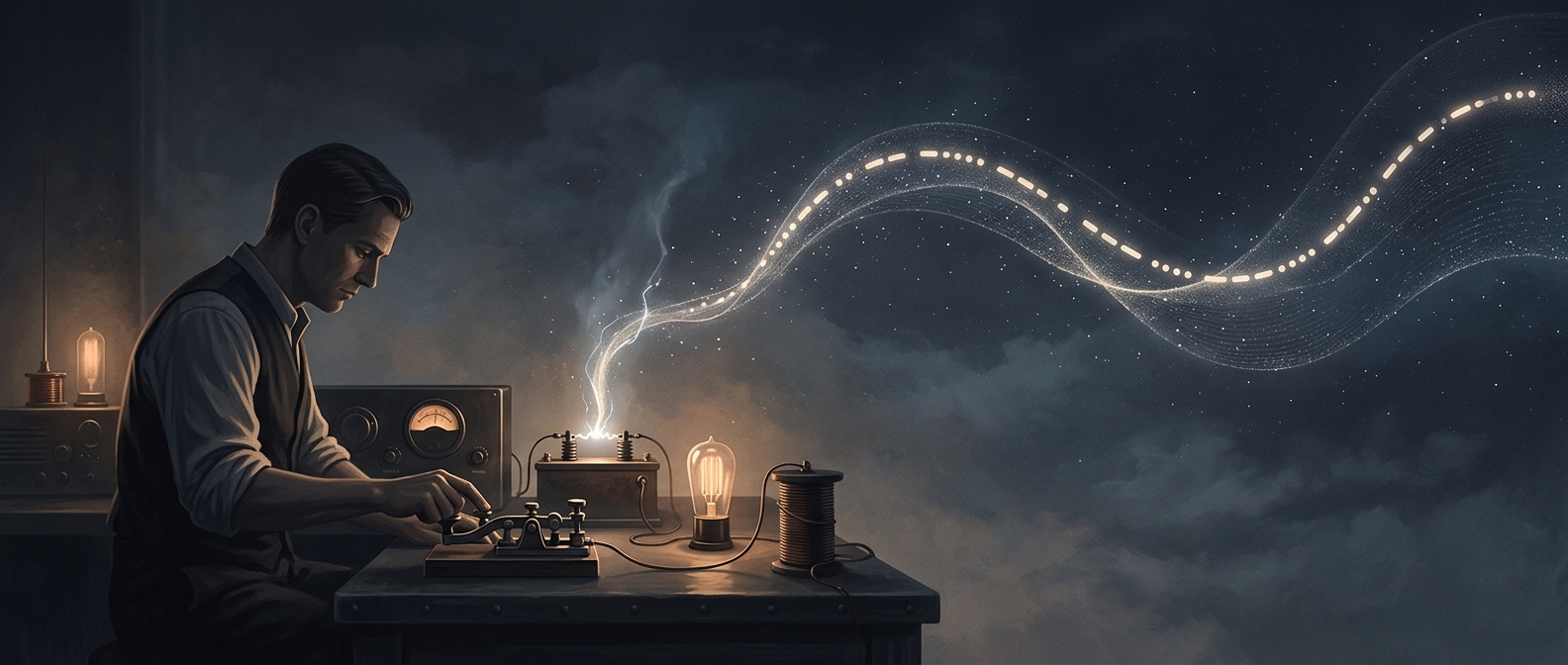
The material’s importance lay in making long submerged wires practical. Telegraphy already allowed messages to travel rapidly over land; insulated undersea cables could extend that network between continents, where ships had once carried messages across the ocean. Gutta-percha was not the signal-carrying part of the system—the metal wire was—but without insulation, the signal could leak into the sea.
For a time, global communication depended on a supply chain that began with trees in tropical forests. The unlikely link between a forest latex and a cable on the ocean floor helped turn the sea from a barrier to telegraphy into a route for it.