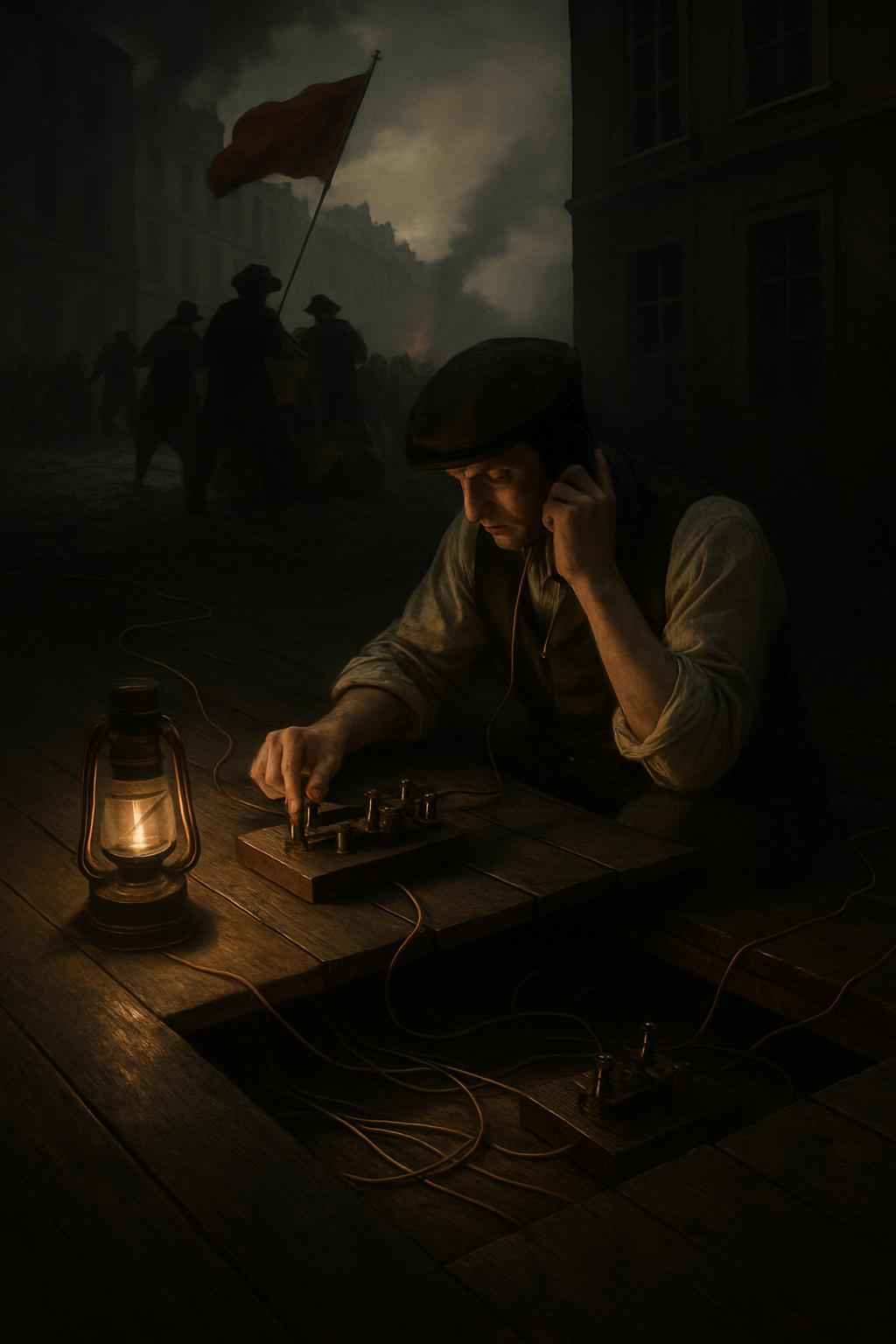
How the Telegraph Made Brevity Pay
A telegraph message had to be tapped out, carried as electrical pulses, and decoded at the other end. In Morse code, each letter became a pattern of short and long signals; more letters meant more tapping and more time occupying the line. Depending on the service and its rates, a longer message could also cost more. Shortening a message was therefore practical, not just playful.
A Few Characters Could Carry a Whole Phrase
Telegraph users and operators relied on shorthand to pack meaning into fewer signals. “C U” works by using the spoken names of the letters—“see you”—while “OMG” compresses a familiar expression into its initials. These forms depended on shared expectations: the recipient had to recognize the abbreviation and infer its meaning from the surrounding message.
That made context part of the code. A short form that saved time for two people who understood it could confuse someone outside their circle. Telegraph shorthand was useful precisely because it traded some explicitness for speed and economy.
The Medium Changed; the Incentive Didn’t
Texting made abbreviations feel new because they appeared on tiny screens and were typed with thumbs. But the underlying habit is older: when communication has a cost per word, a limit on space, or a premium on speed, people look for compact ways to say more. The technology changed from wire signals to phone screens; the pressure to make each character count did not.