A brain that never fully clocks out
The brain’s work is broader than the actions you notice. Even when you are sitting still, it regulates breathing and heartbeat, filters incoming sensations, adjusts posture, and keeps memories and expectations available. Much of this happens without conscious effort: you do not have to decide to correct your balance or notice every sound in a room.
That background work helps explain why brain activity is not limited to the regions used for a visible task. Networks of brain areas coordinate, passing information back and forth as circumstances change. A conversation, for example, can draw on hearing, language, memory, attention, and the movements that shape speech—without switching each system on in isolation.
Not everything is active at once
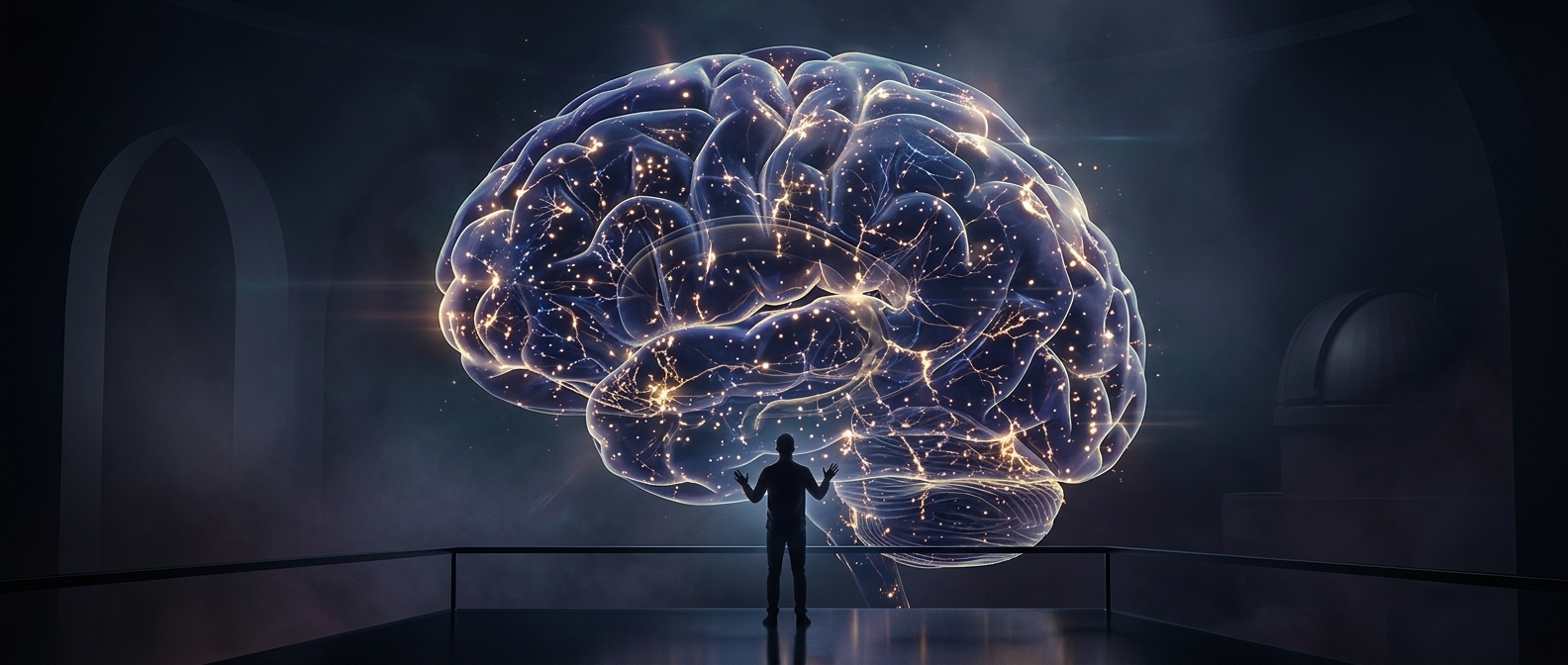
“Using almost all of your brain” does not mean every cell is firing at full strength simultaneously. Different circuits become more or less active depending on what the body and mind need. Brain scans can show changes in activity during a task, but a quieter region is not necessarily idle; it may be maintaining a signal or waiting for relevant information.
The brain also consumes substantial energy for an organ of its size. That energy supports both demanding moments—recognizing a face or learning a new route—and the ongoing regulation that keeps the body functioning. The useful distinction is between activity that is noticeable and activity that is necessary. Much of what keeps the brain working never feels like “thinking,” but it is still part of the job.