How pelvic shape affects birth
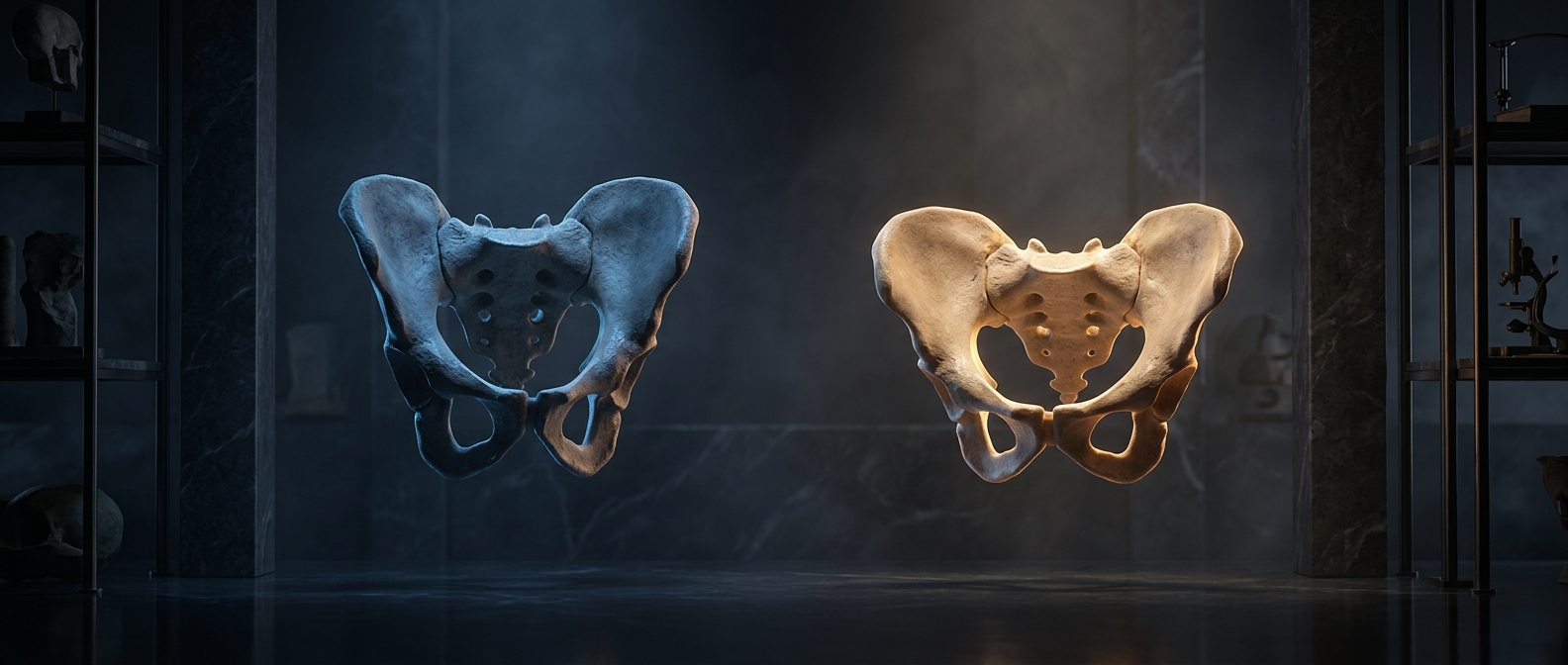
A baby does not pass through one simple opening. During vaginal birth, its head and shoulders move through a curved passage formed by the pelvis. The dimensions and angles of that passage can influence how much room is available and how the baby must turn as it descends. In many women, pelvic features are shaped in ways that tend to provide more space along this route.
The pelvis is also not a rigid, identical ring in every person. Its bones meet at joints, and some joints and supporting tissues become more flexible during pregnancy, helping the passage adapt during birth. That flexibility matters, but it does not erase differences in bone shape or guarantee that birth will be straightforward.
Why the pattern is not a blueprint
Pelvic development reflects many influences, including inherited traits, growth, and hormones. These influences produce a broad range of shapes, with substantial overlap between sexes. A person’s pelvis cannot be reliably classified—or their ability to give birth predicted—from a single feature such as width.
That is why clinicians consider the whole situation rather than treating pelvic shape as a simple pass-or-fail test. The baby’s size and position, the progress of labor, and the pregnant person’s health all matter too. A pelvis that differs from an average pattern is not automatically a problem, just as an average pattern cannot guarantee an uncomplicated birth.
The practical takeaway is that anatomy changes probabilities, not destinies: population-level differences can help explain how birth works, but they do not define what any one person’s body can do.