How the Hand’s Small Bones Make a Grip Adjustable
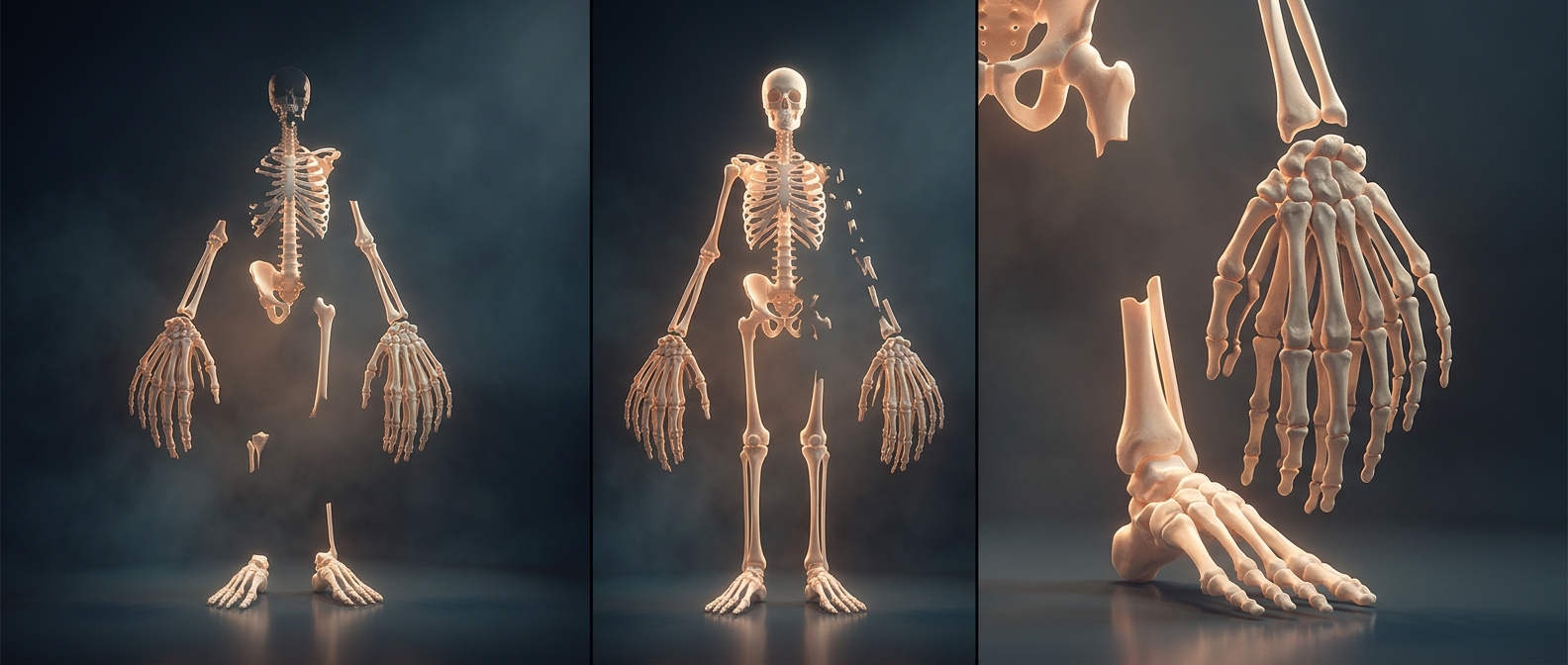
A hand is not a single clamp. Its wrist, palm, and fingers form a linked framework of small bones, with joints that let different parts move by different amounts. The fingers can curl around a handle while the thumb turns across the palm to meet them. That opposition lets the hand hold objects of many shapes—not just squeeze them.
Tendons, the tough cords that connect muscles to bones, pull the fingers into position. Muscles in the forearm power many of those pulls, while smaller muscles in the hand help coordinate fine movements. The bones provide the separate levers those muscles can control.
Why Feet Also Need Many Small Bones
The foot has a different job: it must support body weight, adapt to uneven ground, and help push the body forward. Its bones form arches and joints that can yield slightly when the foot lands, then become firm enough to transmit force during a step. Toes also help with balance and the final push-off.
This balance between flexibility and support depends on bones working together with ligaments—strong bands that connect bones—and muscles and tendons. A foot made as one rigid piece would not adapt as well to changing surfaces; one too loose to support weight would be poor at bearing the body.
Many Bones, Different Jobs
The skeleton’s many hand and foot bones are not excess pieces. Their small, connected segments give each structure several ways to adjust: hands can shape a precise grip, while feet can absorb contact and stabilize movement. The same basic advantage—many coordinated joints—serves dexterity in the hand and controlled support in the foot.