Why an astrologer asks for the minute
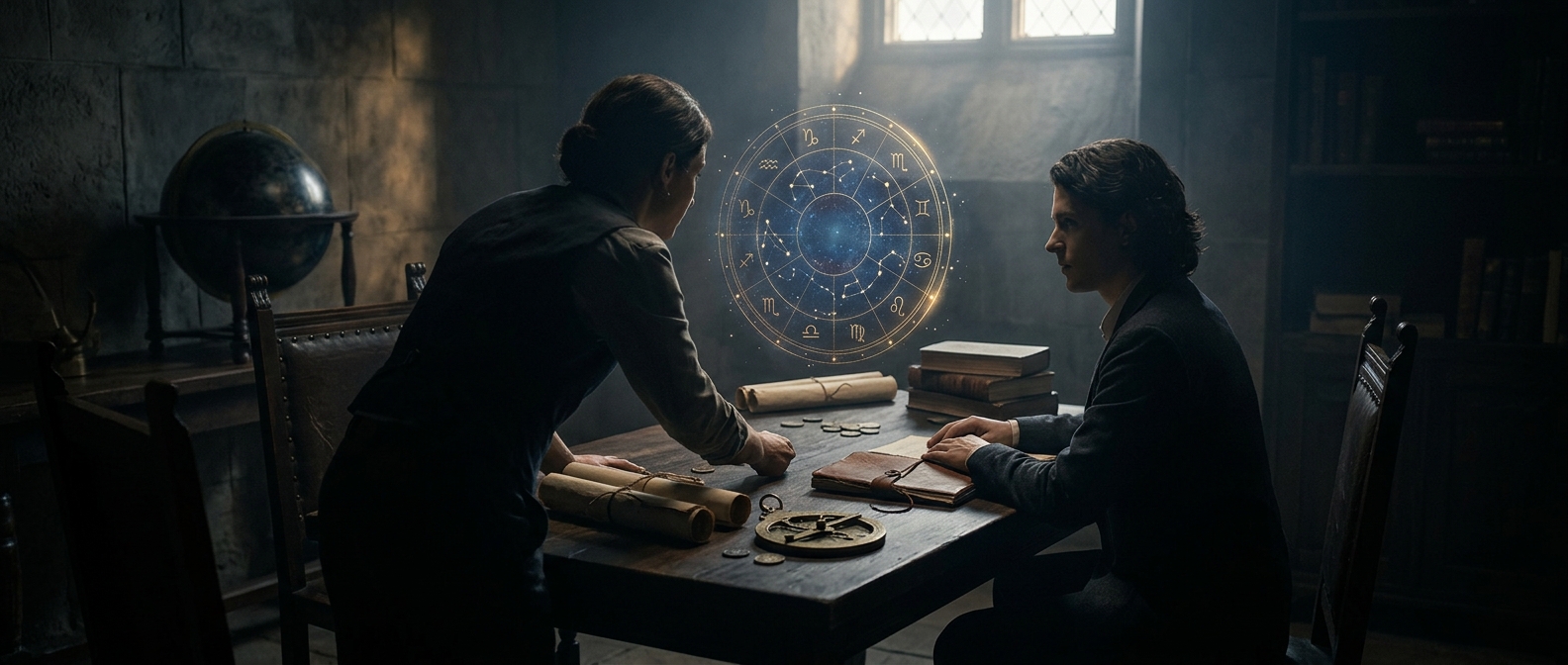
In natal astrology, a birth chart is meant to represent the sky at a particular moment and place. The date identifies the Sun’s position, but the exact time helps determine the Ascendant—the zodiac sign rising over the eastern horizon—and the chart’s houses, which astrologers use to organize different areas of life.
Those parts of the chart depend on Earth’s rotation. As the planet turns, the horizon’s alignment with the zodiac changes, so even a short shift in the recorded time can move the Ascendant’s degree or alter where a house boundary falls. If the birth occurred near a sign boundary, a small timing difference may change the sign assigned to the Ascendant itself.
Why the place matters too
A time alone is not enough: the chart also depends on the birthplace, because someone born elsewhere at the same clock time would have a different local horizon. Time-zone and daylight-saving records can matter when converting the stated birth time into the time used for a chart calculation.
That precision gives the question a practical role within the astrological system: it is not just curiosity about a birthday, but a request for the coordinates needed to build a more specific chart. Astrology offers an interpretive framework rather than a scientifically established way to predict personality or events. Still, for someone who uses it, the difference between “morning” and an exact time can change the chart they are asking to interpret.