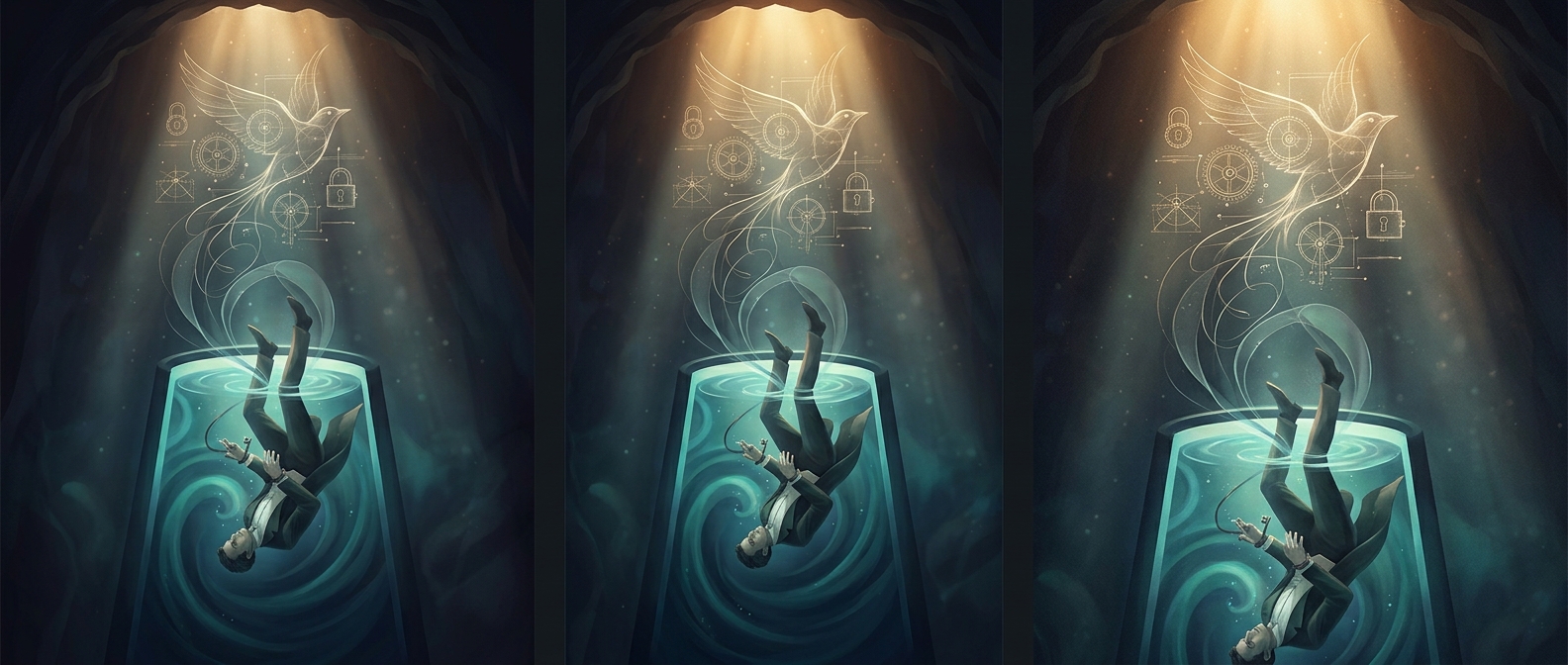
A spectacle built around a visible trap
Houdini’s Chinese Water Torture Cell made the danger part of the show. He was lowered headfirst into a water-filled tank, with his ankles secured in stocks, while the audience watched through a glass front. The arrangement made a simple escape seem impossible: he was inverted, restrained, submerged, and on display.
The glass mattered as much as the locks. It let spectators follow the struggle rather than accept that Houdini had slipped out of view, turning the tank into a stage for suspense. The escape depended on Houdini getting free of the restraints and reaching the surface before he ran out of breath. The audience saw the peril; the apparatus and his practiced technique made the escape possible.
Why patent an illusion?
A patent gave Houdini a legal claim over the specific apparatus described in it, making it harder for competitors to reproduce that design without permission. It was a practical way to protect a signature attraction in a business where a rival could imitate a successful trick and take it on the road.
But a patent also required describing the invention. That meant protection came with a public explanation of the device, not a magical barrier around the performance itself. Houdini’s advantage therefore rested on more than owning a design: the spectacle depended on how the cell was presented and on his own skill under pressure. The patent could help guard the machine; it could not patent the gasp that came when he was still underwater.