Why a whisper can overpower a quiet scene
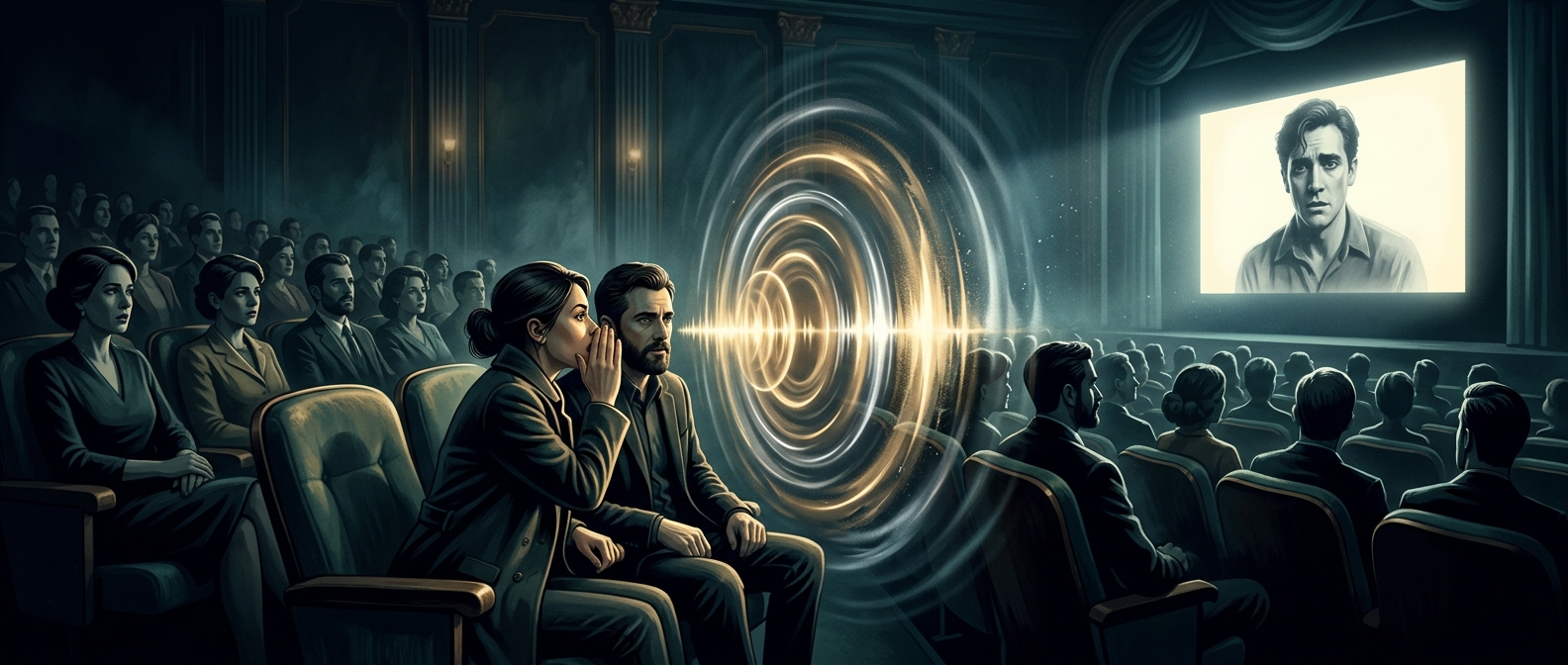
A whisper is quieter than ordinary speech, but it is not silent. Air forced through the mouth still produces sound, especially the crisp consonants that help listeners recognize words. In a theater, a nearby whisper can reach the people beside it directly, while the film’s dialogue and music may be intentionally subdued during a tense pause. With less sound competing for attention, even a low comment stands out.
That contrast is part of the scene’s design. A held breath, a faint footstep, or a moment without music gives viewers room to anticipate what comes next. Nearby speech supplies a different signal—one the brain is quick to interpret as language—so attention shifts from the screen to the conversation, even if only for a moment.
Darkness changes the social calculation
The theater’s darkness can make a person feel less visible, but it does not make them less audible. And because the audience is facing forward, a whisperer may not see the people reacting nearby. That makes it easier to miss the small cues—someone turning away, stiffening, or losing focus—that would signal the interruption in a brighter setting.
The cost is not just missing a line. Suspense depends on a shared stretch of attention: the audience waits together for a sound, movement, or reveal. A comment can break that quiet at exactly the moment the scene is asking viewers to listen. In a theater, keeping a thought to yourself preserves the very silence that makes the next small sound feel so loud.