From a peepshow to a shared screen
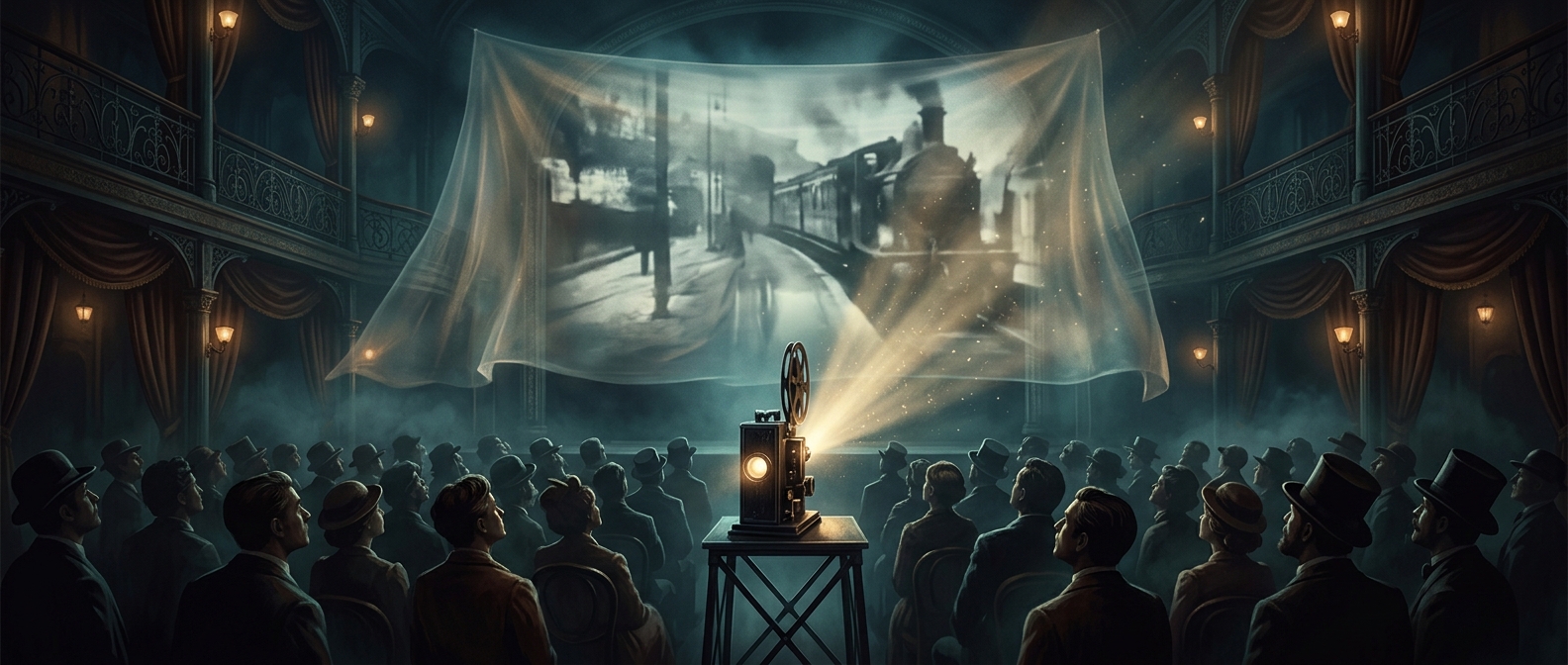
A peepshow made moving pictures a private encounter: one person looked through a small viewing window at a time. Robert W. Paul’s 1896 Animatograph changed the scale of that experience. It projected filmed images onto a screen, where a whole music-hall audience could watch together.
Projection required more than making a film larger. The machine had to send each frame of film through the light path, then briefly hide the transition to the next frame. That rhythm made separate still photographs appear to move rather than blur into a streak. The projector turned a strip of images into a performance visible across a room.
The audience became part of the show
A music hall already gathered people for a succession of live acts. Projected films could join that program: the audience watched the same image at the same moment, reacting collectively instead of taking turns at a viewing box. The cinema’s social format began to emerge not just from the pictures themselves, but from where and how they were shown.
Paul’s Animatograph did not instantly create the modern cinema. It demonstrated a consequential possibility: moving pictures could work as public entertainment for a crowd. Once a screen could hold an entire room’s attention, film no longer had to be a solitary peepshow novelty; it could become an act in its own right.