Why a Water Clock Needed a Watcher
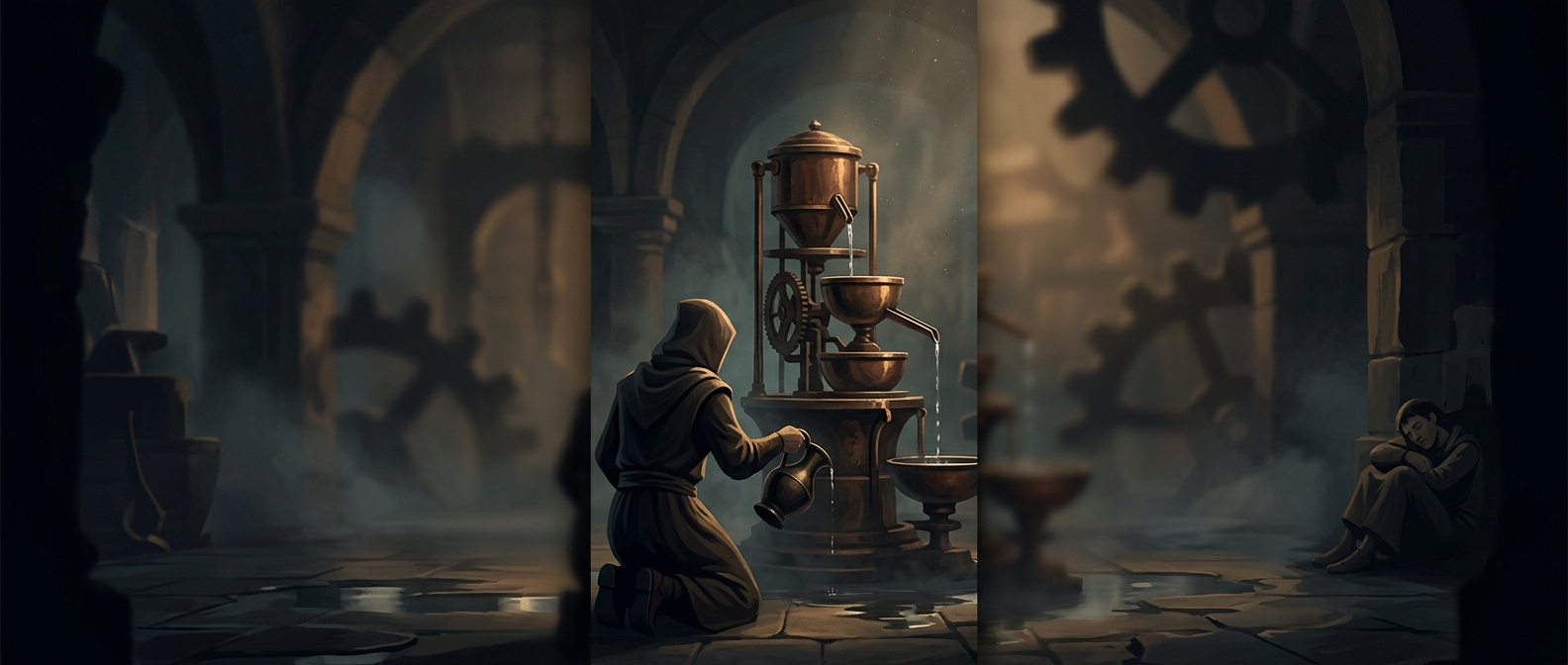
A water clock turned the flow of water into a measure of elapsed time. In a simple design, water dripped into or out of a marked vessel; the changing water level showed how much time had passed. Unlike a clock that could run on its own for a long stretch, such a device depended on a continuing supply of water and a readable level.
Keeping the Measurement Reliable
An attendant had to refill the vessel, empty it when needed, and check its markings. The person also had to make sure the flow continued rather than stopping or changing unexpectedly. That mattered because the clock’s pace depended on water moving steadily: a blockage or interruption could make the level a misleading guide to time.
The work was part of the instrument, not an incidental chore. The vessel supplied the measurement, but human attention kept the process going. A water clock could track time, yet its reliability still rested on someone nearby noticing when it needed care.