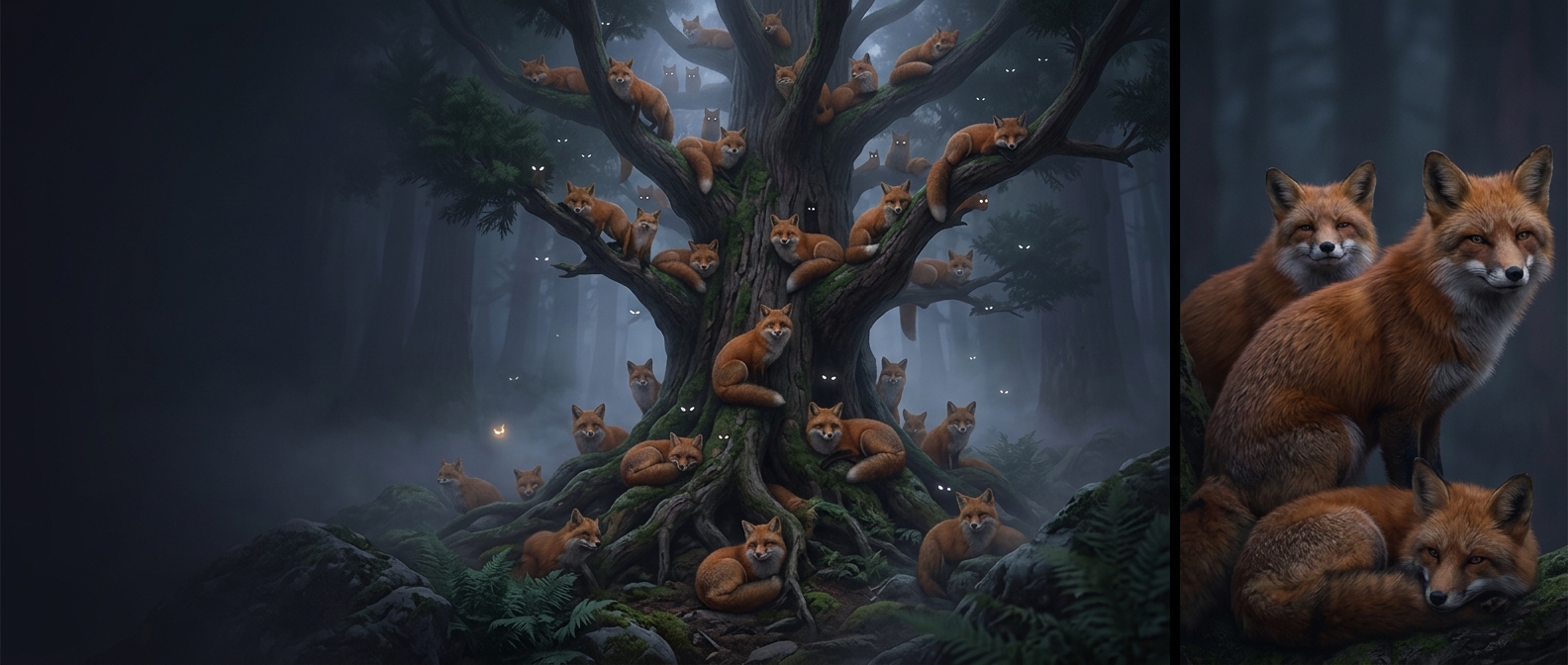
A forest enclosure, not an open village
The attraction commonly called Zao Fox Village is in Miyagi Prefecture, in northern Japan. Despite the name, it is not a settlement where foxes wander among residents’ homes. Visitors enter a managed, enclosed habitat where foxes can move around a wooded area while people follow designated paths.
That setup creates the close-up encounter: instead of spotting a fox at a distance in the wild, visitors may see several resting, walking, or watching from nearby. The animals are still foxes, not domesticated pets. Their comfort with the setting does not make them tame, and they may react defensively if someone reaches toward them.
Why looking is different from touching
The central tradeoff is access without unrestricted contact. A barrier and visitor rules help keep people from crowding or handling the animals, while the foxes retain room to move through their enclosure. Feeding, where permitted, is limited to designated procedures rather than treated as an invitation to approach any fox.
That distinction matters because a fox’s behavior can be unpredictable at close range. Visitors who keep their hands to themselves and follow staff instructions are more likely to see natural movement—such as an animal choosing where to rest or when to approach—rather than prompting a stressful interaction. The memorable part is not simply that foxes are nearby; it is watching them share a wooded space while the boundary between visitor and animal stays clear.