The machine changed the scale of farming
A tractor did more than replace horses: it let a farmer pull heavier plows across more land in less time. A deep-plowing blade turned thick prairie sod—the tightly woven surface of grasses and roots—into furrows that could be planted with crops. Once that native cover was removed, the soil no longer had the same network of roots binding it or a continuous layer of vegetation softening the force of wind and rain.
That change made cultivation across vast stretches of the Great Plains more practical. Land that had been difficult to break with animal power could be put under the plow, and fields could be expanded quickly when growing crops seemed profitable. The tractor was not itself a dust-making machine; its importance was that it made large-scale plowing easier and faster.
When the cover was gone, weather mattered more
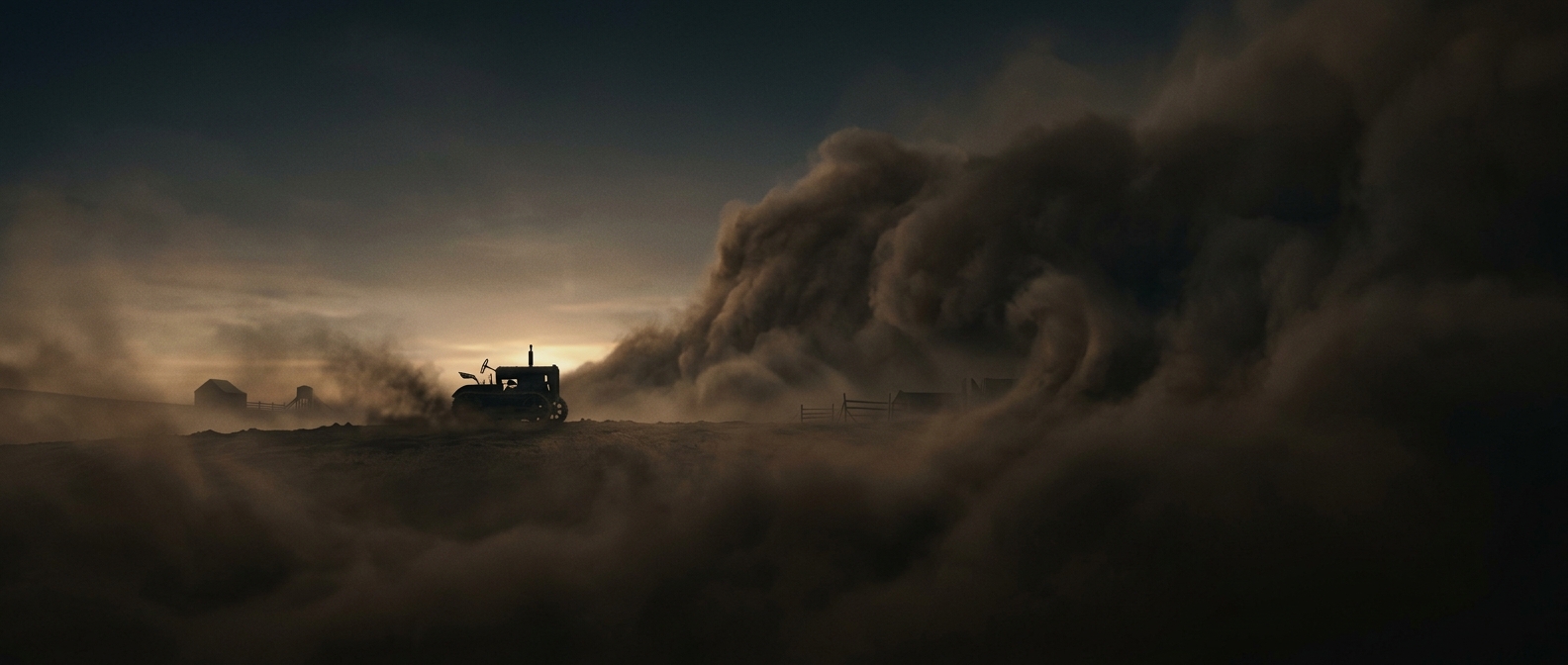
Prairie soil can be fertile, but exposed topsoil is vulnerable. In the 1930s, severe drought dried cultivated fields, while winds swept loose soil from them into enormous dust storms. Deep plowing had helped remove the living cover that could hold soil in place, and drought left little crop growth to replace it.
The Dust Bowl was therefore not simply a story of technology causing a disaster. Tractors enabled a farming system to spread across land whose protection depended on grasses and whose rainfall could not be counted on. The lasting lesson was about scale: machinery made it possible to disturb the prairie faster than the land could recover when conditions turned dry.