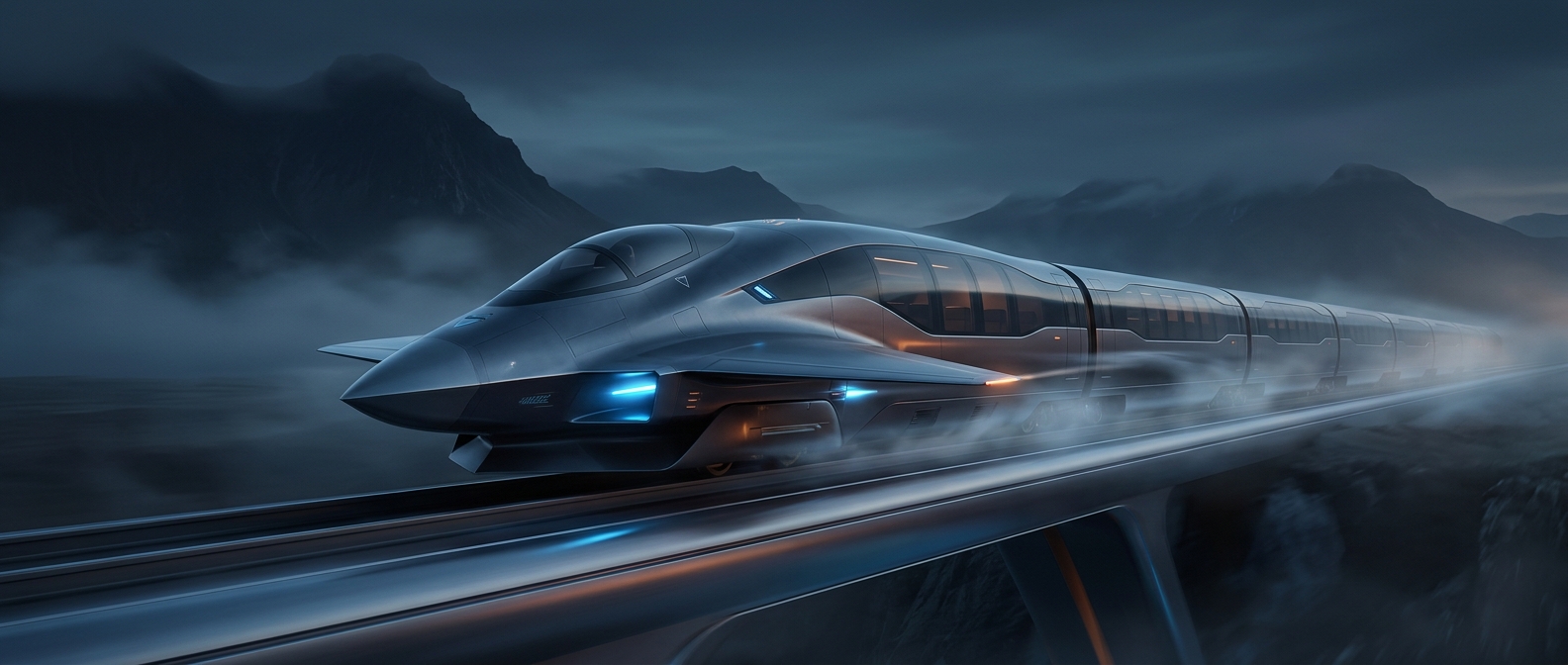
A railcar propelled like an aircraft
Franz Kruckenberg’s unusual train transferred a basic airship idea to the railway: use a propeller to push the vehicle through the air. The Schienenzeppelin carried its engine and propeller at the rear, so the wheels rolled along the rails without a locomotive supplying the driving force. Its streamlined body and low weight were intended to help it move quickly while reducing resistance from the air.
That arrangement changed the engineering problem. A conventional locomotive pushes its wheels against the rails; the grip between wheel and rail turns engine power into forward motion. The Schienenzeppelin instead relied on its propeller’s thrust. It did not need driven wheels to pull itself forward—but it also could not use a locomotive’s wheels to haul a line of coaches.
Speed came with practical limits
The propeller made the car strikingly fast, but speed alone could not make it a useful passenger service. A rear propeller was a hazard around people and equipment, and its thrust was most useful once the vehicle was already moving. The design also offered little flexibility: one powered railcar could not readily serve the same role as a locomotive that could pull different loads.
Kruckenberg’s machine demonstrated what an airship engineer could bring to railway design: aerodynamic thinking, a light body, and propulsion borrowed from aviation. But railways needed vehicles that could carry passengers reliably, fit into existing operations, and work beyond a high-speed run. The Schienenzeppelin remained an experimental dead end, its exposed propeller making the train look less like a new kind of locomotive than an aircraft that had found a stretch of track.