What “in a line” means in the sky
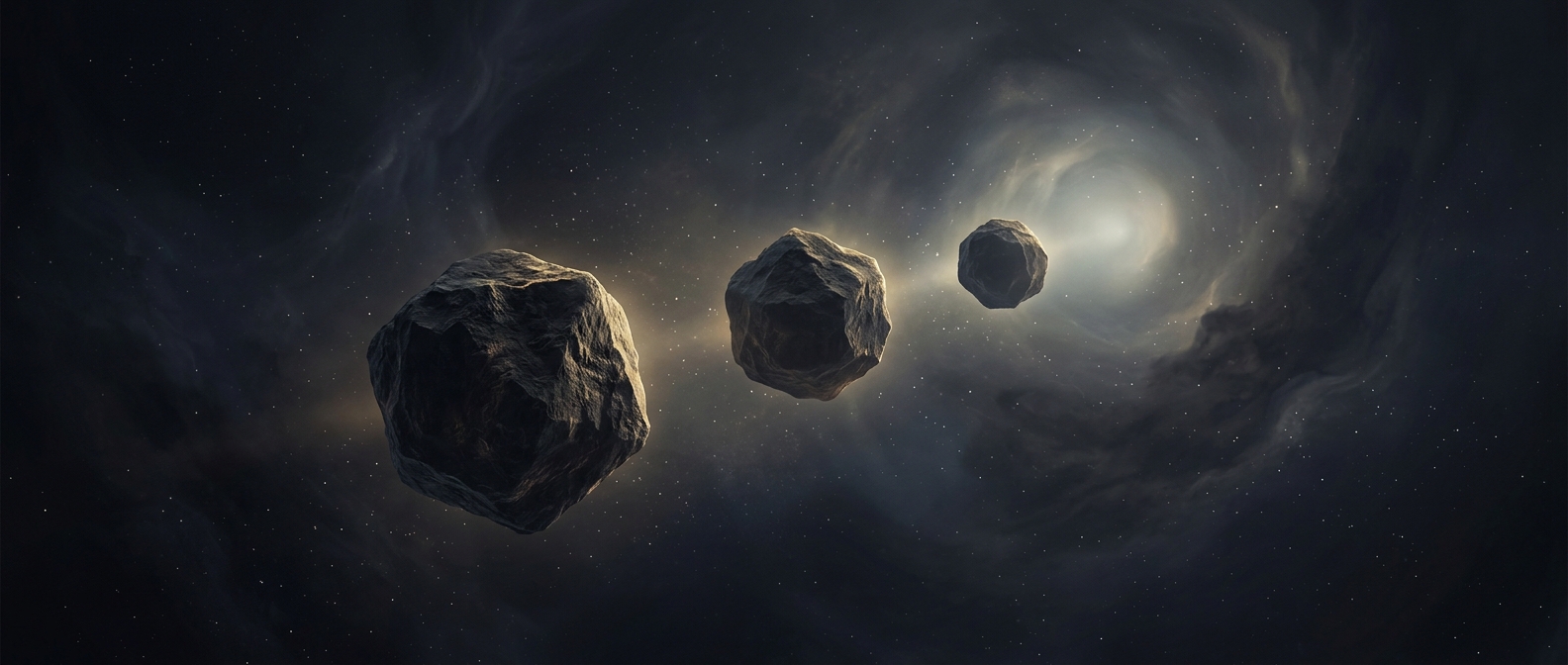
An alignment called a syzygy is a matter of perspective and orbital geometry, not three objects touching or forming a perfectly straight cosmic ruler. The bodies appear on roughly the same line when viewed in space, though their distances from one another remain enormous. Because the Moon’s orbit is tilted slightly relative to Earth’s path around the Sun, the alignment is usually close rather than exact.
Why some alignments make eclipses
At new moon, the Moon is between Earth and the Sun; at full moon, Earth lies between the Sun and Moon. Those arrangements are syzygies, but they do not automatically produce eclipses. Most months, the Moon passes a little above or below the line that would let one body’s shadow fall on another. An eclipse occurs only when the alignment happens near one of the points where the Moon’s tilted orbit crosses Earth’s orbital plane.
That small geometric difference explains why a familiar phase can arrive without a dramatic event. A full moon may pass through the night sky unobstructed, while a full moon near the right crossing can enter Earth’s shadow and darken. The same principle governs solar eclipses: the Moon must pass across the Sun from our viewpoint, not merely be at new moon.