How a Six-Pointed Star Becomes a Map of Opposites
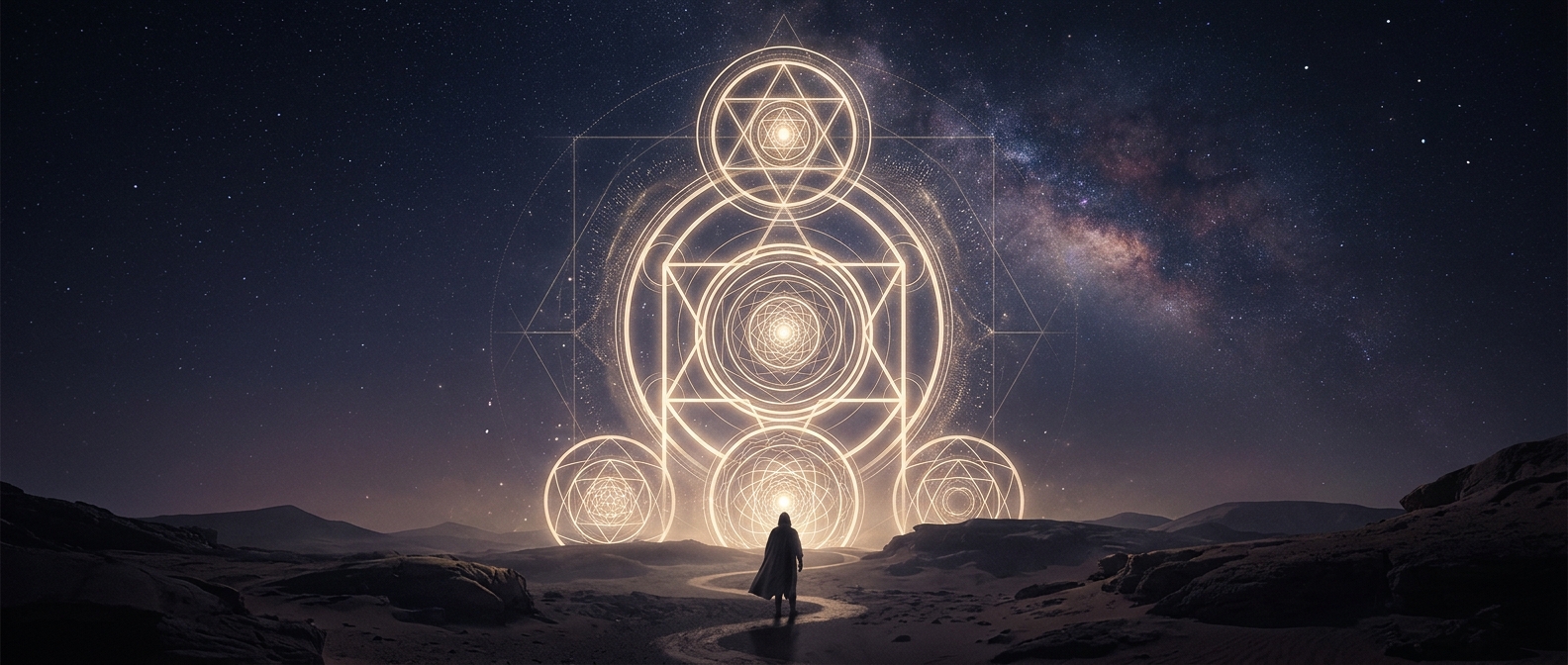
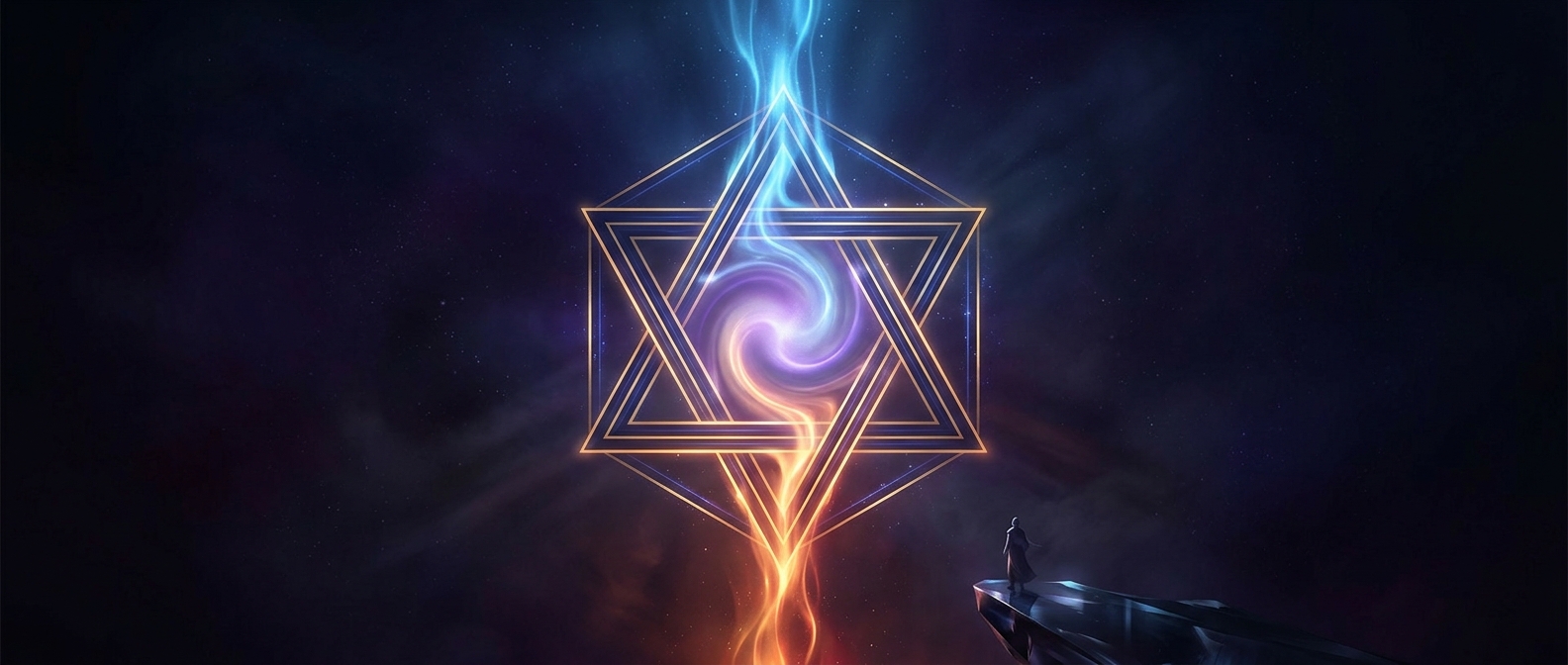
A hexagram is made from two overlapping triangles. In esoteric interpretations, the upward-pointing triangle can stand for ascent, spirit, or the active principle; the downward-pointing one can suggest descent, matter, or the receptive principle. Their overlap turns the shape into a compact image of interaction: neither force disappears, and each helps form the whole.
That visual logic is one way to understand “as above, so below”—the idea that patterns in the greater world are echoed in the smaller one. The star does not illustrate a literal mechanism in nature. It gives abstract ideas a form that can be recognized at a glance.
One Shape, Different Traditions
The hexagram does not carry one universal meaning. In some Western esoteric and alchemical interpretations, its opposing points have been used to express the joining of complementary principles, including associations with fire and water. Other communities have used the same geometry within different religious or cultural meanings. The shape alone cannot tell you which interpretation is intended; its setting and accompanying symbols matter.
That flexibility is part of its appeal as a mystical emblem. Two simple outlines create a more complex center, making balance look less like sameness than like a relationship between distinct forces. The memorable detail is that the star’s unity comes from keeping its opposites visible.