From taxiways to a television test track
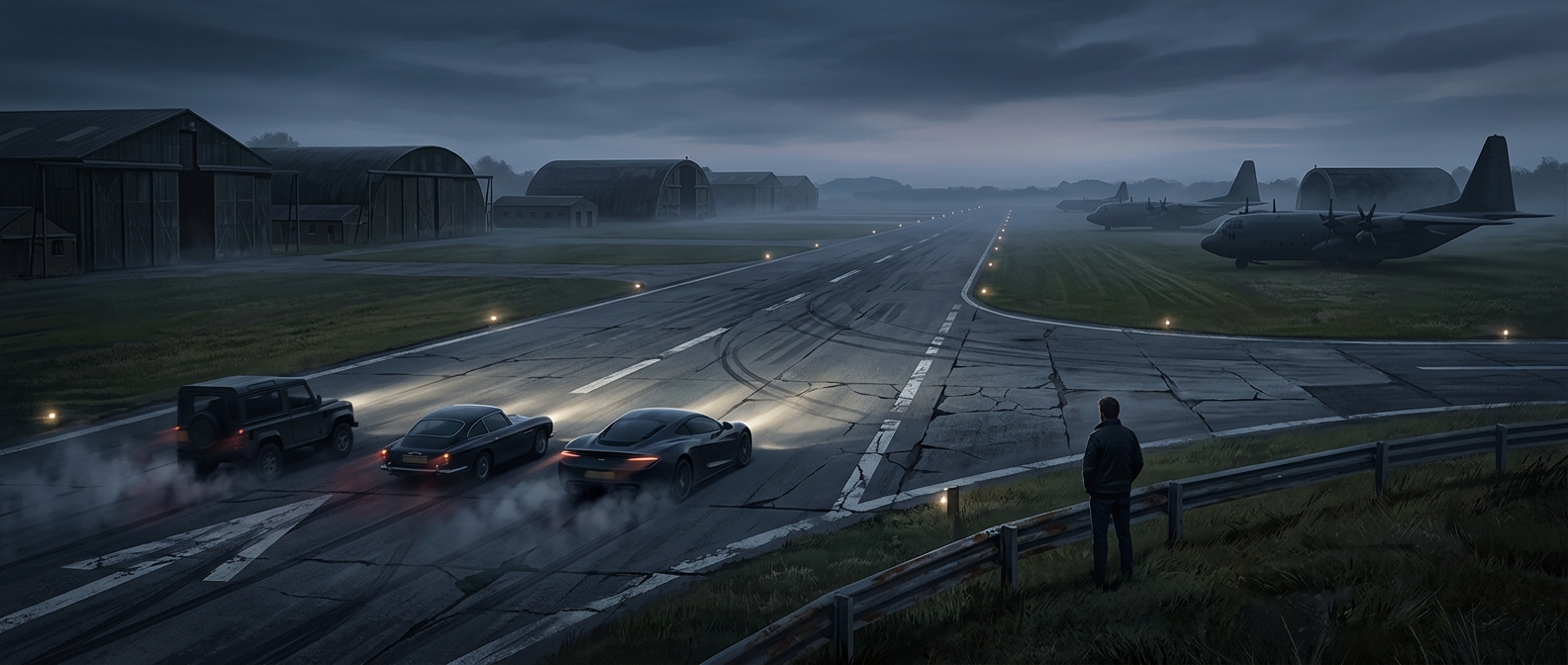
An airfield offers something a purpose-built racing circuit would take time and money to provide: broad, continuous paved surfaces and room to connect them into a closed course. At Dunsfold, the track could follow existing taxiways—paved routes aircraft used to move between runways and other parts of the airfield—then use painted markings to show drivers where the course went.
That inherited shape gives the circuit its unusual character. Long, open stretches let cars build speed, while tighter turns make drivers brake, change direction and find out how a car behaves under pressure. The figure-eight crossing adds a distinctive visual feature, but the course is still a practical test route, not a full-size grand-prix circuit.
Why the layout worked for Top Gear
The track’s mix of straights and corners suited a television format built around comparing cars on the same lap. A driver could repeat the route in different vehicles, giving viewers a visible result while the course itself supplied varied challenges. Reusing an airfield also meant the show could film fast driving in a controlled, enclosed setting rather than on public roads.
The result is a course shaped by two histories at once: its aviation past supplied the pavement and space; television turned those surfaces into a repeatable stage for testing cars.**