A Challenge Has to Work Before It Can Be a Contest
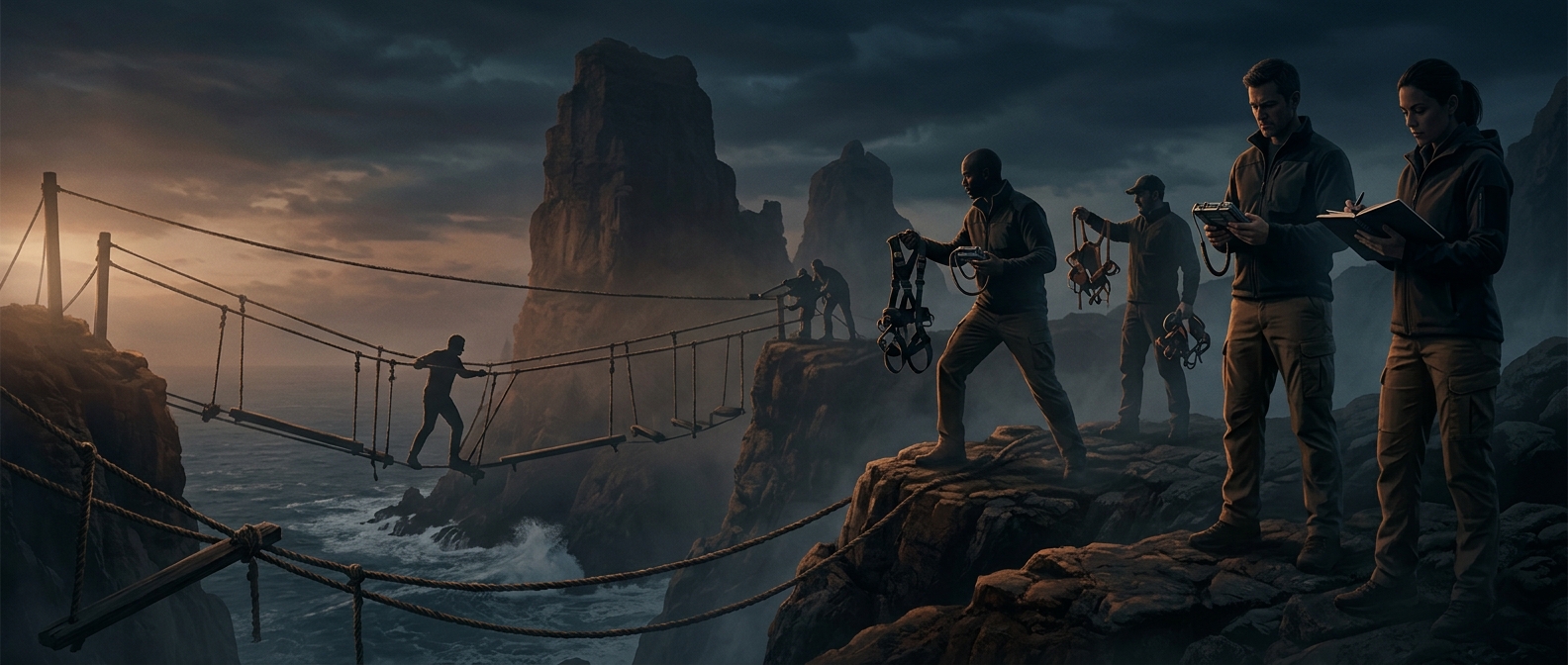
An obstacle course can look straightforward in a sketch and behave very differently once someone is climbing, balancing, or carrying something through it. A test run lets the production team see the challenge as a sequence of physical actions rather than a set of props: Can a person reach the next obstacle? Does the intended route make sense? Is the task achievable, or is some unnoticed snag likely to stop play?
That practical check matters to the competition. If a challenge cannot be completed as designed, contestants may end up struggling with a construction flaw instead of competing against one another. A run-through can reveal where the setup needs adjustment before the stakes—and the cameras—are on the players.
Testing for Safety Has Limits
A test also gives the crew a chance to look for hazards in the actual setup, not just imagine them from a plan. Physical obstacles can create risks through the way they are built, arranged, or used; seeing someone attempt the course can make those risks easier to spot.
But a successful run is not a promise that every contestant will experience the course the same way. People differ in strength, balance, reach, and pace, and the pressure of competition changes how they move. Testing is therefore a practical checkpoint: it helps establish that the challenge can be attempted and flags problems the team can address. It does not make the obstacle risk-free.
The key distinction is that contestants are meant to face the challenge—not an avoidable surprise in its construction. Testing helps production catch the difference before the competition begins.