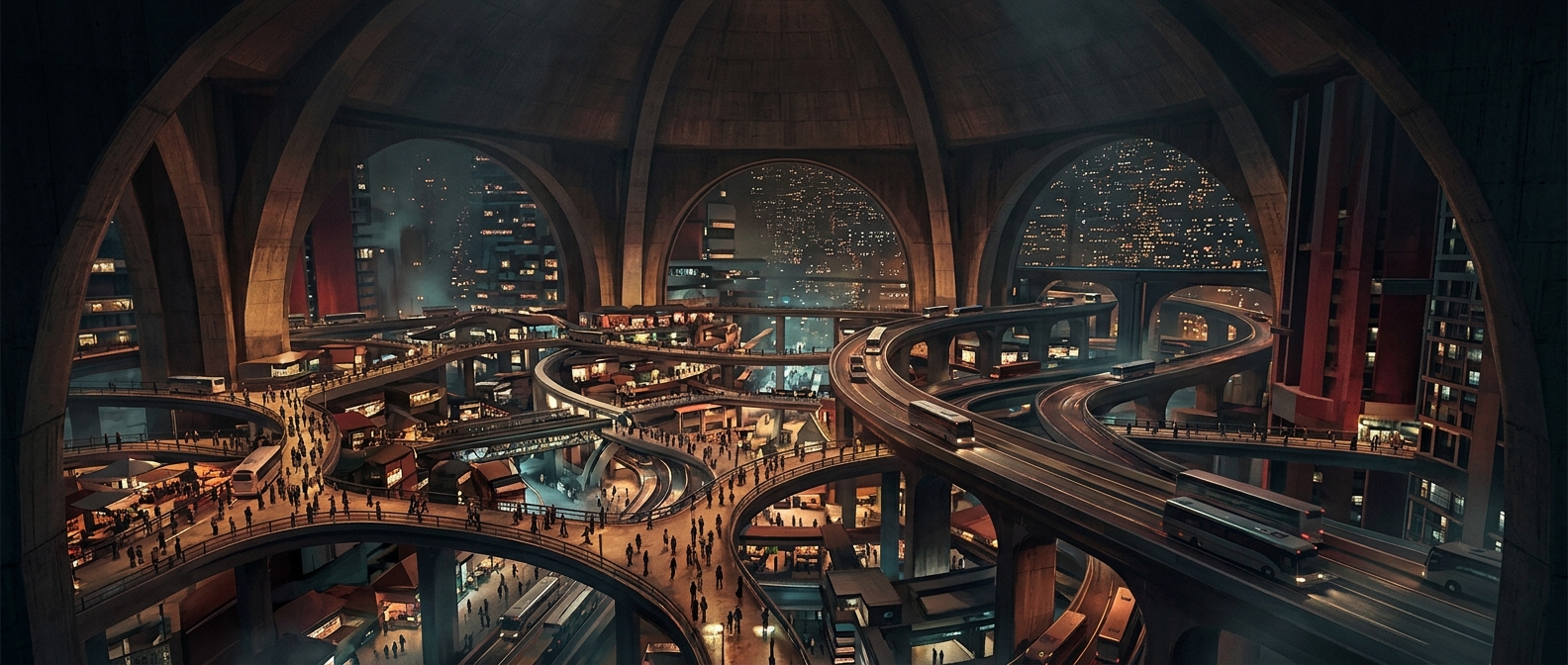
Why TAPO feels bigger than a waiting room
Mexico City’s Terminal de Autobuses de Pasajeros de Oriente—usually called TAPO—is a major hub for bus travel to and from the city’s eastern side. A terminal like this has to serve people arriving, departing, changing plans, and waiting between buses, often with luggage and family in tow. That steady flow creates demand for more than ticket counters and platforms.
Food stalls and market-style spaces meet ordinary needs on the spot: passengers can eat, pick up provisions, or browse without leaving the terminal and risking a missed departure. The services also make the building useful to people who work there and to visitors accompanying travelers. A bus journey may begin or end at a platform, but the hours around it happen elsewhere inside the complex.
A place for the in-between moments
The chapels serve a different need. Travel can involve long waits, farewells, uncertainty, or a wish to pause before setting off; a dedicated place for prayer gives those moments room within an otherwise busy transport hub. It doesn’t make TAPO a neighborhood, but it adds a quieter, more personal space alongside the commercial bustle.
That mix is what gives the terminal its small-city quality. Its shops and services are not decorative extras: they grow out of the practical and emotional demands of moving large numbers of people. For many travelers, the trip through TAPO includes a meal, an errand, or a moment of reflection—not just a bus ride.