A Small Ring Becomes a Growing Burden
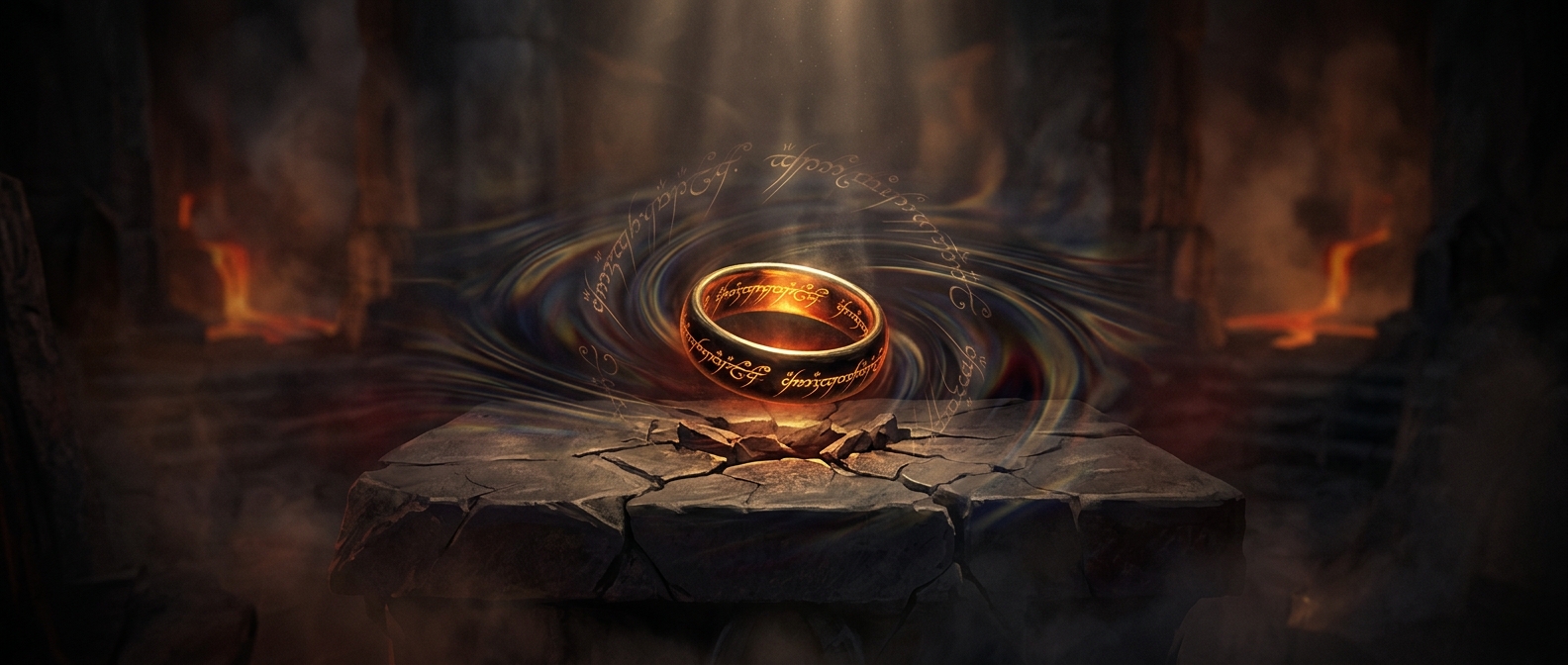
The One Ring’s changing weight makes an invisible struggle feel physical. As Frodo carries it toward Mordor, the Ring is described as growing heavier. The story gives that sensation a clear dramatic purpose: each step brings him closer to the place where the Ring was made, while wearing it and resisting its influence become harder to endure.
Weight You Can Feel, Power You Can’t See
Tolkien does not treat the Ring like an ordinary object with a stable, measurable mass. Its weight belongs to the story’s magic, but also to Frodo’s experience. The Ring presses on him in more than one sense: he must carry it, guard it, and keep refusing its pull. By giving that pressure a physical form, the narrative lets readers feel an inward conflict as bodily strain.
The distinction matters. The Ring is not simply a heavy piece of jewelry that tires its bearer. Its burden is bound up with its power over whoever possesses it—and with the effort of resisting that power. As Frodo nears Mount Doom, the object’s weight becomes a vivid measure of how difficult the task has grown.
Why the Detail Matters
The changing weight also makes the journey’s stakes visible without turning them into a tally of miles or battles. Frodo can keep walking, but the burden is no longer merely something on a chain around his neck. By the time he reaches the place where the Ring can be destroyed, carrying it and surrendering it have become inseparable tests. A tiny object can be physically small and still feel, in Tolkien’s story, almost impossible to bear.