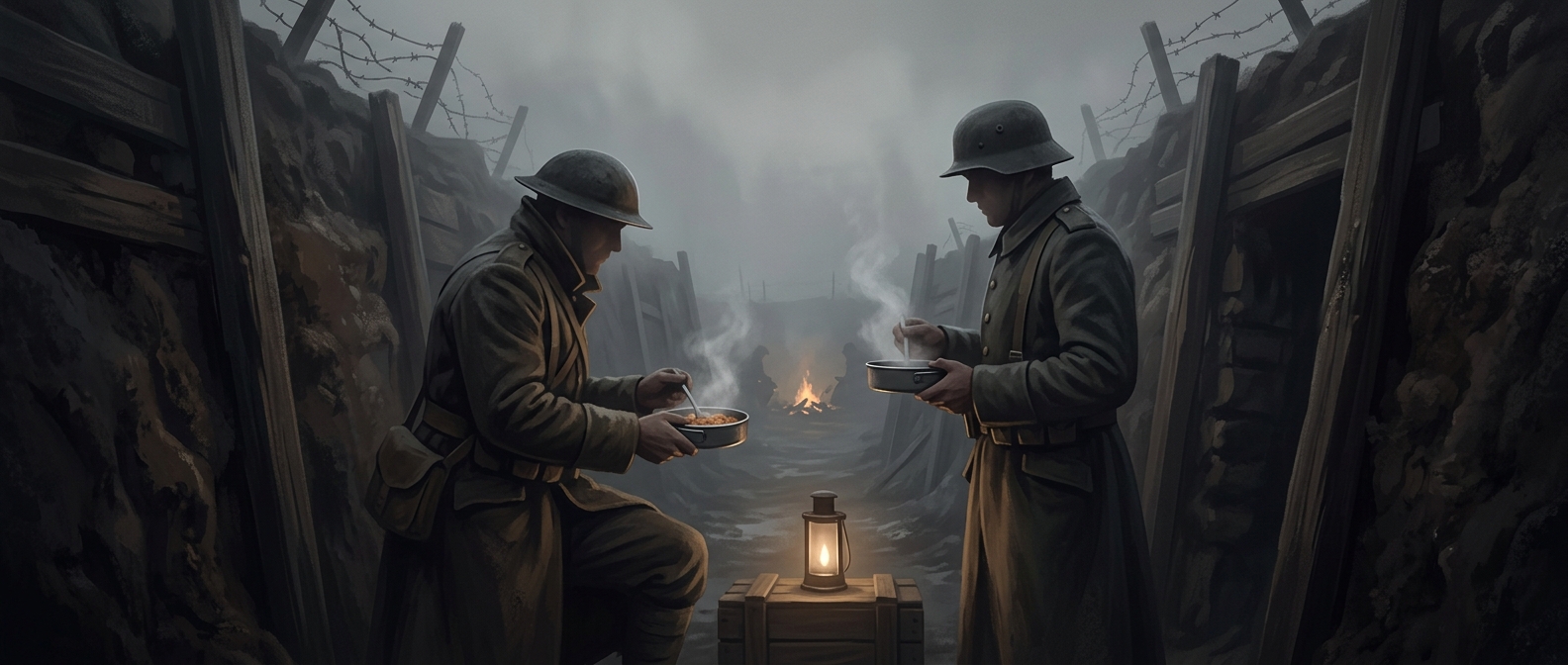
A Meal Could Create a Brief, Local Truce
On some fronts, morning coffee became more than a private routine: opposing soldiers informally held their fire during certain hours so they could drink it. The pause was not a negotiated cease-fire. It was a small accommodation between men still facing one another as enemies.
Its force came from repetition. When the same stretch of the day kept bringing the same need—time to prepare and drink something—both sides could recognize the pattern. For a little while, routine offered a reason not to shoot. That did not require trust or reconciliation; it required only that each side expect the other to observe the pause.
Why the Pause Stayed Fragile
A shared habit could lower the immediate danger without changing the war around it. It did not settle a dispute, make the opposing soldiers allies, or guarantee that firing would not resume. The arrangement was informal, so it depended on local expectations rather than a lasting agreement. A break in that expectation could end it.
That is what makes the episode striking: amid organized violence, a narrow daily need could briefly shape behavior more strongly than hostility. The coffee did not make peace. It marked a small interval in which both sides acted as though the morning routine still mattered.