How cereal makes a slope in water
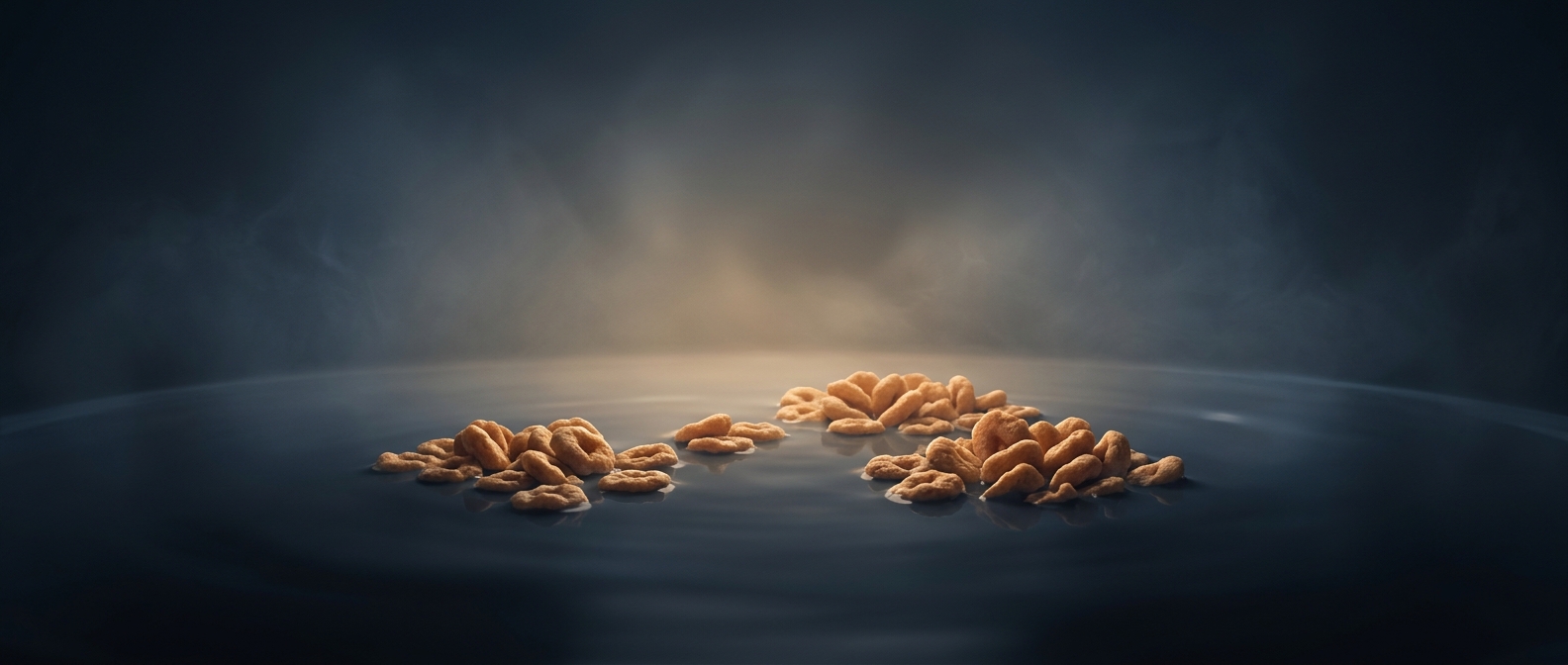
A floating cereal piece does more than sit on the surface: it slightly bends the water around it. Many cereal pieces are light enough to float, but their edges can press into the surface or draw it upward. The result is a shallow dip or rise—a tiny slope in the water around each piece.
Water’s surface tension is the tendency of its surface to behave like a stretched skin. It arises because water molecules attract one another. When a cereal piece distorts that surface, the surrounding water pulls back toward a smoother shape. That pull can have a sideways component, nudging a nearby piece along the slope.
Why pieces move together
Two floating pieces can lower the surface’s overall distortion by moving closer. Their water-bending patterns overlap, and surface tension pulls them toward an arrangement with less bent surface. This attraction between floating objects is sometimes called the Cheerios effect, after the cereal that makes it easy to spot.
The effect does not require cereal pieces to touch or stick together. It is the shape of the water between and around them that guides their motion. Depending on how each object bends the surface, floating objects can also push apart rather than gather.
The bowl helps reveal the pattern
A bowl’s curved wall bends the water surface too. Cereal near the edge can be drawn toward the wall, where its surface distortion fits the water’s shape there. Pieces may then collect along the perimeter, while cereal elsewhere drifts into small clusters.
The next time a few pieces glide together, the movement is not a miniature current carrying them. It is the surface itself—bent by the cereal and pulled taut by surface tension—quietly steering them across the bowl.