How a passing electron shift creates a pull
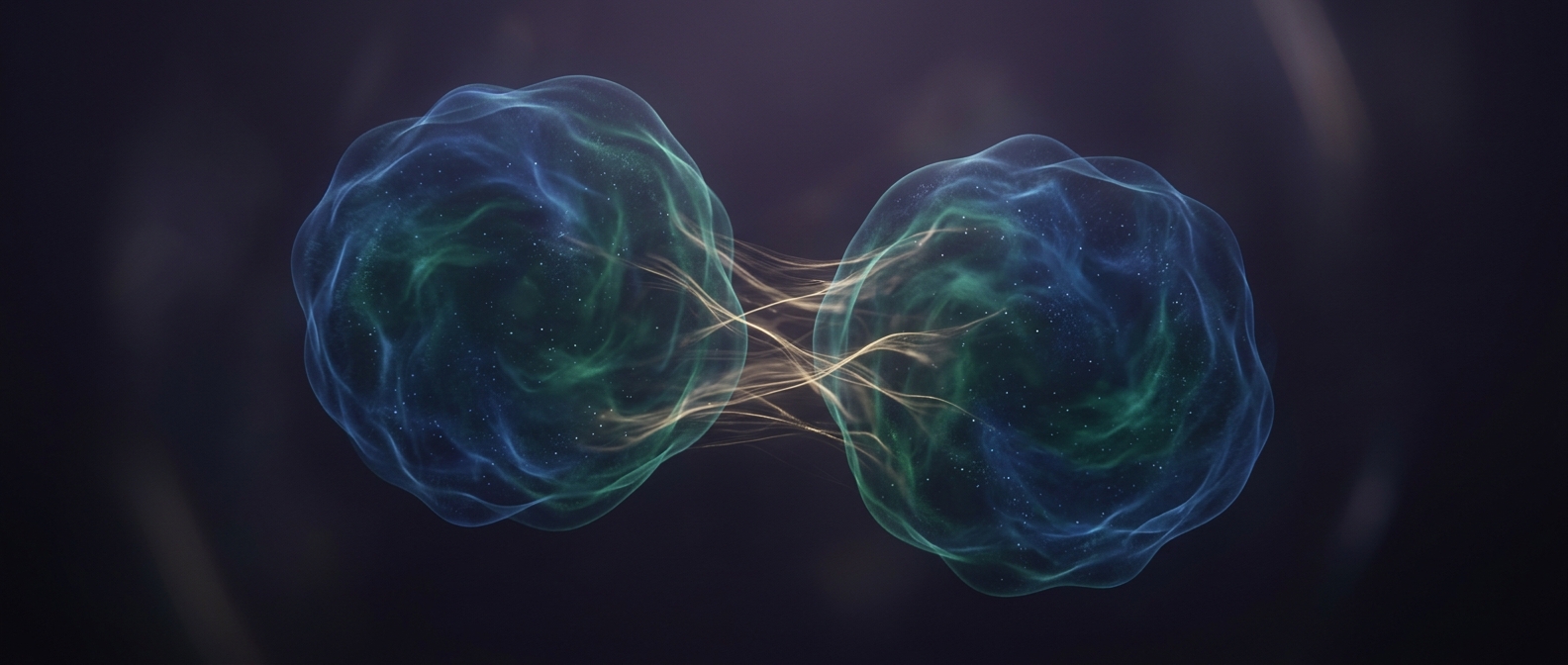
Electrons do not sit still in a molecule. At any instant, their uneven distribution can make one side slightly more negative and the other slightly more positive. This temporary separation of charge is called a temporary dipole. Its electric field can shift electrons in a neighboring molecule, creating a corresponding dipole there. The two molecules then attract because opposite charges face one another.
The effect lasts only as long as the charge patterns remain uneven, and they are constantly changing. Across many brief moments, however, these tiny attractions add up. The shifting-and-inducing process is one kind of van der Waals force, a broad name for weak attractions between atoms and molecules.
Why weak attractions matter
A single tug is far weaker than a chemical bond, which holds atoms together within a molecule. But when many atoms lie close together, their van der Waals attractions can collectively influence how molecules behave. They help explain why even electrically neutral substances can condense into liquids or solids when conditions allow molecules to crowd near one another.
The attraction also depends on how easily a molecule’s electrons can be shifted. Larger, more electron-rich molecules are generally more polarizable—that is, their electron clouds distort more readily—and can exert stronger temporary attractions. That helps account for why substances made of similar molecules may differ in boiling point: stronger intermolecular attractions take more energy to overcome before molecules escape into a gas.
So a fleeting imbalance that vanishes almost immediately can still shape a material’s behavior. The key is repetition: millions of tiny, short-lived tugs acting across molecules at once.