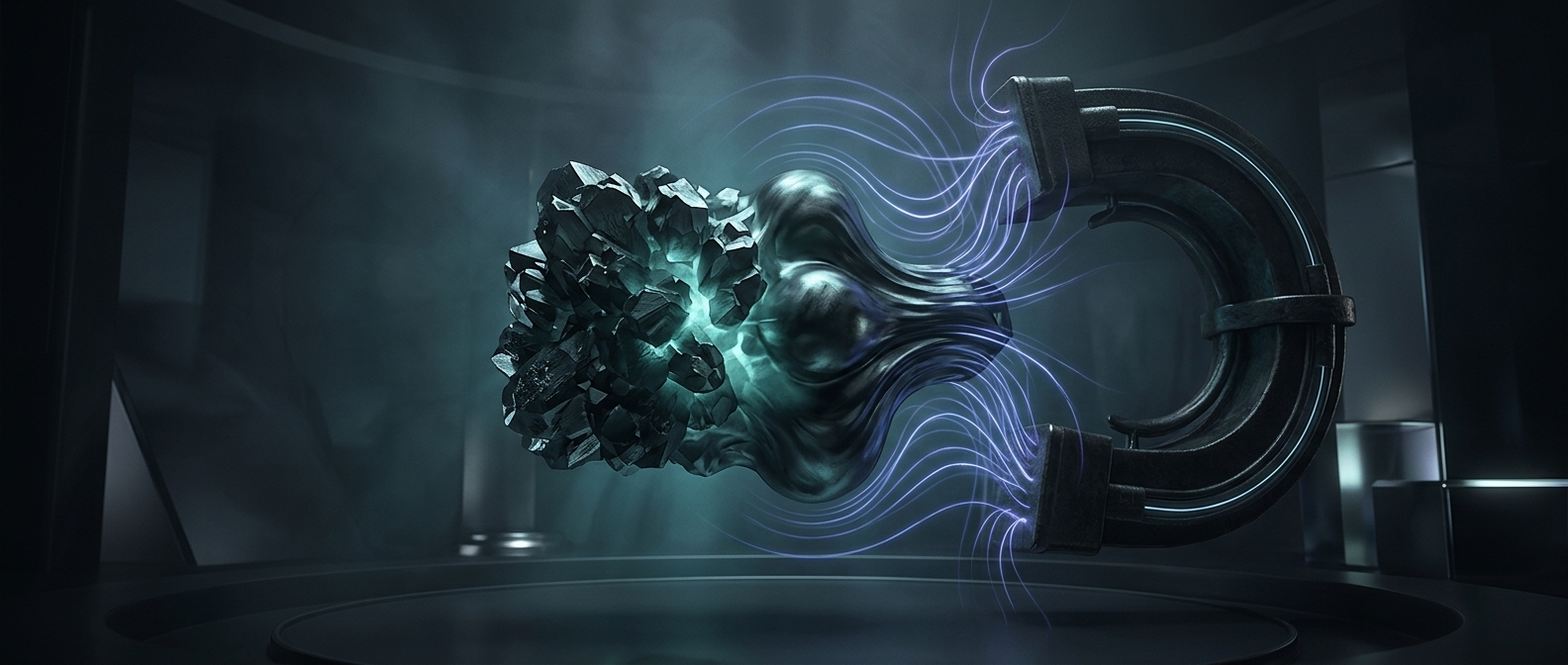
How erbium gives a dim light signal a boost
A fiber-optic signal can weaken as it travels: some light is absorbed or scattered by the glass. To carry information over longer distances, networks need a way to restore the signal. An erbium-doped fiber amplifier does this while the information is still encoded as light.
The key ingredient is erbium, a rare-earth element added in small amounts to a section of glass fiber. A separate pump laser supplies energy to the erbium ions—atoms that have lost or gained electrons. This energy leaves many ions in an excited state, ready to release it as light.
One signal prompts matching light
When the incoming signal passes through the energized fiber, its photons can trigger excited erbium ions to emit additional photons. The new light matches the signal’s wavelength and travels in step with it, so it reinforces the existing signal rather than adding a different one. This process is called stimulated emission.
The amplifier does not recreate the original message from scratch. It strengthens the passing optical pattern, including its changes that represent data. Because it works directly on light, it avoids converting the signal into electricity, amplifying it electronically, and converting it back—a process that would require more equipment at each point where the signal needs a boost.
Why this matters across long routes
Erbium is especially useful because it can amplify light in a wavelength range commonly used for fiber-optic communications. A length of doped fiber, a pump laser, and supporting components can therefore serve as an optical amplifier along a route. The message stays in the form that the fiber carries best: light, strengthened before it fades too far to be reliably detected.