How a digital appearance can become a behavioral cue
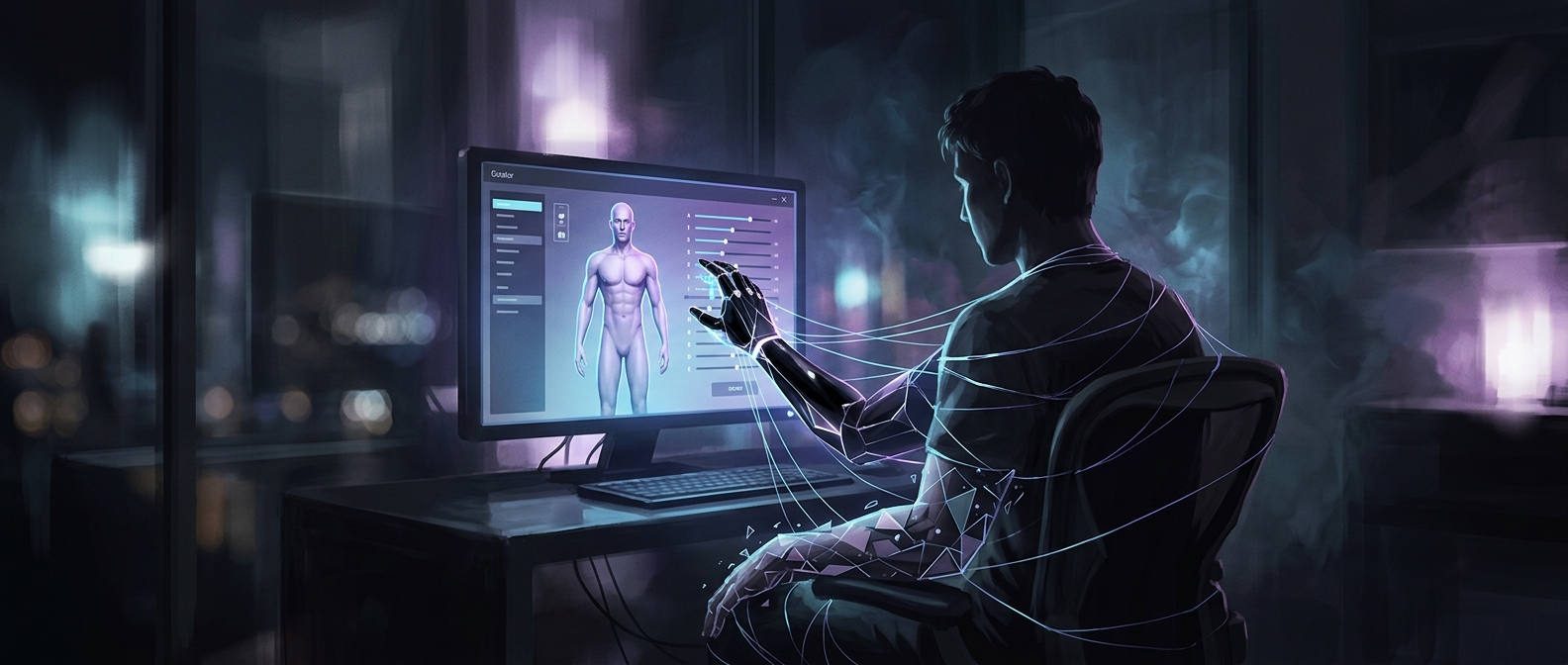
An avatar is not only an image for other people to judge. While using it, you repeatedly see and move through the world as that character. A tall, polished, or commanding figure can quietly suggest how someone in that role is expected to behave. The suggestion is especially noticeable in situations where there is no obvious “right” way to act.
Psychologists often call this kind of shift the Proteus effect: a person’s behavior can move toward traits associated with their digital appearance. The avatar does not control the person. Rather, it can make one style of behavior feel more fitting—or easier to try—than another.
From appearance to action
The process can be understood as a feedback loop. You see your character, interpret what that appearance implies, and adjust your behavior to match. If the character looks self-assured, for example, speaking up may feel more in character. Acting that way then gives you a small piece of evidence about yourself: “I can be someone who speaks up.”
This resembles a familiar offline effect. Clothing, uniforms, and roles can influence how people carry themselves because they change both how others respond and what the wearer expects of themselves. In a virtual setting, the avatar supplies a visible role even when the person is alone or interacting through a screen.
Why the effect can linger—and why it varies
A brief change in behavior is not the same as a lasting personality change. The influence is more plausible when someone identifies with the avatar, notices its appearance, and has room to choose how to act. A character that feels arbitrary, or a tightly scripted game that leaves little choice, offers fewer openings for that role to shape behavior.
After logging off, the avatar is gone, but the action may remain memorable. If a person has just practiced being assertive, generous, or bold, that experience can make the behavior easier to imagine repeating offline. The useful takeaway is not that a game can remake someone at will, but that a chosen digital role can give a person a low-stakes rehearsal for acting differently in real life.