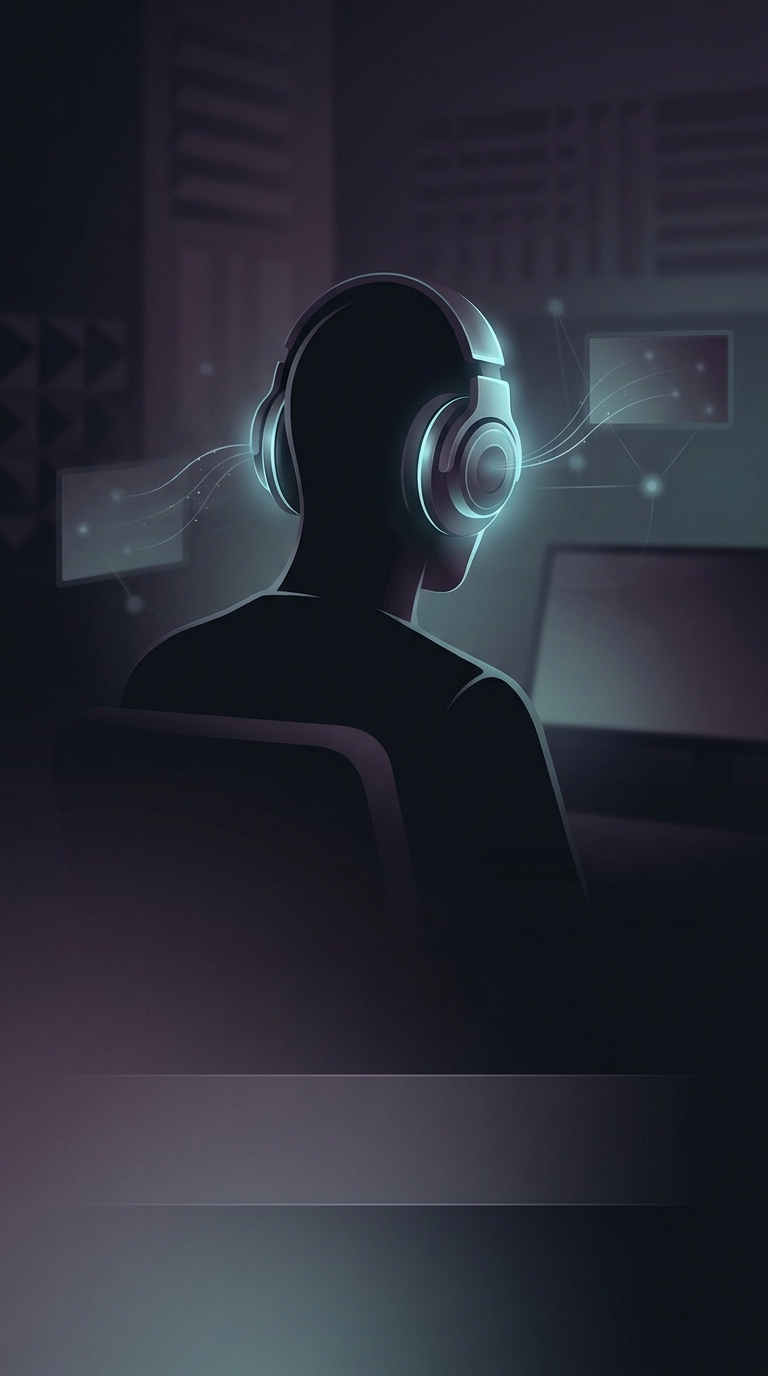
Headphones turn the recording into a live check
A quiet room does not guarantee a clean recording. A microphone can still pick up a host speaking too softly, a guest talking over someone, a cable crackling, or a voice clipping because the level is too high. Studio headphones let hosts hear the audio feed as it is being recorded, so they—or a producer—can catch problems before they become permanent.
They also help hosts judge their own voice. Hearing it through the same feed as the audience can reveal whether they are drifting away from the microphone, swallowing words, or speaking at an uneven volume. In a multi-person or remote interview, headphones make it easier to notice interruptions and respond at the right moment.
Why not use speakers?
Speakers send sound back into the room, where a nearby microphone may capture it again. That can create an echo or, in some setups, a piercing feedback loop. Headphones keep the playback close to the listener and out of the microphone’s pickup area. Closed-back studio models also limit how much their sound leaks back into the room.
The oversized look is partly practical: large ear cups can be comfortable for long sessions and make it easy to put on or remove the headphones between takes. But the essential feature is not their size. It is the direct, controlled audio feed. The headphones are less about making a quiet room quieter than about letting the people in it hear what the microphone is actually recording.