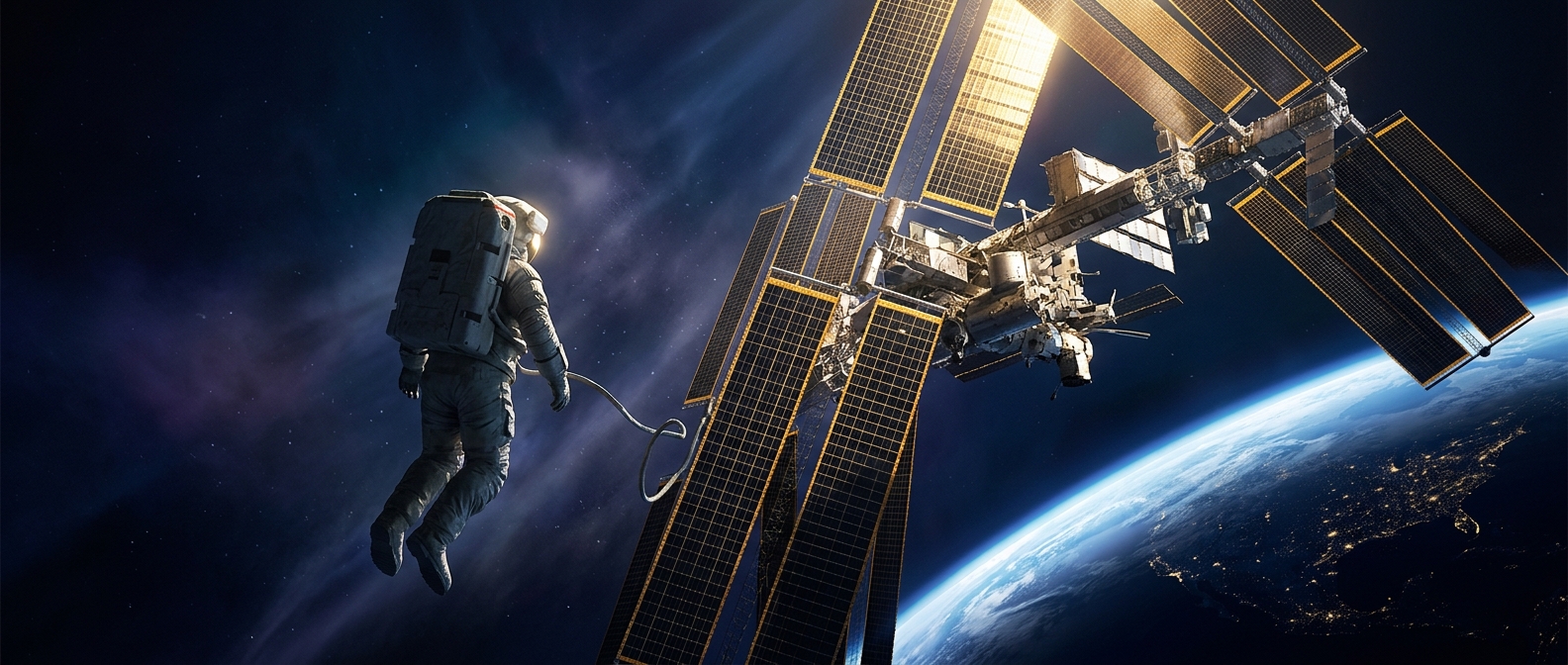
How tiny impacts wear down a space station’s solar arrays
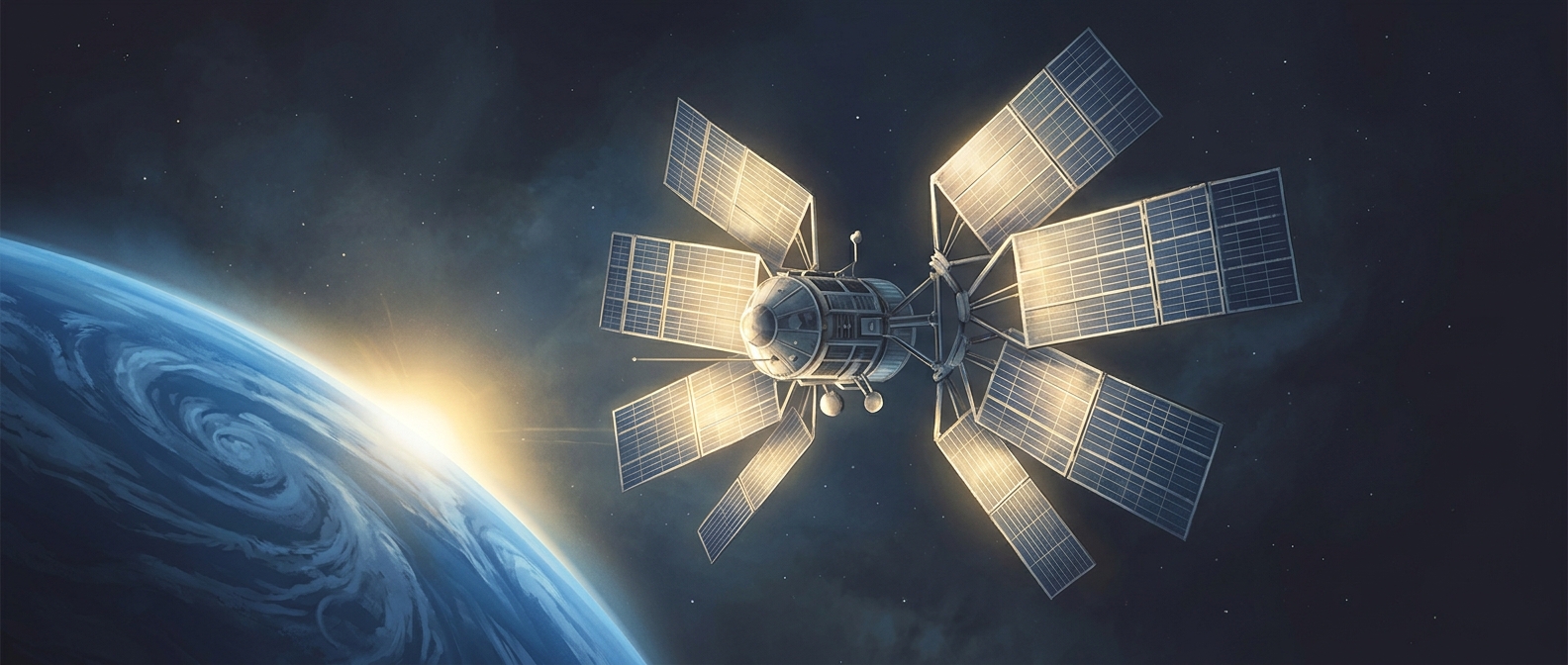
A solar array in orbit is not simply a panel left in sunlight. Its cells and wiring face a steady stream of hazards that Earth’s atmosphere normally reduces before they reach the ground. Small particles called micrometeoroids can strike at extreme speeds; even a grain-sized particle can pit or puncture exposed material. A hit may damage a cell or interrupt part of its electrical path, reducing the panel’s output.
Sunlight itself is part of the wear. Ultraviolet light and energetic particles in space gradually alter the materials that protect the cells and convert light into electricity. The damage accumulates: an array can keep working while producing less power than it did when new.
The cost shows up in available power
The station depends on its arrays to supply electricity for equipment and onboard systems. Engineers therefore account for declining output when planning how much power will be available over time. They can manage loads, but they cannot restore a damaged cell simply by turning the array toward the Sun.
That makes array lifetime an engineering constraint, not just a matter of keeping panels clean. Spacecraft must carry enough generation capacity to tolerate gradual losses, and replacing large array hardware in orbit is a substantial undertaking. Each year of exposure is another small reduction in the power budget the station can count on.