Why ordinary structures and pets add up to greater bird losses
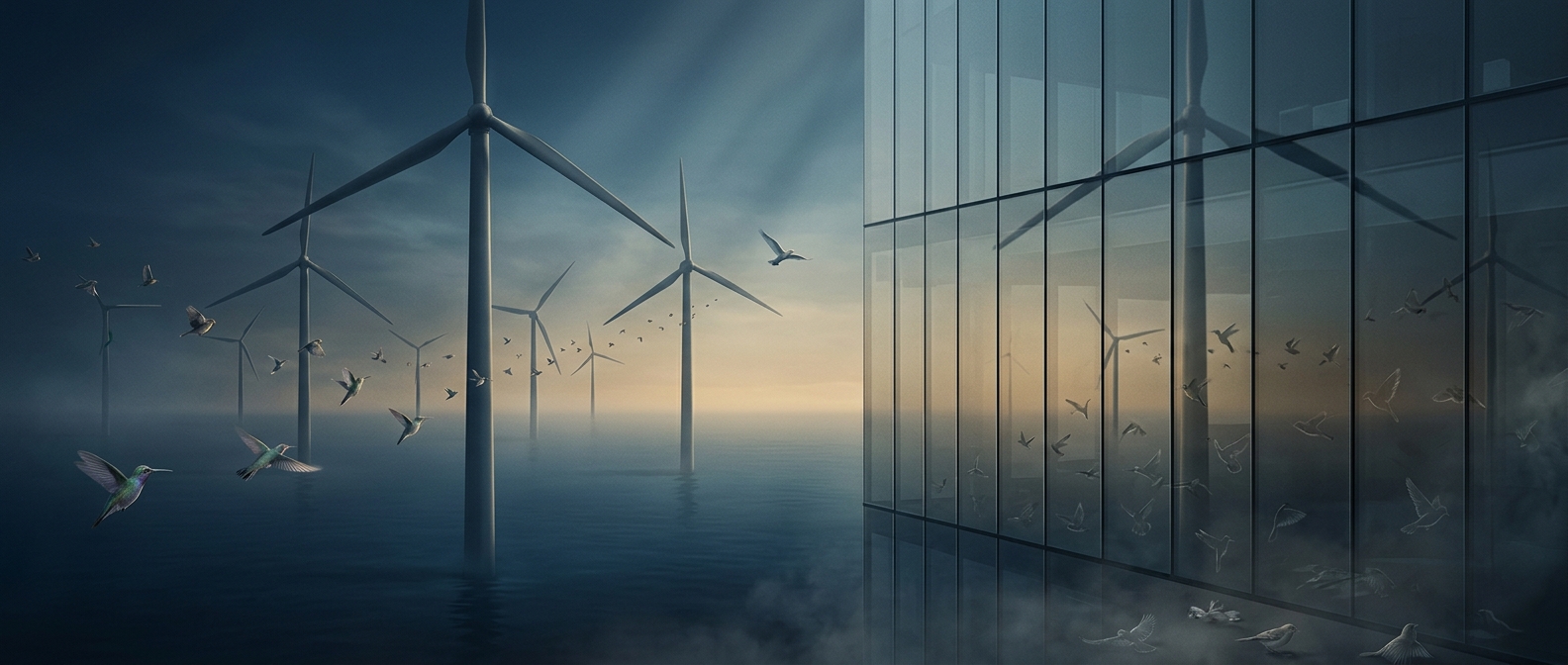
A turbine is a conspicuous hazard: its blades move through open air, and a collision can be easy to associate with the machine. But bird deaths from hazards spread across everyday landscapes can accumulate on a much larger scale. Buildings and domestic cats are widespread, so their combined toll can be far greater even though any one building or cat may seem less threatening than a turbine.
Glass can look like open sky
Birds do not always perceive windows as solid barriers. Reflective glass can mirror trees or sky, while clear panes may appear to offer a route through a building to vegetation or daylight on the other side. A bird flying toward what it sees can strike the pane before it recognizes the obstacle. The risk is not limited to skyscrapers: homes and other low-rise buildings also contain large areas of glass.
Cats pose a different problem. They hunt birds on the ground and in vegetation, where young or resting birds may be vulnerable. Unlike a fixed structure, a cat can search across several patches of habitat; domestic cats that spend time outdoors can therefore expose wildlife to predation in places people may not think of as dangerous.
Why turbines still matter
The comparison does not make turbine collisions harmless. Their effects can be important at particular sites, especially where vulnerable birds regularly fly, and the risk depends on where and how a project is built and operated. Developers can reduce exposure by avoiding sensitive locations and adjusting operations when risk is elevated.
The broader lesson is that visibility is not the same as scale. A turbine makes a dramatic symbol of human-made danger, but a window that seems like sky and a familiar pet can create hazards repeated across millions of ordinary encounters.