How desert brine becomes battery material
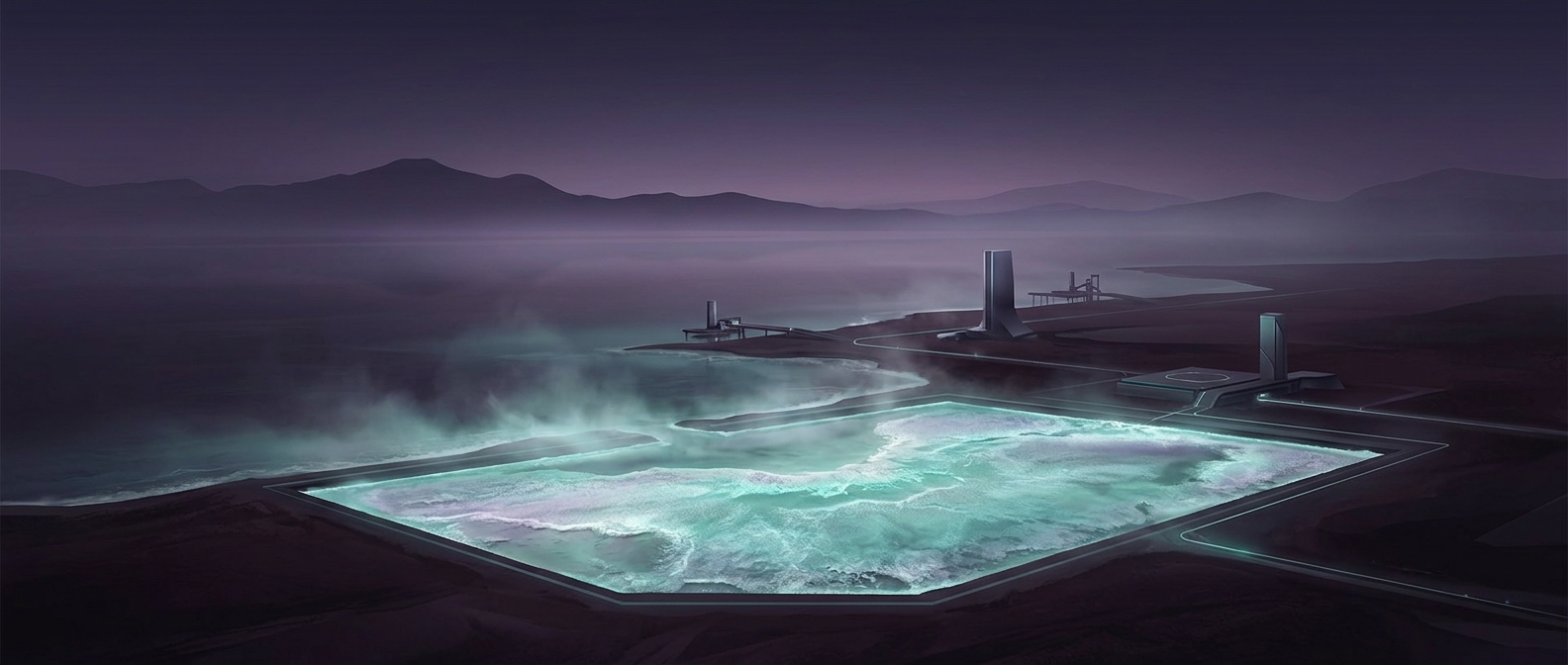
Lithium in an underground brine is already dissolved in water, alongside other salts and minerals. Pumps bring that liquid to the surface, where it can be moved through a series of shallow ponds. The ponds are not simply storage: each stage gives water more time in the sun and wind, leaving the remaining liquid more concentrated.
As the brine thickens, some other dissolved salts crystallize and settle out. Operators can remove those solids before moving the lithium-rich liquid onward. This staged separation matters because the starting brine is a mixture, not a ready-made battery ingredient.
Evaporation is only the first step
After months of concentration, the remaining brine still needs processing. Chemical treatments separate lithium from remaining impurities and turn it into a usable compound, commonly lithium carbonate. That refined material can then be further processed into ingredients for battery production.
The pond method relies on a slow, free energy source—sunlight—but it also ties production to arid landscapes and long evaporation times. Its footprint is visible across the desert: broad ponds mark the stages between pumping a mineral-bearing liquid from underground and producing a concentrated material that can enter the battery supply chain.