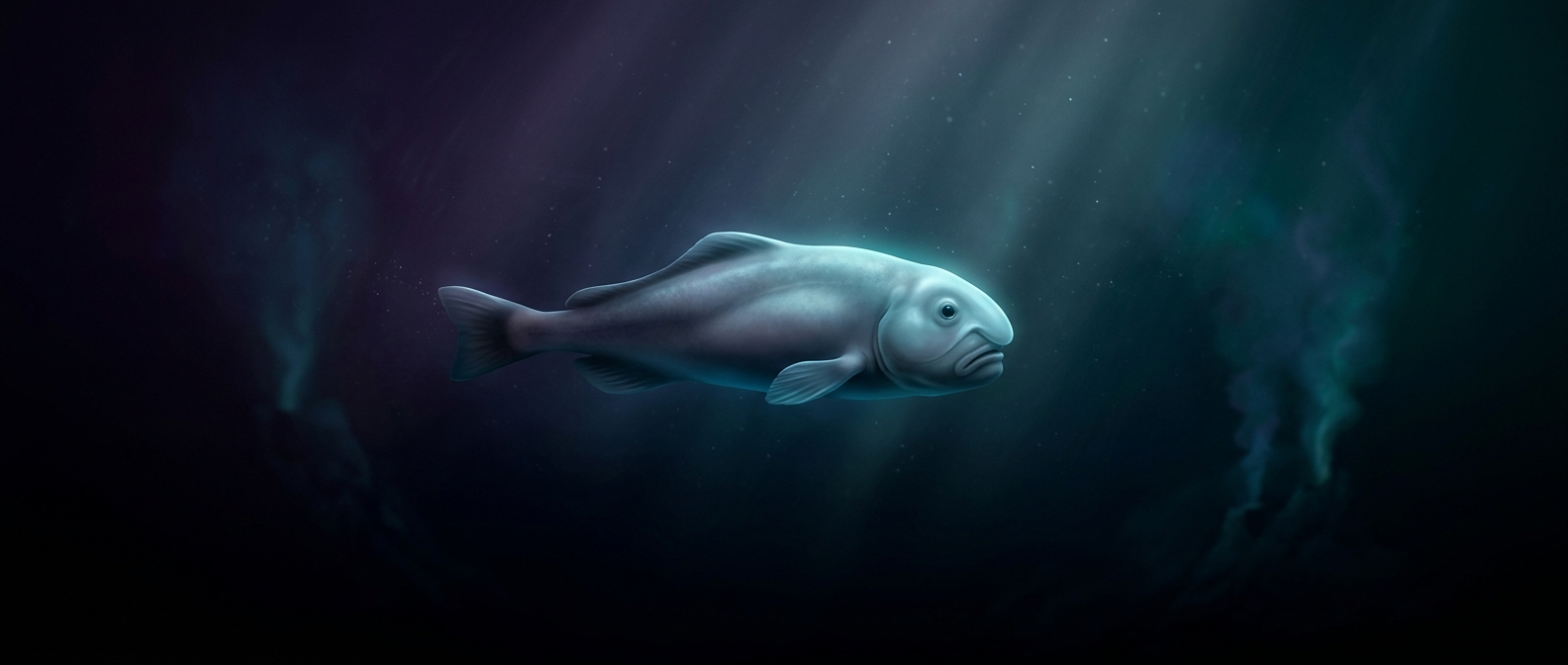
Why a blobfish changes shape out of the water
A blobfish’s familiar drooping face is largely an effect of being brought to the surface. In its deep-sea habitat, the fish’s soft, jellylike body is supported by the surrounding water. Out of that setting, it can no longer hold its usual form, and the change in pressure during ascent adds stress to its tissues. The limp, sagging look is especially pronounced in fish photographed after being caught and removed from the water.
A different way to stay afloat
Many fish regulate their depth with a swim bladder—a gas-filled sac they adjust to rise or sink. Gas changes volume as pressure changes, making that strategy difficult at great depths. Blobfish instead have flesh that is close in density to the water around them, along with a relatively weak skeleton and little muscle. That combination helps them remain buoyant without relying on a gas-filled float.
Their body is not a rigid shape that deep-sea pressure neatly presses into place. Rather, their build works in an environment where the water supports them and where a conventional swim bladder would be a poor solution. The same soft structure that helps at depth offers little resistance to gravity and handling in air.
The photograph is not the whole fish
A blobfish lifted from deep water undergoes a rapid change in conditions, and its body may be damaged as well as distorted during capture. The famous face is therefore a poor guide to how the animal looks while living in its natural surroundings. Its droopy appearance tells a story about the journey to the surface—not simply about what a blobfish looks like at home.