When a comic character meets his real-life model
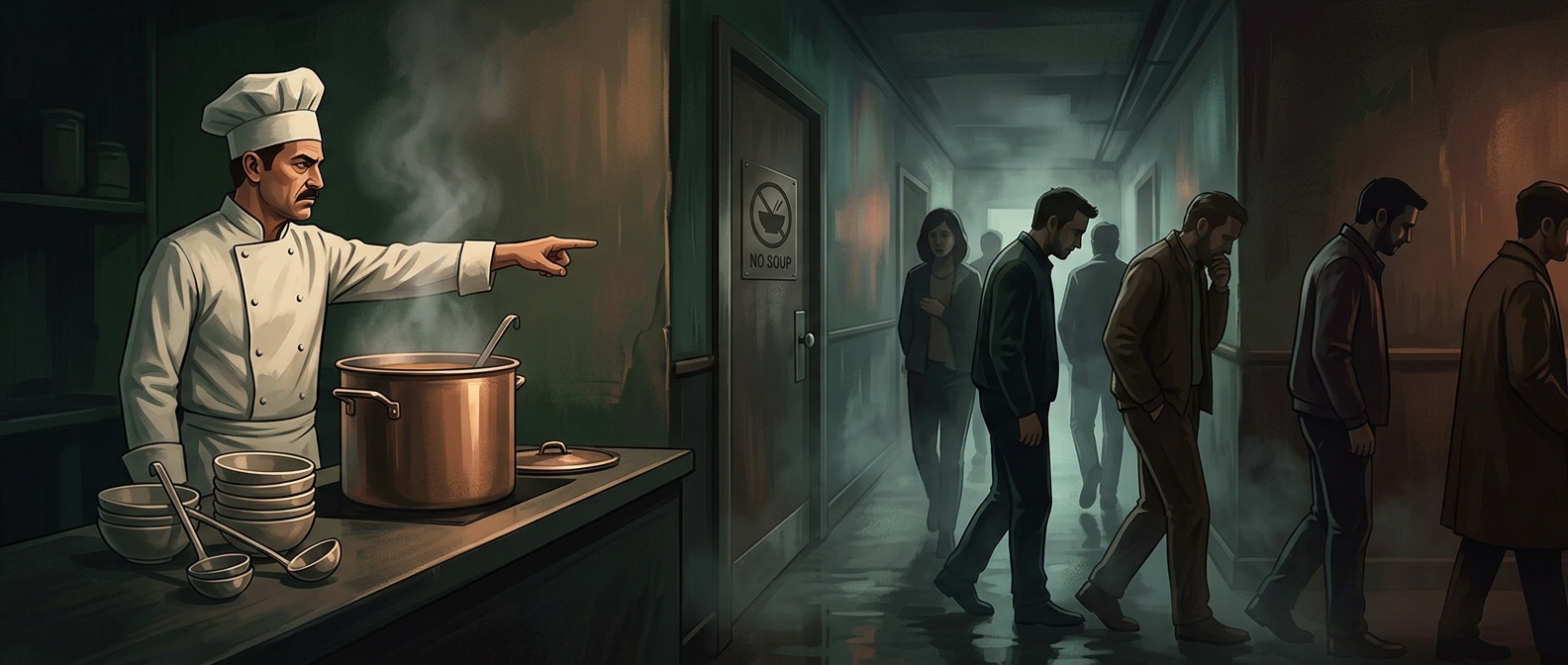
The “Soup Nazi” episode turned a demanding soup-shop owner into a comic rule-maker: customers had to follow his ordering routine or lose their place in line. That premise gave the writers a simple engine for conflict—each small mistake could bring the same abrupt punishment. Ali Yeganeh, the New York vendor who inspired the character, did not treat the resemblance as harmless. After the episode portrayed a version of him, he banned Jerry Seinfeld and the show’s writing staff from his restaurant.
Satire can travel farther than its target
The joke depended on making Yeganeh’s strictness larger than life. On television, that made the shop’s rules easy to understand and the owner an instantly recognizable comic antagonist. In real life, the caricature attached a catchphrase and a reputation to an actual business owner. The episode’s popularity carried the fictional version beyond the screen, while Yeganeh had to contend with customers who could arrive already seeing him through the joke.
That is the awkward power of a recognizable character: the audience may remember the comedy, but the person who inspired it cannot simply step out of the role. For Seinfeld’s writers, the consequence was literal—the shop’s rules ended with them being turned away.