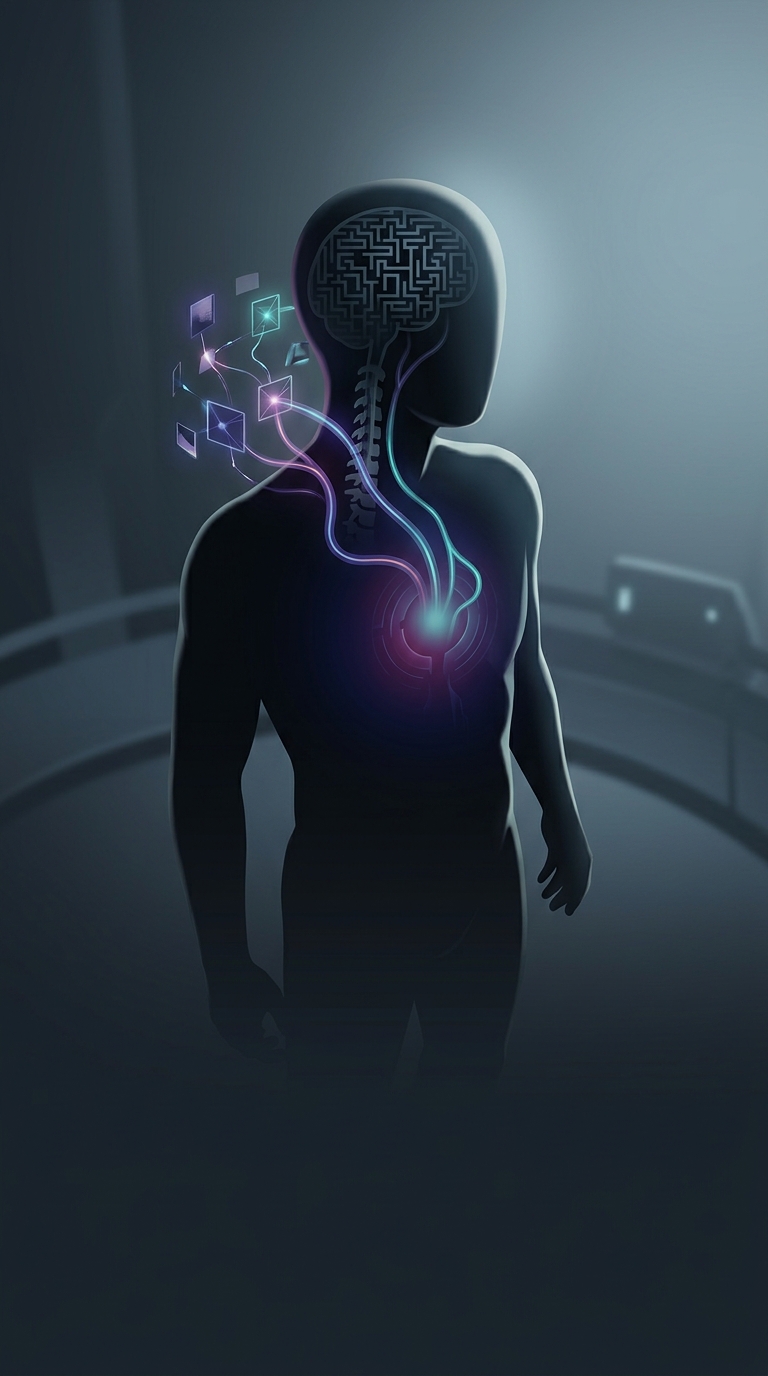
How the brain builds a map
The brain’s navigation system is not a single internal compass. It is a network of neurons that combines information about where you are with information about how you got there. Place cells, found mainly in the hippocampus, become active in particular places in a familiar environment. Their activity helps the brain represent locations as distinct parts of an experience, rather than as a continuous stream of movement.
Grid cells, in a nearby region called the entorhinal cortex, provide a different kind of signal. As an animal moves through an environment, different grid cells activate at points arranged in repeating, roughly hexagonal patterns. Together, those patterns can help estimate position and distance across a space—like overlapping measuring nets rather than a satellite pinpointing a coordinate.
Movement updates the estimate
To keep track between recognizable places, the brain uses path integration: it estimates a new position by accumulating information about movement. Signals related to direction, speed, and bodily motion help update that estimate. If you walk down a corridor with your eyes closed, for instance, the brain can make a rough calculation of how far and in which direction you have gone.
That calculation is useful but imperfect. Small errors in estimating each step can build up, so the imagined position gradually slips away from the real one. A doorway, a distinctive turn, or another familiar landmark can correct the estimate by giving the brain a recognizable reference point. Without such cues, navigation becomes less reliable.
A map that can be mentally explored
Spatial memory can also support planning. Remembering the layout of a place lets you consider possible routes without physically walking each one: you can recall where a turn leads or compare a familiar path with another option. This is not a precise, satellite-style preview. It is a reconstruction assembled from remembered locations and movement, and its accuracy depends on how well those pieces fit together.
That is why a route can feel clear in your head yet prove confusing on the ground. The brain’s map is an active estimate, continually checked against landmarks and fresh movement—not a fixed image stored with perfect coordinates.