How a Goldfish Turns a Cue Into a Useful Memory
A fish does not need to remember a scene in human-like detail to learn from it. It can connect a particular signal with a consequence: a color or shape appears, food follows, and that cue becomes worth noticing. When the cue returns, the fish can respond differently because of what happened before.
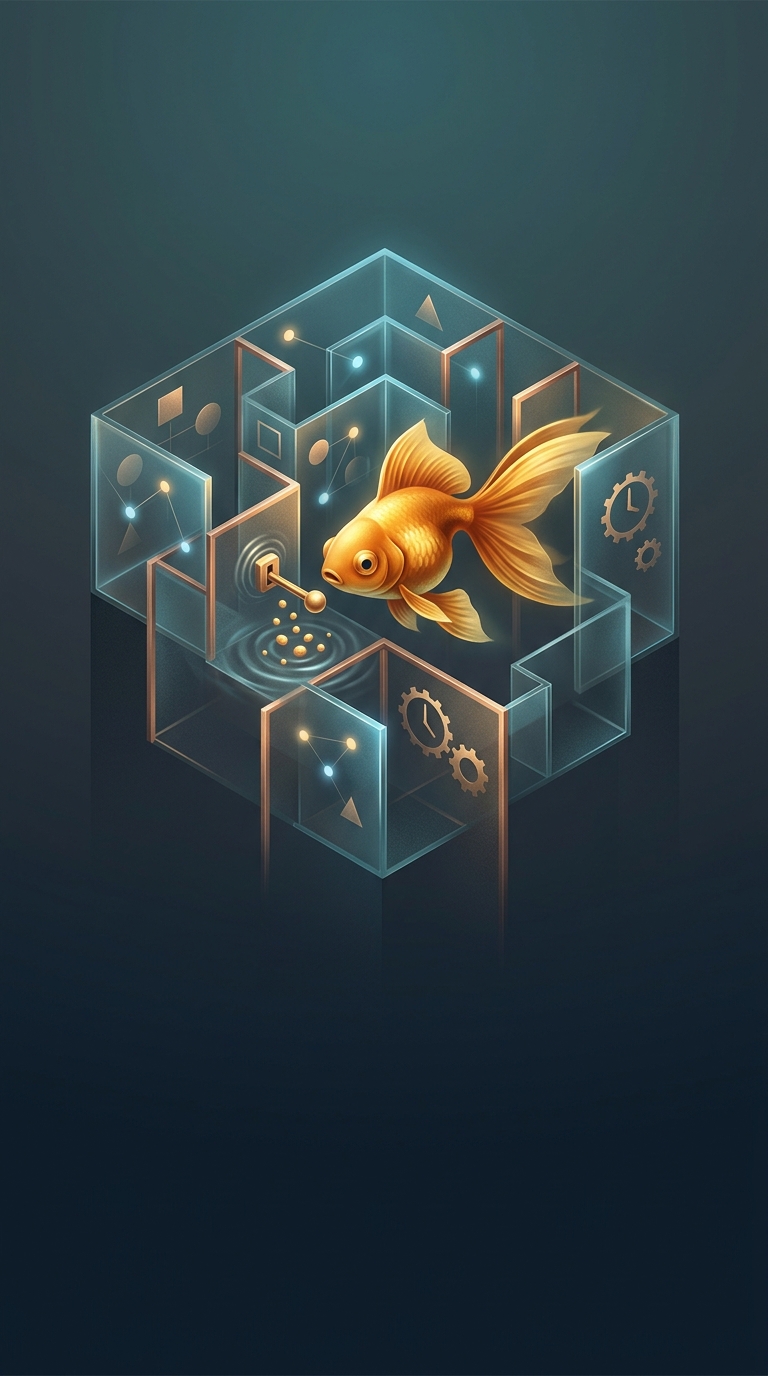
This is a form of associative learning—linking one event to another. In a lever task, the fish learns that pressing a particular lever brings food. The reward reinforces the action, making it more likely to be repeated. Remembering the task means retaining more than a general expectation that food may appear; the fish must distinguish the useful lever from other possible actions.
Remembering Where, Not Just What
Navigation adds another kind of information. A fish moving through a maze can use landmarks—recognizable features around it—to guide its route. Those cues help answer a different question from the lever task: not simply “What action earns food?” but “Where should I go?”
Keeping these abilities separate helps explain why the three-second-memory joke is misleading. Learning a feeding schedule, recognizing a visual cue, and finding a route are different challenges, but each depends on information lasting long enough to shape later behavior. Experiments have found that goldfish can retain specific learned information for months, with some memories lasting as long as five months.
That does not mean every goldfish remembers every experience for that long. It means a fish can carry a useful lesson forward well beyond a few seconds. In practical terms, a route through a maze or a food-winning action can remain part of what the fish knows long after the original reward is gone.