Why the Underground runs in the open
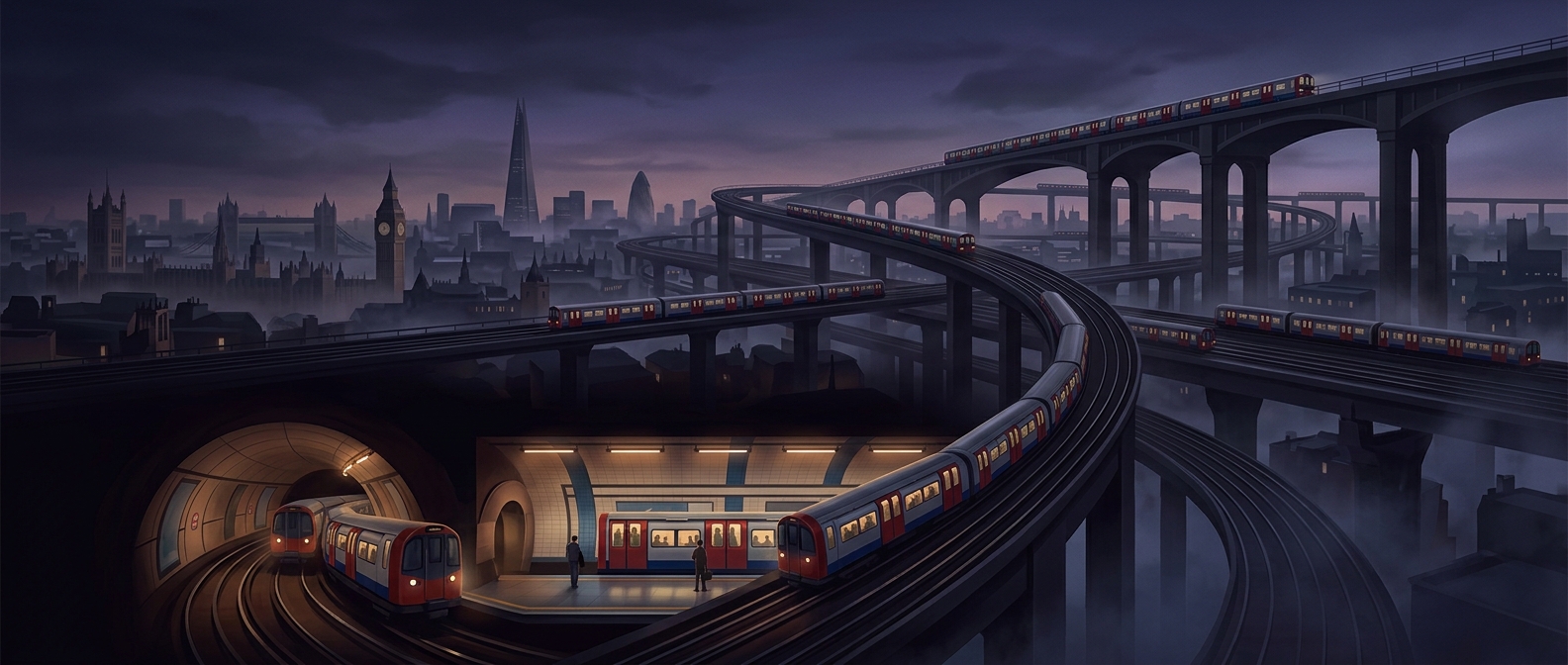
“Above ground” does not necessarily mean trains are raised on viaducts. Much of the network runs at the level of the land, or in open cuttings—trenches dug into the ground—or on embankments built up to carry the track. These arrangements let trains cross suburbs without enclosing the railway in a tunnel.
The basic tradeoff is construction cost and space. A tunnel requires excavation and structural support, and it must pass beneath streets and buildings without disrupting what is above. Where there is room to reserve a surface corridor, tracks can be laid in the open instead. That makes surface routes especially practical farther from central London, where the built environment is less tightly packed.
Two kinds of railway beneath one name
The Underground is not a single engineering design. Some routes use shallow tunnels, while others use deep, narrow tunnels; surface sections form another part of the mix. The method chosen shapes not only construction but also what passengers experience: open stretches bring daylight and views, while underground sections carry trains beneath dense parts of the city.
The result is a network whose name describes its role more than its physical setting. On a journey toward the suburbs, a train can emerge from a tunnel and continue through open air—not because it has left the Underground, but because keeping the route above ground is often the more practical way to extend rail service.