The Fish House Made Underwater Life Visible
When the London Zoo opened its Fish House in 1853, visitors could look through glass at living aquatic animals—a form of public display that had seemed impractical to sustain. The breakthrough was not simply a clearer tank. It was learning to treat the water as a living environment that needed continual care.
A Tank Had to Stay in Balance
Fish consume oxygen and release waste. In a small volume of water, those changes can quickly make conditions dangerous. Water also needs to remain suitable for the animals’ temperature and habitat. A glass box could show fish, but without managing these conditions it could not reliably keep them alive.
Aquarium keepers therefore had to maintain the water, not just fill the tank. Plants could help by releasing oxygen in light, while cleaning and water replacement helped limit accumulating waste. These measures were parts of a delicate balance, not a self-running system: too little care could undo the display.
From Private Experiment to Public Attraction
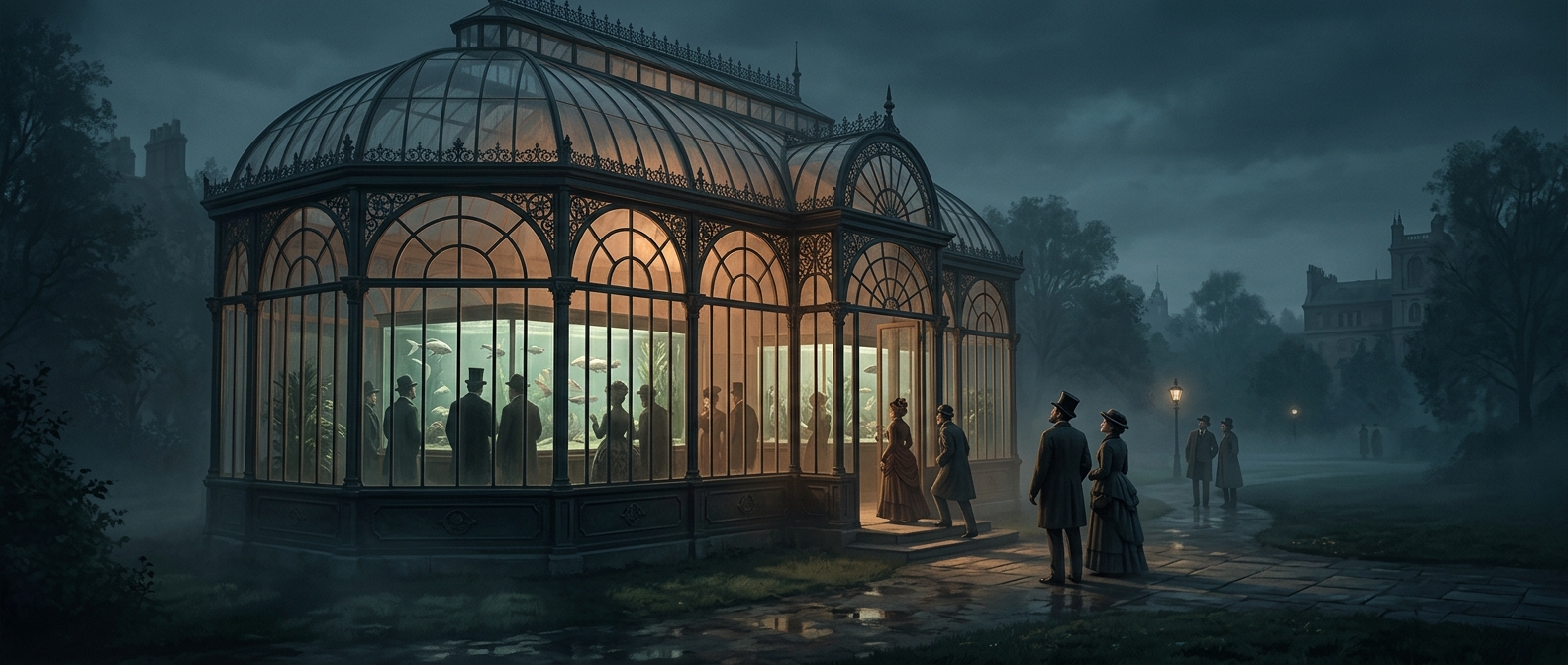
The Fish House turned that practical challenge into a shared spectacle. Instead of encountering aquatic creatures only in the wild, in markets, or in natural-history collections, visitors could watch them moving underwater. The display also made a new kind of question visible: what conditions did an animal need in order to live outside its natural surroundings?
That combination of engineering and exhibition helped make the aquarium a public attraction. Its glass walls offered a view into another environment, but the view depended on unseen work—keeping the water fit for life.