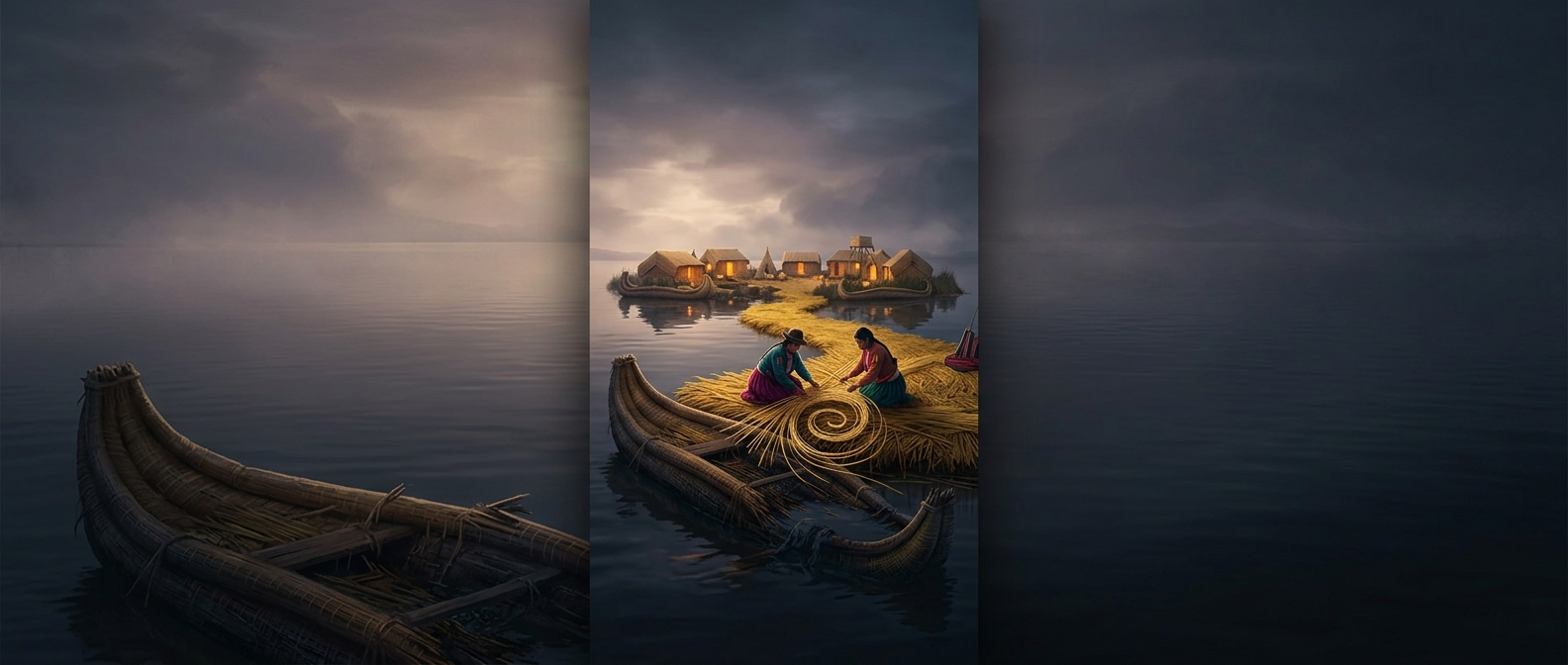
A platform made of plants
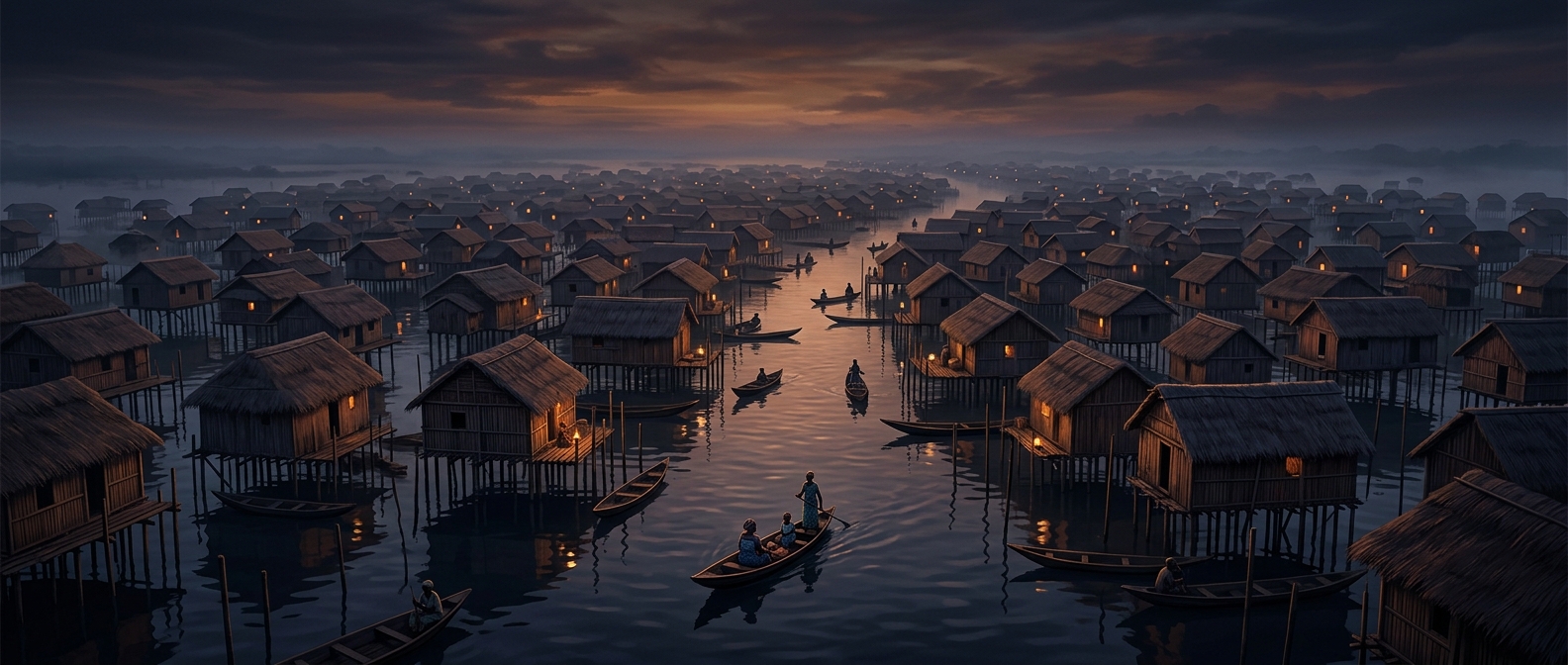
On Lake Titicaca, the Uros’ islands are not solid ground: they are thick platforms built from totora, a tall reed that grows in the lake’s shallows. The reeds are laid over buoyant blocks of intertwined roots and plant matter, creating a surface sturdy enough for homes and daily life. The platform stays afloat because that underlying mass traps air and remains buoyant.
Why the surface keeps changing
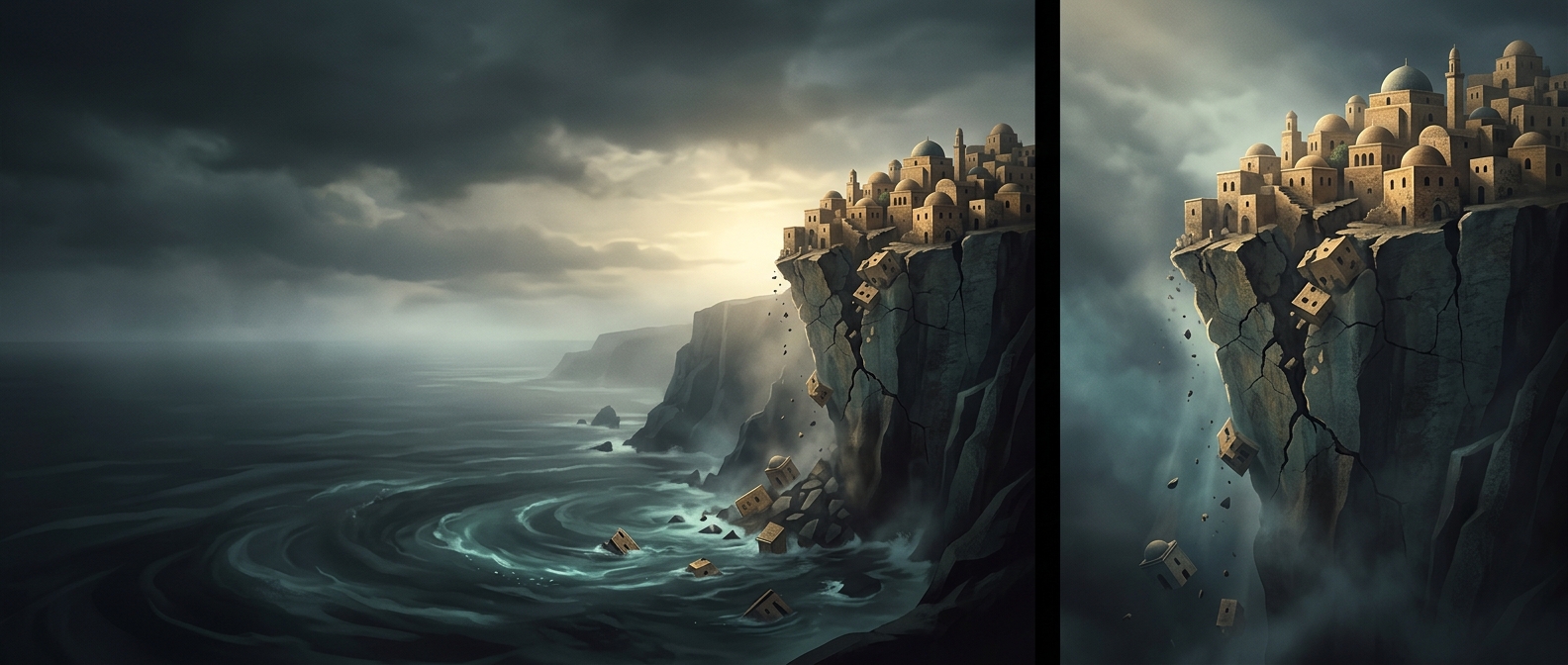
Water slowly breaks down the plant material at the platform’s underside. As the lower layers soften and decay, the island loses material from the very part that supports it. Freshly cut reeds laid across the top replace some of what is being lost and keep the walking surface usable. The new layer also compresses underfoot, so the island needs repeated attention rather than a single repair.
This is maintenance on a much larger scale than patching a floor: residents replenish the shared platform itself. Paths, house sites, and other parts of island life all depend on that base remaining thick and stable. The work is part of how the Uros make a lake environment habitable, using a plant that grows locally but never lasts indefinitely.
A home that requires tending
A floating island is therefore less like a finished construction and more like a platform continually renewed. Its distinctive mobility and materials come with a tradeoff: the same reeds that make it possible must be replaced as water wears them away. The island stays a place to live only because people keep adding ground beneath their feet.