A refuge that required a new way to live
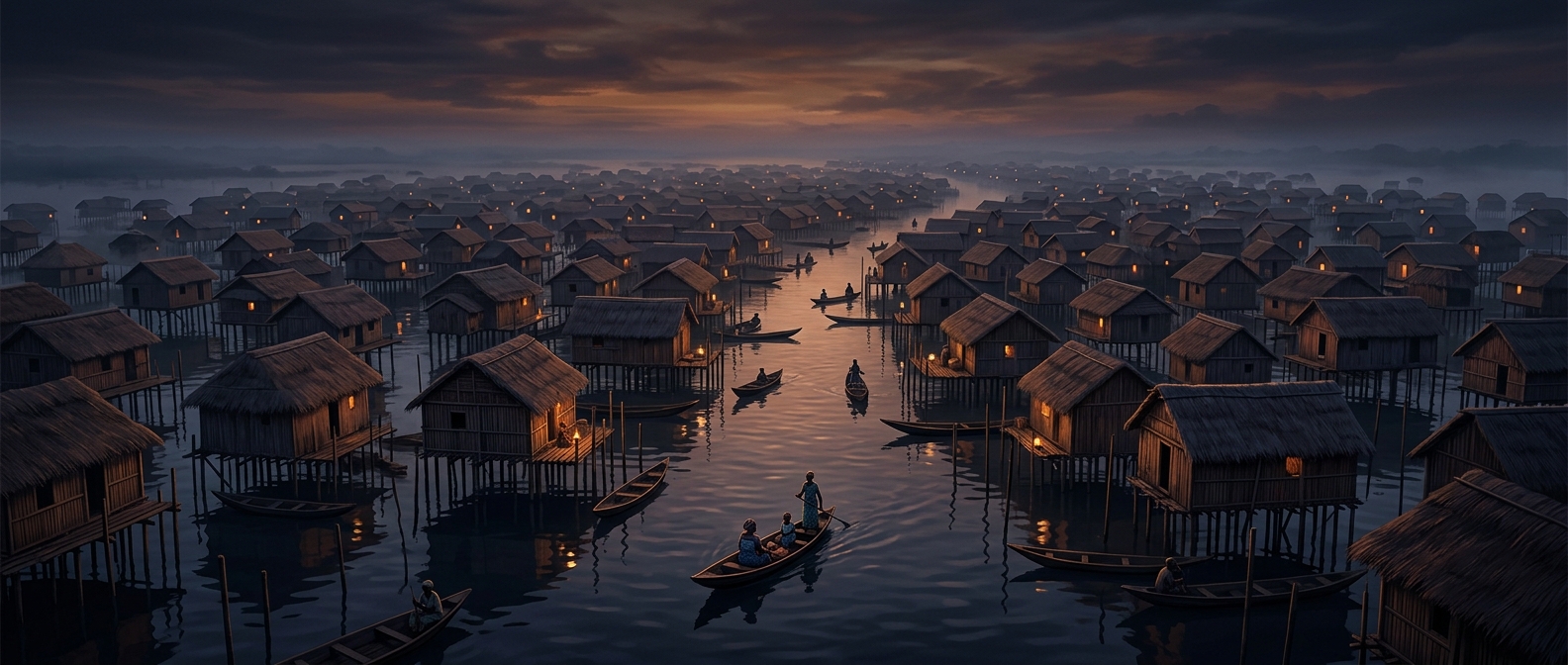
On Lake Nokoué in Benin, the Tofinu’s choice of water as refuge reshaped more than the village’s location. Building homes above the lagoon meant raising everyday life onto stilts: entrances, household tasks, and movement between neighbors all had to work over water rather than along streets. Canoes became the practical link between homes and the wider world.
The lagoon’s geography helped make that choice meaningful. The Fon, according to the account behind the village’s founding, avoided fighting on water for religious reasons. For the Tofinu, a landscape that might otherwise have seemed difficult to inhabit offered protection from capture. The settlement’s design grew out of that pressure, not simply from a preference for unusual architecture.
The village’s streets are routes by canoe
That history still shapes how supplies move. A shop on land is less useful when reaching it means crossing water, so some sellers bring groceries directly by boat. These floating stores turn the canoe from basic transport into a traveling marketplace, carrying goods to people where they live.
The result is a community organized around waterways rather than roads. A canoe can be a daily connection between neighbors, a way to reach services, and a means of bringing provisions home. The stilt village is striking to visitors, but its form also reflects a practical legacy: the same water that once offered refuge continues to structure ordinary life.