How Rain Turns a Track Into a Drainage Channel
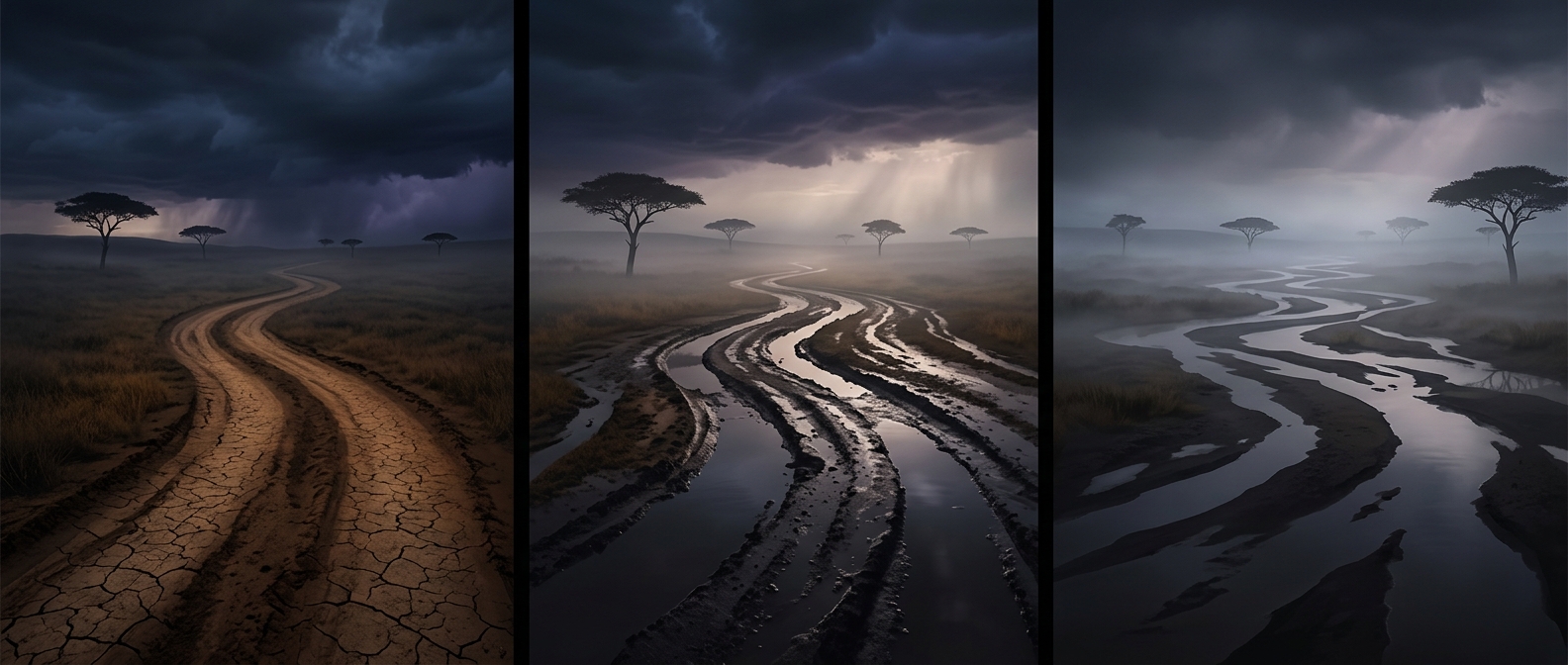
A dirt trail can look firm in dry weather because its surface is packed hard by tires. But that compacted surface absorbs less water than loose ground nearby. When a downpour arrives, rain runs across it rather than soaking in, and the wheel ruts give the runoff a ready-made channel.
As water rushes downhill, it carries away fine soil. The ruts deepen, collect more flow, and can join into a steep-sided cut. A track that was merely uneven before the storm may become a trench too deep or slippery for a vehicle to cross.
Why the Route May Not Be Where You Expect
The damage depends on the shape of the land, the soil, and where water can escape. A shallow dip can concentrate runoff from a broad area; a bend or low crossing may funnel it into one vulnerable stretch. Vegetation can slow water and hold soil in place, but a cleared, heavily used route has less protection.
That is why a familiar savanna route is not necessarily reliable after heavy rain. Drivers may need to stop well short of a washed-out section: the edges of a new cut can crumble, and water may conceal its depth. The trail has not simply become muddy—it may have changed shape, leaving yesterday’s tire line as the channel that helped make it impassable.