Why capuchins rub strong-smelling substances into their fur
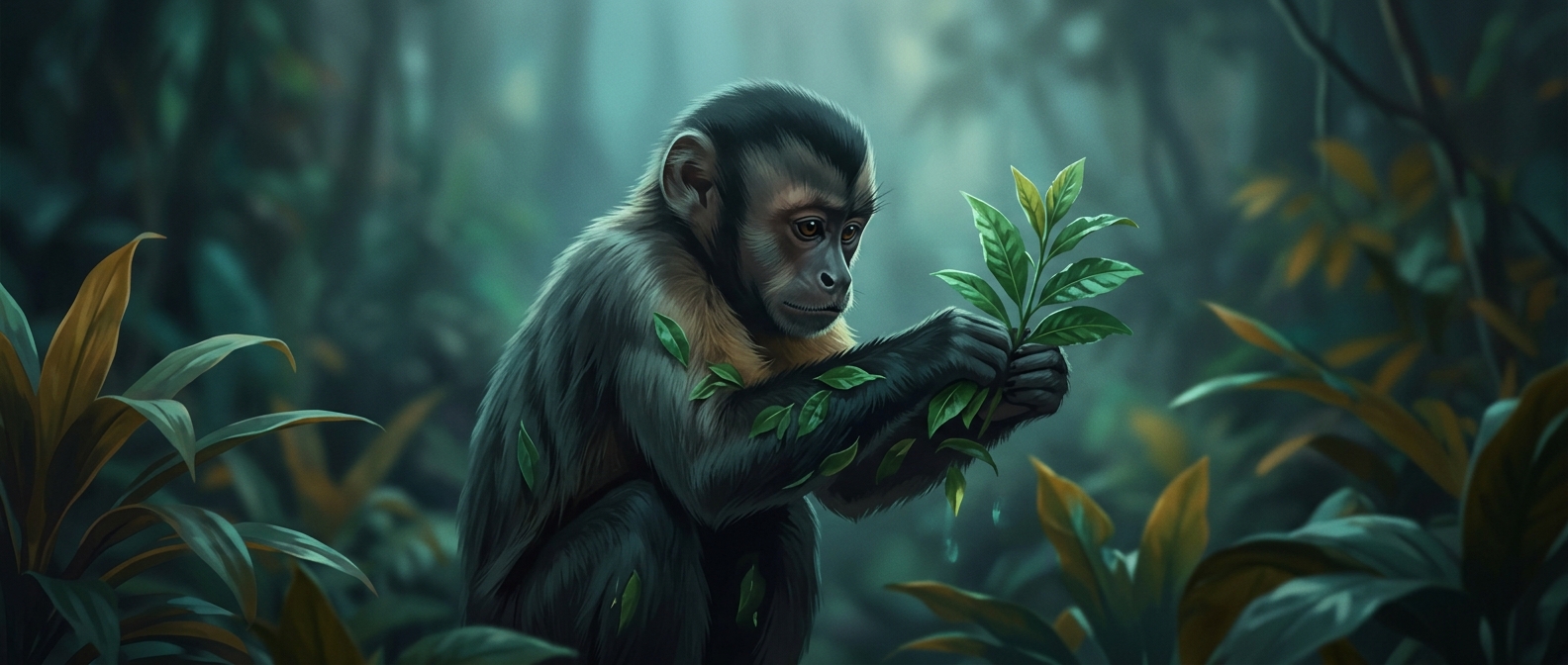
A capuchin’s grooming routine can involve more than picking through its coat. The monkey crushes a pungent substance, such as citrus or an onion, or handles a millipede that releases defensive chemicals, then smears the material over its body. This behavior is called anointing: applying a substance to the skin or fur.
The mixture may work as a topical deterrent. Biting insects and other parasites encounter the treated coat before they reach the skin, where they might feed or irritate the monkey. Strong odors and irritating chemicals could make the animal a less appealing target. Millipede secretions are especially potent because the animals use them to discourage predators; what protects the millipede may also bother insects that land on a capuchin.
A plausible defense, not a proven shield
The protective explanation makes sense, but the behavior does not establish exactly which ingredients repel which parasites, or how much protection a capuchin gains. A powerful smell alone is not proof that a biting insect will stay away, and a substance that irritates a parasite could also irritate the monkey. The likely effect depends on the material, how it is applied, and what pests are present.
That uncertainty is part of what makes the behavior intriguing: the monkey is using its environment as a kind of improvised skin treatment, without the precise dose or dependable coverage of a manufactured repellent. Even if the coating only discourages some pests for a while, it could make a difference during the moments when an exposed patch of skin would otherwise be easy to reach.