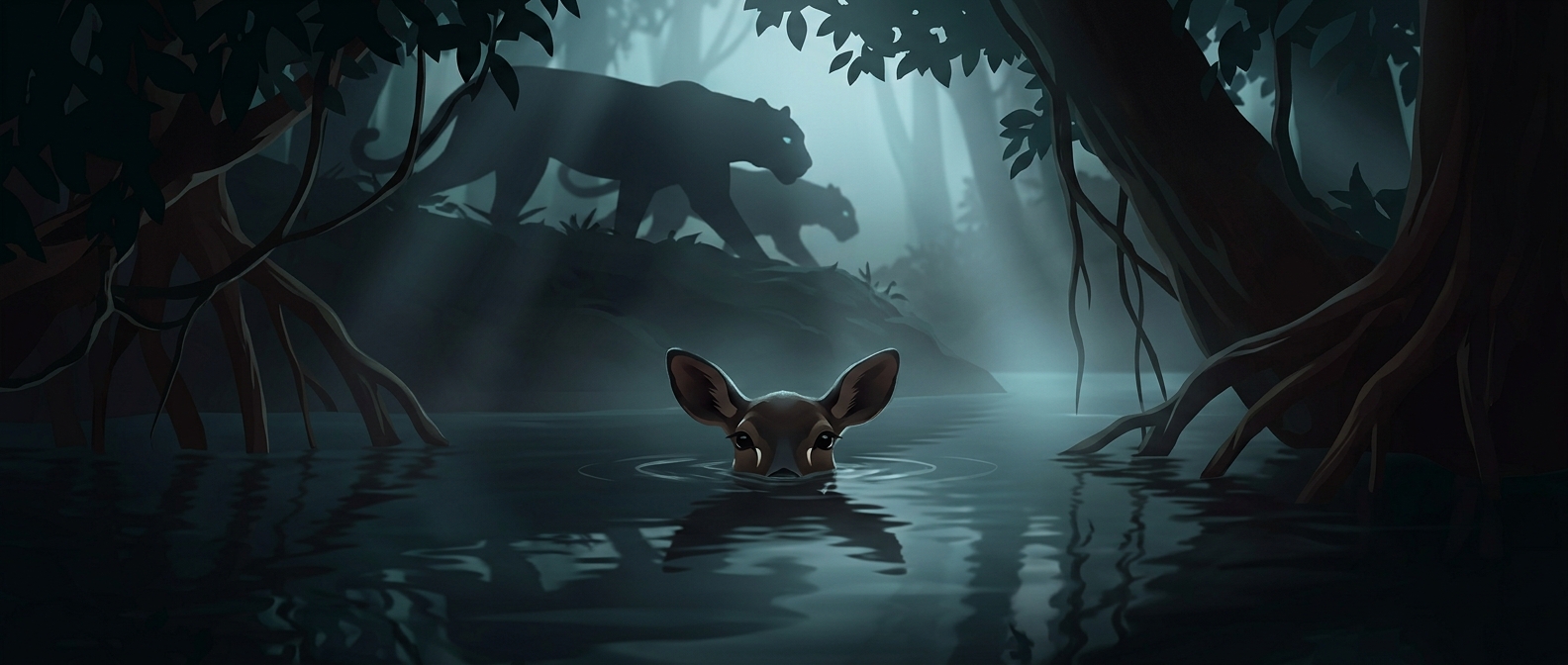
How a water chevrotain takes the underwater route
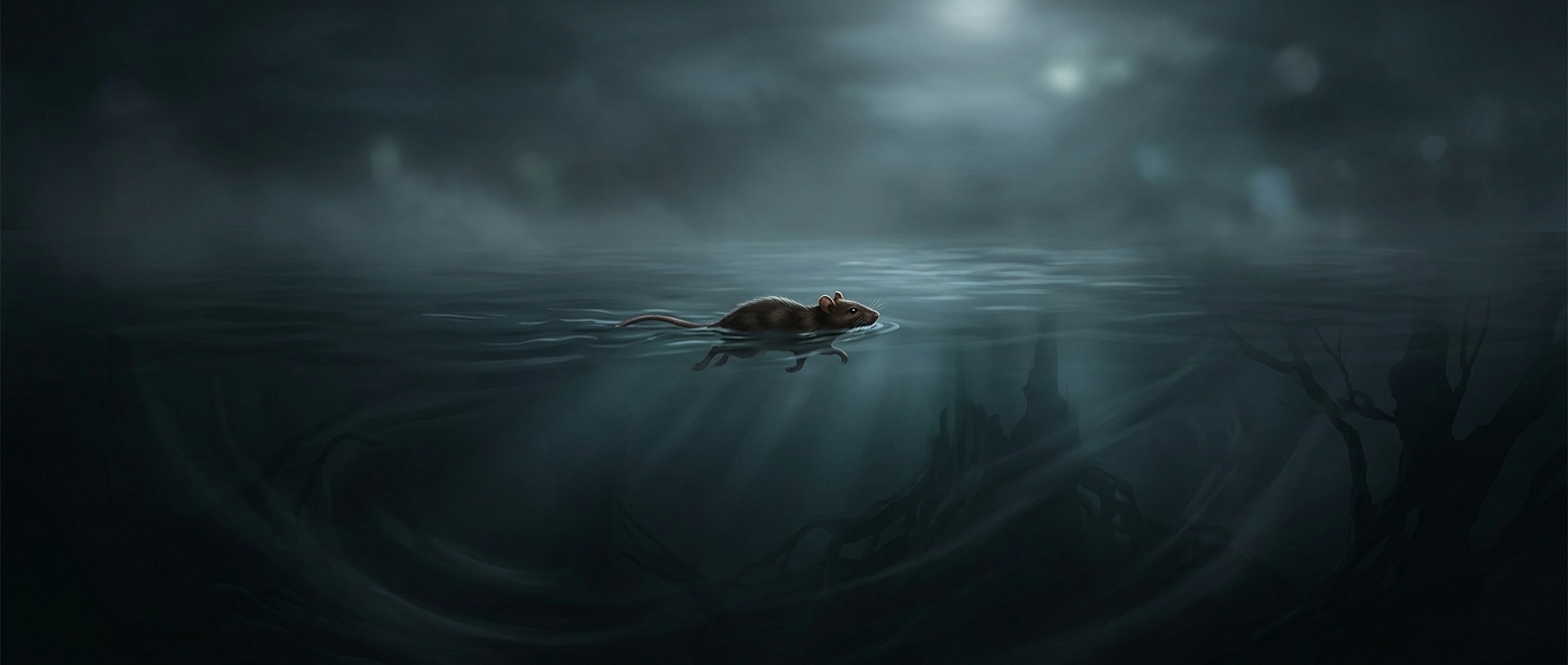
A water chevrotain can escape a threat not by outrunning it on land, but by slipping into water and moving beneath the surface. Once submerged, it can use its legs to travel along the riverbed, where the water and surrounding vegetation can make it harder for a predator to follow or see it.
That is different from simply paddling across a river. Walking underwater means staying low enough to keep contact with the bottom while moving forward. The animal must also manage its buoyancy—the upward force that makes a body float—by pushing down and maintaining its position against the water’s lift. The riverbed becomes a temporary escape path.
A deer-like animal with a misleading name
Despite its name and deer-like appearance, the water chevrotain is not a true deer. It belongs to a separate group of small hoofed mammals called chevrotains. Males have elongated canine teeth that project like little fangs; they are teeth, not horns or antlers.
The combination makes the animal seem almost fanciful: a tiny, fanged “deer” disappearing beneath a stream. But the striking part is practical. When danger closes in, the water itself can become cover—and the bottom of the river, a route to safety.