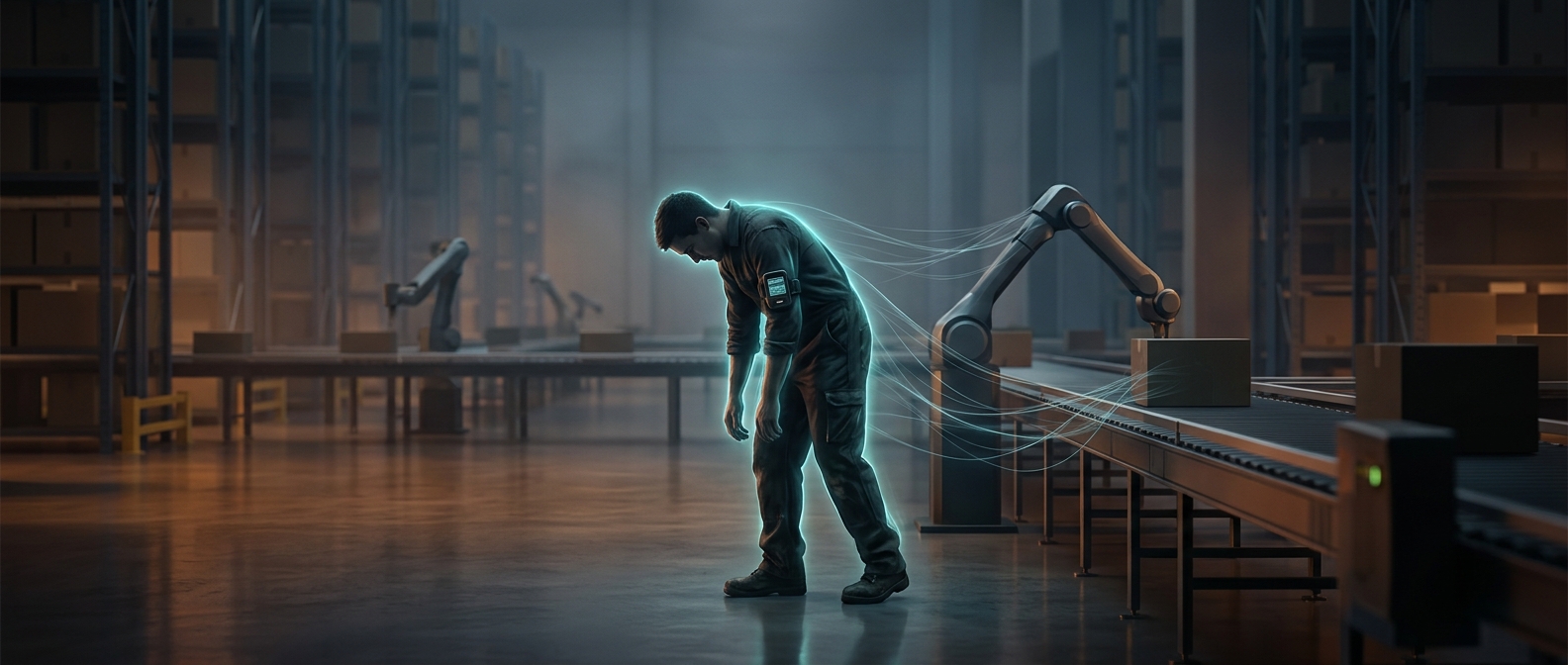
When the Robot Sets the Pace
A warehouse robot does not need to lift a box to make the job harder. In many automated facilities, mobile robots carry shelves or bins to fixed workstations, where employees pick items, scan them, and prepare orders. The machine takes over travel through the aisles; the human remains responsible for a steady stream of precise, repetitive tasks.
That division can raise output—and reset expectations. Software coordinates the robots and routes work to stations, helping keep items arriving with fewer pauses. If a worker’s station is supplied continuously, the natural gaps once spent walking, searching, or waiting may shrink. A faster system can therefore mean more picks, scans, or lifts per hour, rather than less effort per order.
The Strain of a Continuous Flow
The pressure comes from the pace and repetition. Workers may reach, twist, bend, or handle objects hundreds of times during a shift, while trying to avoid errors as the next task arrives. Even when each movement is manageable on its own, limited recovery time can make fatigue build. Tired muscles and attention can also make awkward movements or mishandling more likely, increasing the risk of injury.
Automation can reduce some hazards, such as long walks carrying goods, but it does not automatically remove physical work. The outcome depends on how managers set station speeds, staffing, breaks, and task rotation—not just on how many robots are on the floor. If the human workstation is expected to match the machine’s uninterrupted flow, the technology may accelerate work without reducing the worker’s load.