Why an Anchor Needs More Than Its Hook
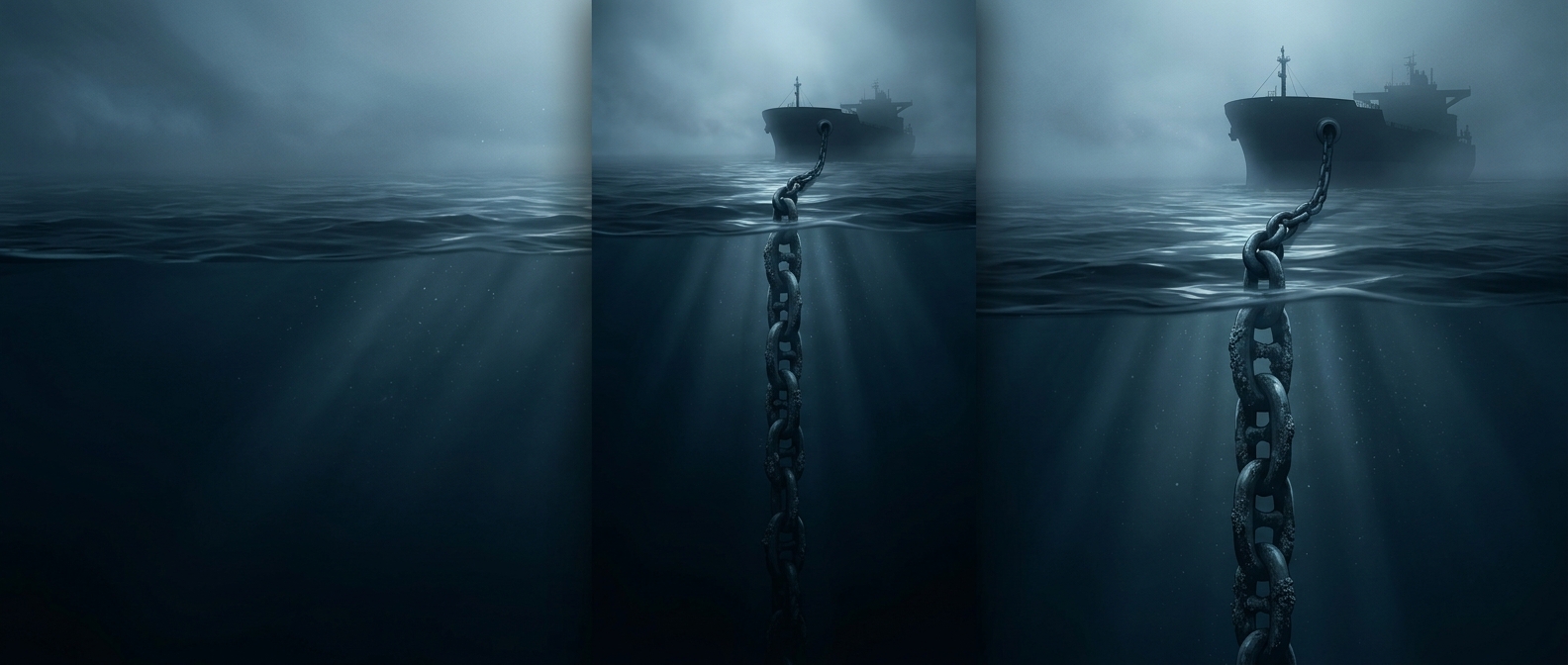
An anchor works as part of a system: the anchor at the end of the line, the chain connecting it to the ship, and the seabed beneath them. When the ship drifts, it pulls the chain tight. A long stretch of chain lying on the bottom makes that pull gentler and more horizontal, rather than yanking upward on the anchor.
That direction matters. Anchors generally grip best when they are pulled along the seabed so their flukes—the pointed arms designed to dig in—can bite into sand or mud. A steep upward pull can pry an anchor loose. The chain’s weight helps keep the line low, especially when the vessel moves with wind or waves.
The Chain Shares the Load
The chain also adds resistance through contact with the seabed. As the ship tugs, part of the chain may lift and slide before the pull reaches the anchor. That movement absorbs some of the force and helps steady the vessel. If the load eases, gravity lets the chain settle back onto the bottom.
This is why anchoring depends on more than choosing a sufficiently heavy anchor. The length of chain paid out, the water depth, the seabed, and the conditions all affect how much chain lies on the bottom and how the force reaches the anchor. In deeper water, more chain may be needed to preserve a low pulling angle.
A Tradeoff at Sea
Chain is dependable but heavy, so carrying and handling it costs space and effort. Its weight is useful while anchoring, yet the vessel must also haul it back aboard when leaving. The practical balance is to use enough chain for a secure, low-angle pull without making the ground tackle—the anchor and its connecting gear—needlessly burdensome.
The visible chain is therefore doing more than connecting ship to anchor: it helps turn a sharp tug from the vessel into a lower, more gradual pull that the anchor can resist.