Why a large paper map turns into a sail
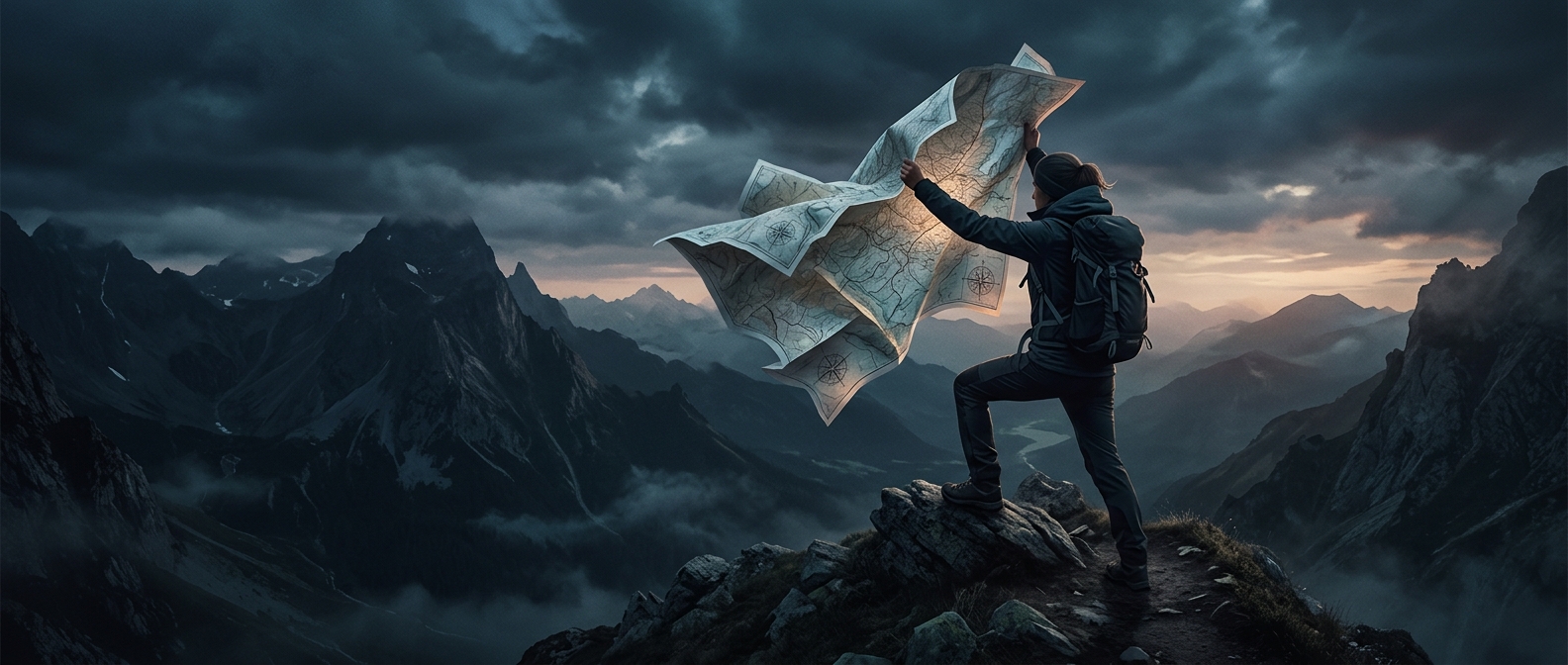
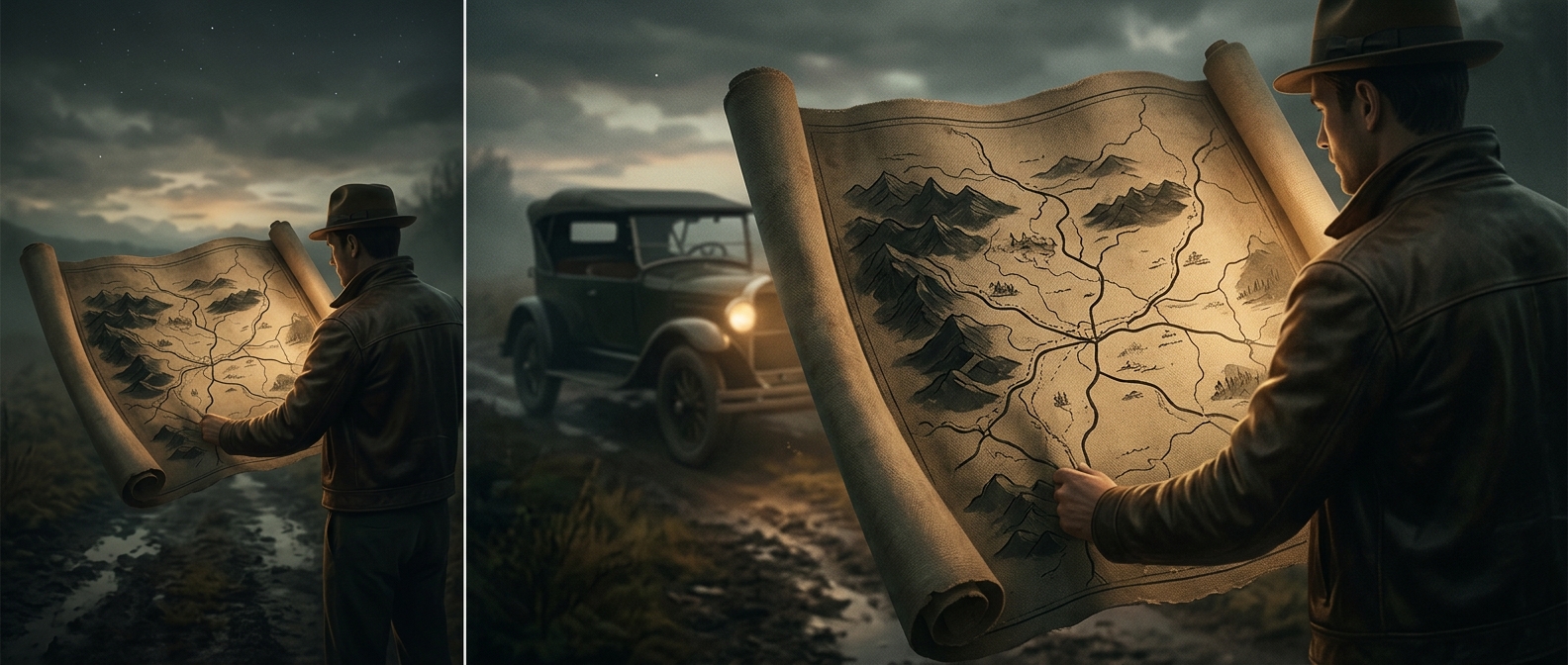
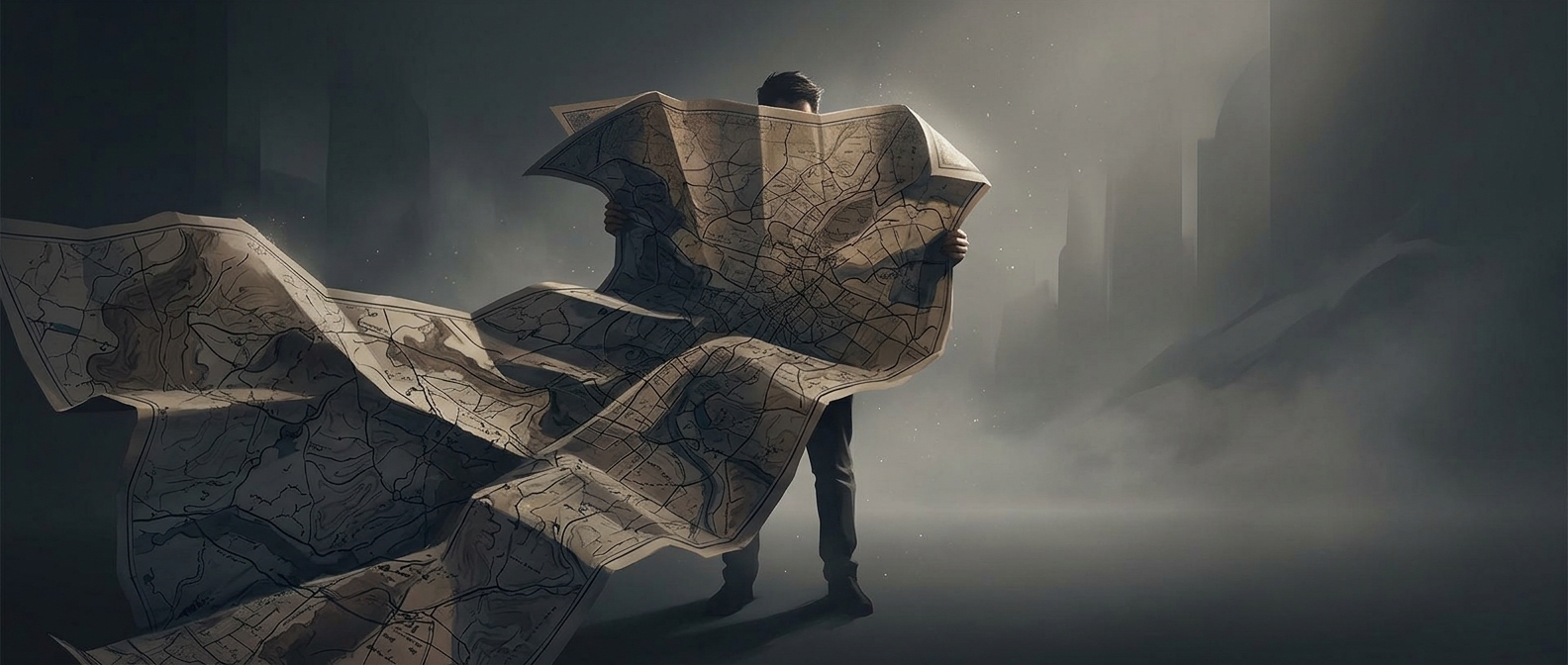
A map is light, but its broad, flat surface gives the wind plenty to push against. A gust can lift one edge and bow the paper; once it bends, the sheet can twist or fold before you can flatten it again. The bigger the map, the more difficult it is to keep its corners under control—especially if you are trying to hold it open with one hand while looking for a road or trail.
The wind can disrupt more than the paper
Reading a map depends on keeping the relevant area visible and knowing how it relates to the ground around you. When the sheet flips or collapses, your attention shifts from matching landmarks to wrestling with the paper. You may also lose the map’s orientation: the direction you are facing relative to the map. That small interruption can make a route harder to follow even if the map itself is clear and accurate.
Make the map easier to handle
Folding the sheet down to the section you need reduces the exposed area and keeps fewer loose edges available to catch the wind. A map case or firm backing can help hold it flat; when conditions allow, stepping out of the gusts gives you a steadier moment to check your position. The practical lesson is that a map’s usefulness depends not only on how much terrain it shows, but on whether you can keep the right part visible when you need it.