Why a Road Map Needed More Than Paper
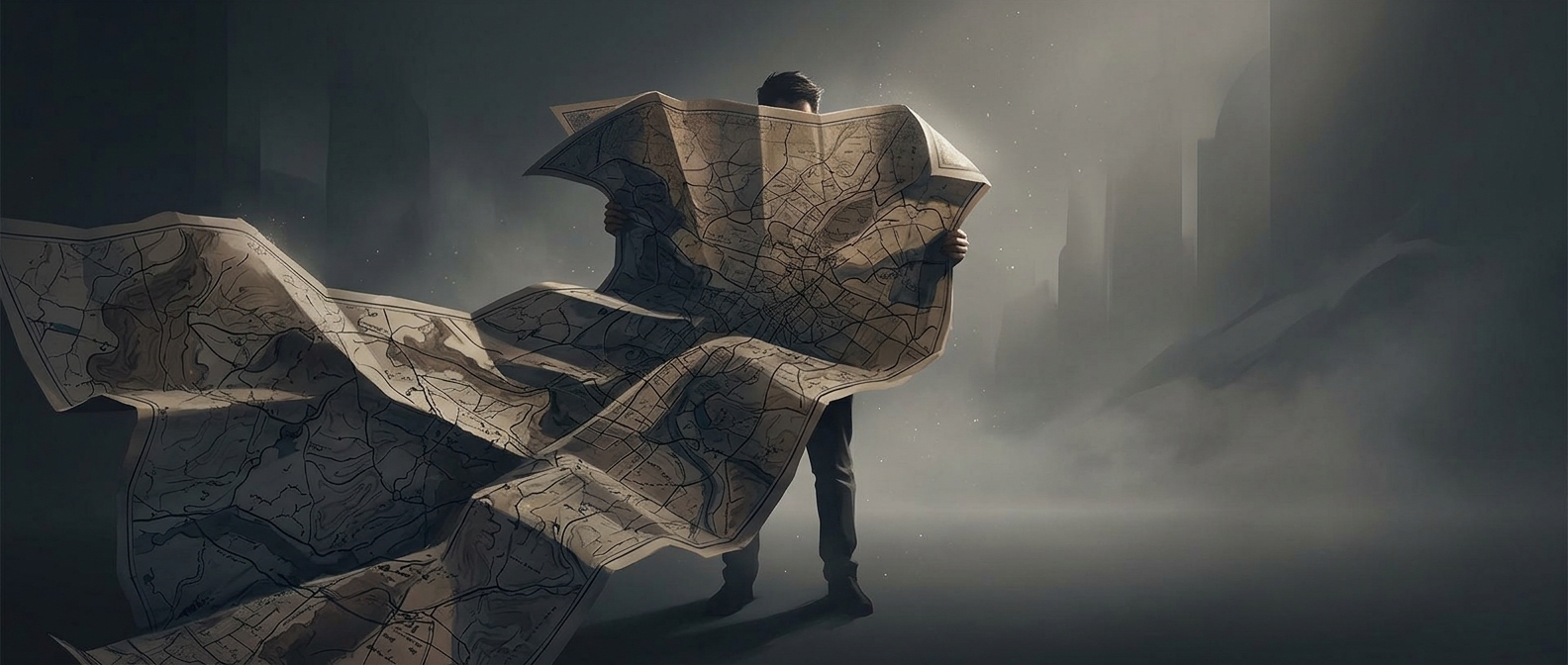
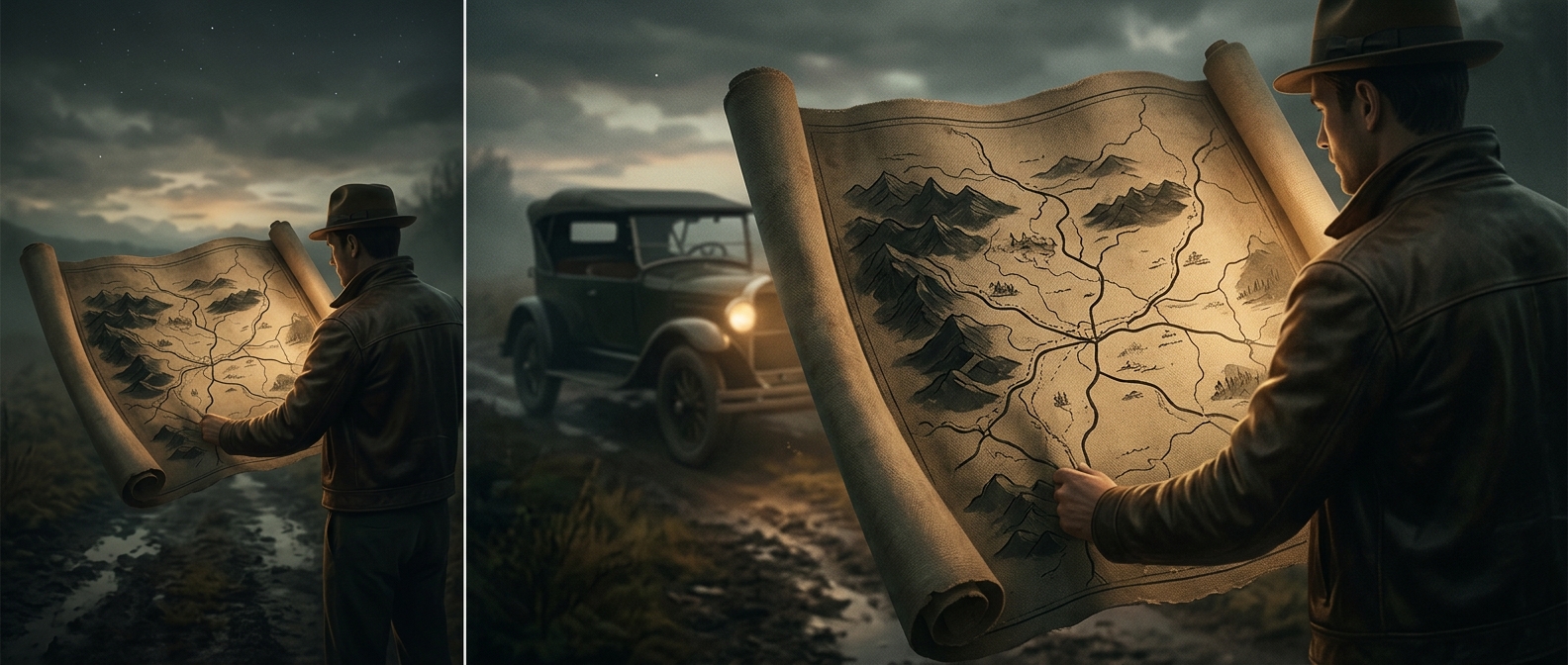
A map in an early open car faced a problem that a map on a desk did not: it had to be unfolded and read in moving air. Wind could catch a sheet like a small sail, tugging at its corners and stressing the creases where it had been folded. Paper could split at those weak points, especially after repeated handling.
Printing directions on heavy fabric changed how the map behaved. Its woven structure could flex when bent instead of tearing as readily along a crease. That made it better suited to being opened, refolded, and handled outdoors, where a driver or passenger might need to check a route without the protection of a closed cabin.
Toughness Came With a Tradeoff
Fabric did not make a map effortless to use. A heavier map took up more space and could be less crisp to fold into a compact shape than a thin paper sheet. But for a route guide expected to endure wind and repeated unfolding, durability mattered more than a perfectly neat fold.
The material choice reflects a simple design principle: a map had to survive the conditions in which people used it. In an open car, the difference between paper and cloth could determine whether the route stayed readable after the next gust.