Why a One-Sided Turn Can Slow a Horse
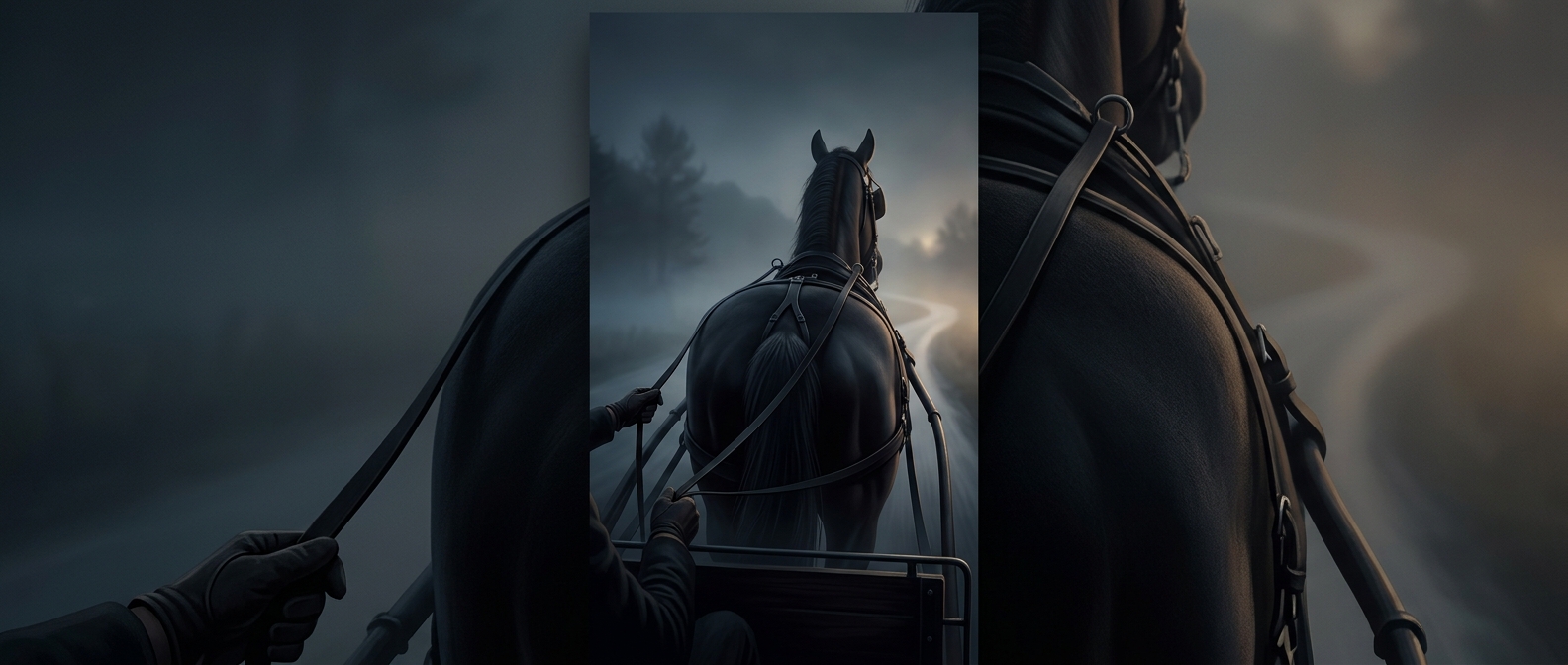
A horse moving straight ahead can put much of its strength behind forward motion. Pulling both reins straight back asks it to stop while leaving its body lined up to keep going; a frightened horse may brace against that pressure or simply overpower it.
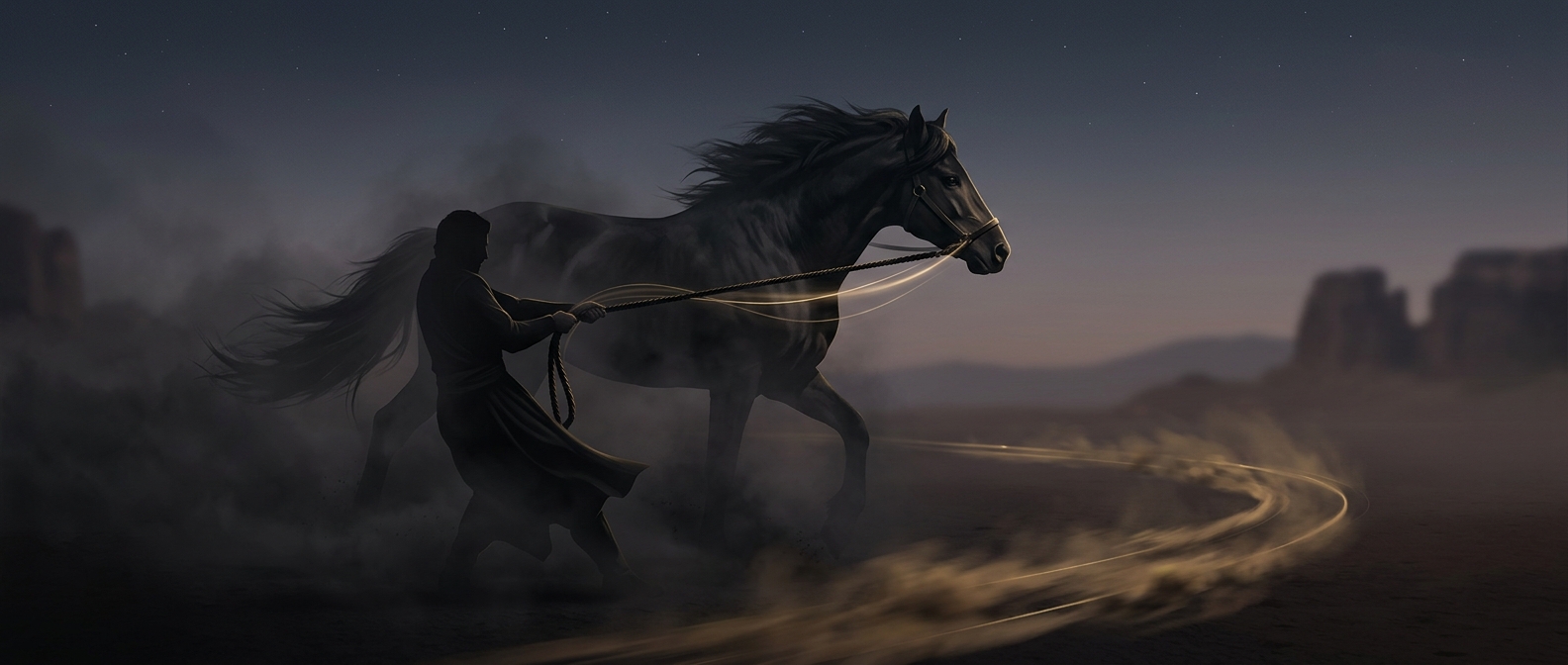
Drawing one rein toward your knee bends the horse’s neck and brings its body into a turn. As it curves, it can no longer keep driving straight ahead. The turn redirects its momentum, and the horse has to shorten its stride to follow the tighter path. This is often called a one-rein stop, though it is a way to interrupt forward motion—not a guaranteed brake.
The Turn Needs Room
A gradual circle is different from wrenching the horse’s head sharply to one side. A sudden, tight pull can unbalance the animal or make it fall, especially at speed. The rider needs enough clear space to guide a curve without sending the horse toward a fence, road, ditch, or other people and animals.
The maneuver also depends on control: a horse that is already turning, stumbling, or panicking may not respond predictably. In a confined or crowded place, trying to force a circle can create a new collision hazard. The useful principle is to redirect straight-line momentum into a controlled turn, not to assume that pulling harder—or turning tighter—will always make a runaway horse stop.