Why Pliny Linked Menstruation to Storms and Spoiled Crops
In Natural History, his sprawling account of the world, the Roman writer Pliny the Elder collected practical observations alongside rumors and extraordinary claims. Among them were reports that menstrual blood could halt hail, damage crops, sour wine, rust iron, or drive caterpillars away. These were not separate oddities so much as variations on an old idea: a powerful bodily substance might alter the world around it.
A Body Thought to Affect Its Surroundings
In ancient Roman culture, menstruation carried meanings of both danger and potency. The visible flow was unusual and difficult to explain through the medical knowledge of the time, making it easy to imagine that it had unusual effects. Claims about wine turning sour or iron rusting also connected menstruation to familiar changes in materials—changes whose actual causes were not always obvious.
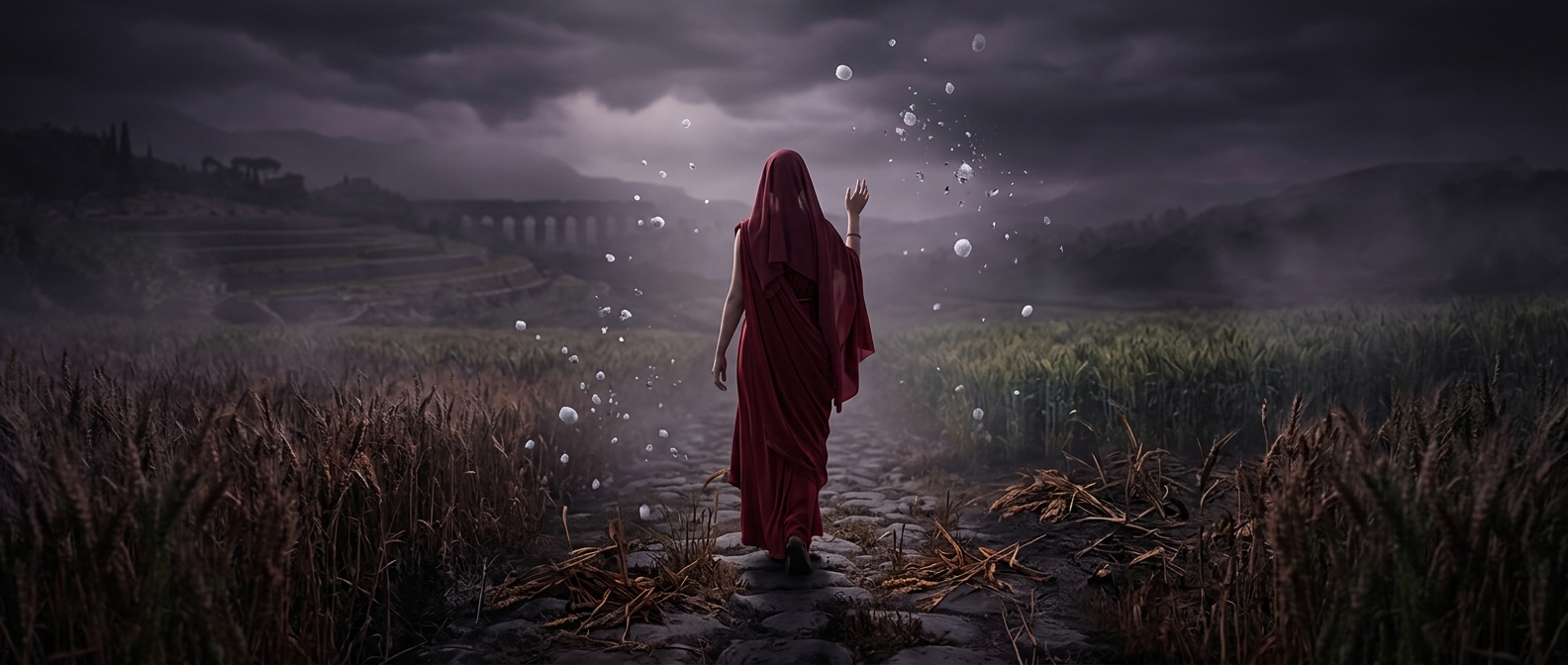
The idea that a menstruating woman could influence hail or crops extended that same logic from household objects to the natural world. If a bodily state could affect food or metal, it might also disrupt weather or plant growth. Such beliefs made the body part of a larger, interconnected world in which contact and proximity could carry hidden influence.
What Pliny’s Record Tells Us
Pliny’s book preserves what people said about nature, not a set of claims verified by controlled tests. Its value here is historical: it shows how confidently stories about the body could sit beside discussions of animals, plants, and physical substances in an ancient encyclopedia.
The striking detail is the range of effects attributed to menstruation—from a storm overhead to a drink in a cup. That range reveals a worldview in which the body was not sealed off from nature; it was imagined as one of the forces capable of changing it.