Why a Desert Highway Needs a Green Edge
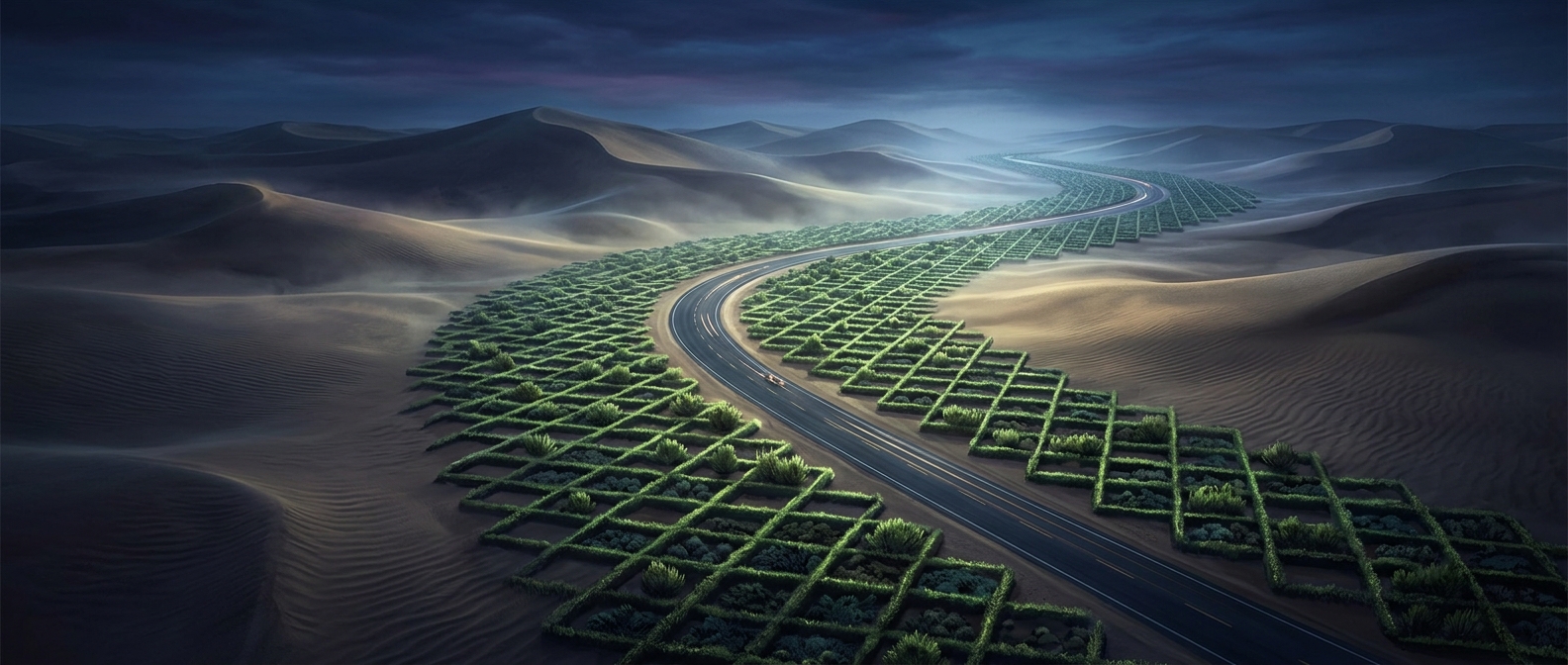
Across the Taklamakan, a road faces a hazard that can move: windblown sand. Gusts push loose grains across the ground and pile them against the pavement. If drifts spread over the roadway, they can make driving dangerous and force crews to clear the route. The planted strip beside the highway is designed to interrupt that process before sand reaches the asphalt.
Shrubs That Slow the Sand
The shelterbelt works by changing the wind near the ground. Stems and leaves obstruct the airflow, reducing its speed and helping sand settle among the plants instead of traveling toward the road. Belowground, the shrubs’ roots bind loose soil, making it harder for wind to lift and carry away. Together, these effects help stabilize the sandy roadside.
The plants must survive intense dryness, so the strip is supported by drip irrigation: water delivered in small amounts near the roots rather than sprayed across the surface. Solar-powered wells provide the water. This lets the vegetation establish and persist in a place where rainfall alone cannot reliably sustain it.
A Roadside System, Not Just Landscaping
The shelterbelt is a piece of transport infrastructure with living components. Its effectiveness depends on keeping both the plants and their water supply working; dead or sparse sections would leave gaps where wind could carry sand toward the highway. The green line therefore marks an ongoing effort to protect a fixed road from a shifting desert—one in which shrubs, roots, irrigation, and solar power all help keep the route passable.