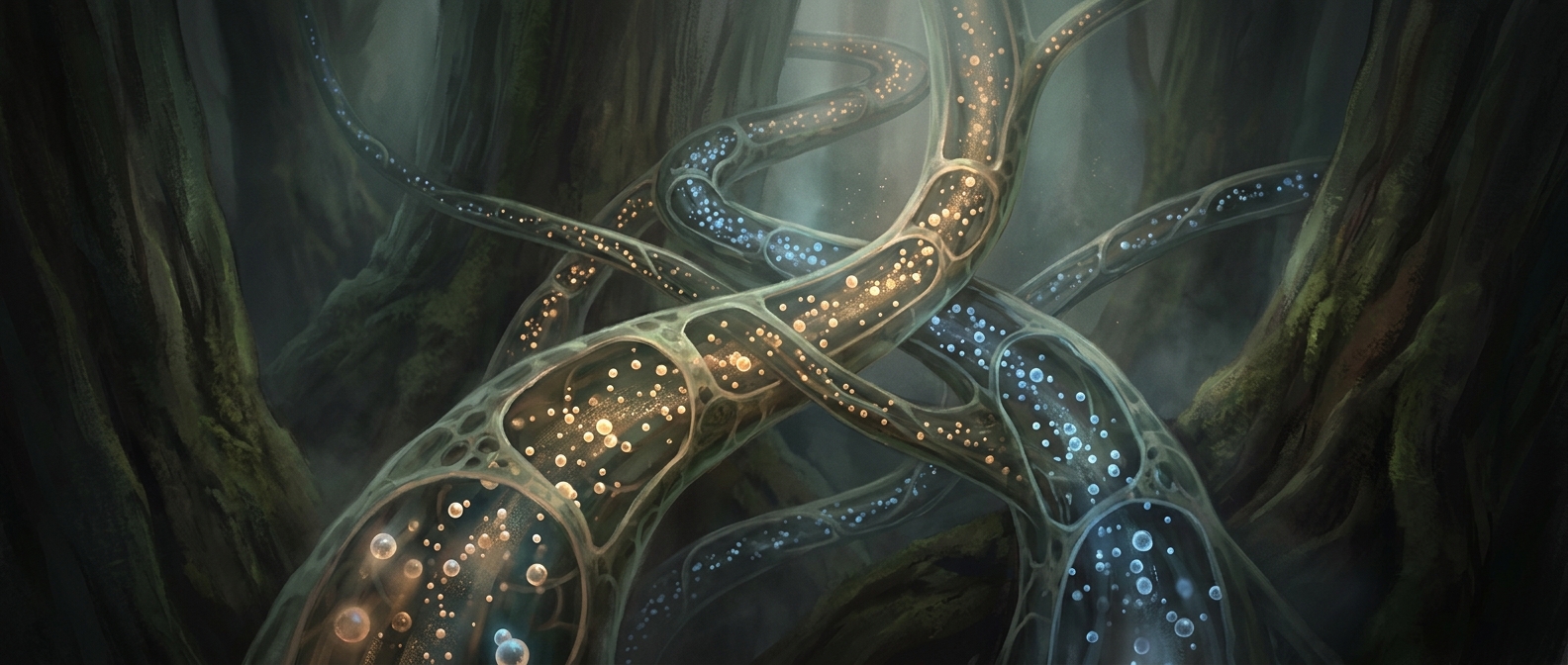
How Plants Send Sugar in Opposite Directions
A plant does not make one phloem tube carry traffic both ways at once. Instead, neighboring sieve tubes—elongated channels made of living cells—can carry sugary sap in opposite directions. Each tube has its own route from a place supplying sugar to a place using or storing it.
A mature leaf is often a source, exporting sugar made by photosynthesis. A growing fruit, root, shoot, or developing leaf can be a sink, drawing sugar in. Roots can also become sources when they release stored carbohydrates to support new growth.
Pressure Pushes Sap Along Each Route
The movement is driven largely by differences in pressure. At a source, cells load sugar into the phloem. Water follows from nearby tissues, raising pressure inside the tube. At a sink, sugar is unloaded and used or stored; water can leave, lowering pressure. The resulting pressure difference pushes sap along the channel from source toward sink.
This is not a central traffic-control system. The plant’s changing needs help determine which tissues act as sources and sinks. When fruit is growing, it may draw heavily from leaves; when buds begin to grow, stored sugar can be sent upward from roots or stems. Nearby tubes can therefore serve destinations in different directions without a microscopic roundabout: each tube’s flow follows its own source-to-sink pressure gradient.