How a Playing Card Becomes a Projectile
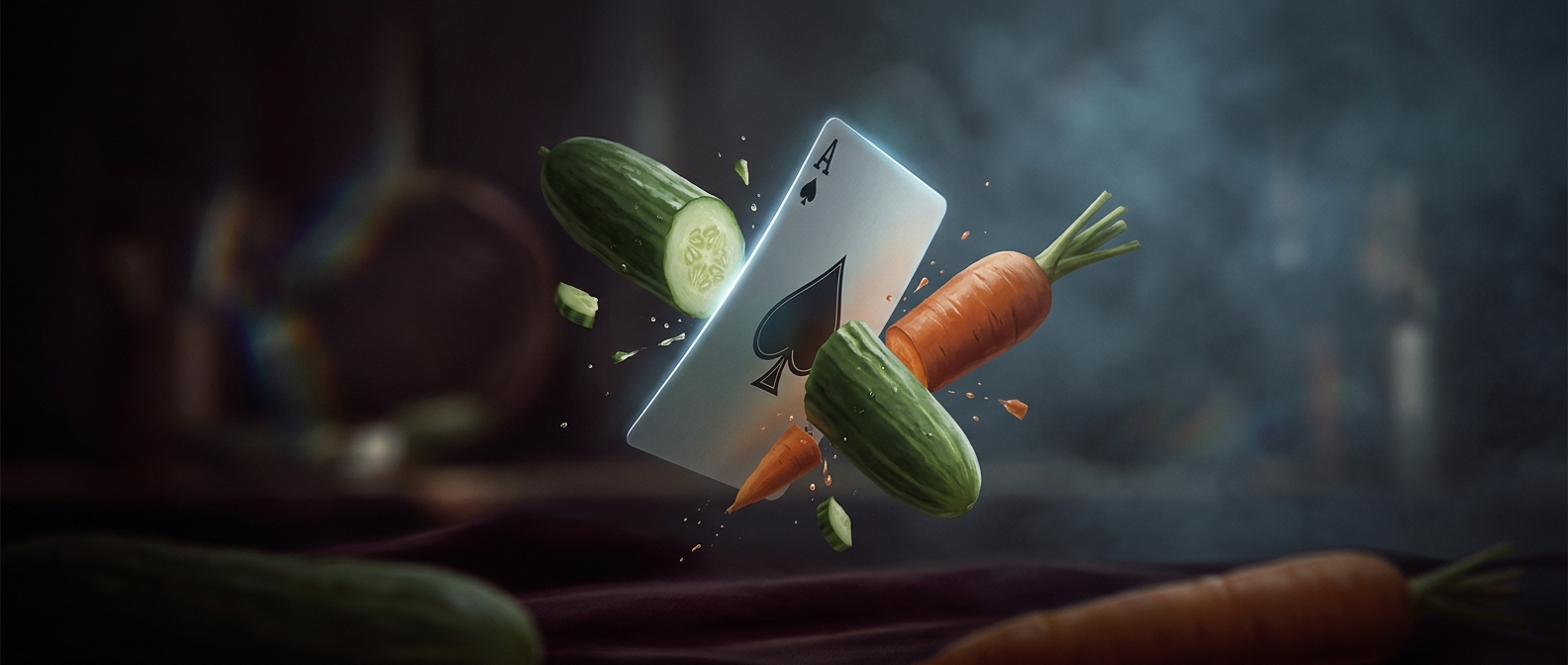
A card seems too light and floppy to do much damage. But when thrown with a sharp spin, it can behave less like a sheet being pushed through the air and more like a small, fast-moving blade. The spin helps keep the card’s broad face from tumbling wildly, while the throw gives it enough speed to strike edge-first.
That narrow edge concentrates the impact on a very small area. Instead of spreading its force across the card’s full face, the strike presses the edge against the rind, which can split or give way under a forceful, well-aimed hit. The card’s flexibility matters, too: it can bend on impact rather than simply bounce away, allowing its edge to bite into the surface.
Skill Meets a Compliant Target
The feat depends on more than raw strength. A thrower must control the card’s spin, angle, and release so it arrives edge-first instead of flattening against the target. A watermelon is a useful performance target because its rind offers visible resistance, while the fruit beneath is softer than a hard surface such as wood or metal.
That combination makes the result dramatic without making every throw predictable. A small change in angle or wobble can turn a clean strike into a glancing hit. The feat is therefore as much about repeatable technique and staging as it is about speed: the audience sees an ordinary card, then a thin edge lodged in a fruit.
The striking detail is that the card does not need to become rigid or heavy. For a brief instant, a controlled spin and a concentrated edge impact let a flimsy object act like a surprisingly effective projectile.